

In 2026, access to vocational training and postsecondary studies in Nunavik and Eeyou Istchee relies on a combination of courses offered in the communities, distance learning, study stays in the South and financial support measures. Adults can pursue trades essential to the North — construction, health, education, administration or municipal management — while taking into account concrete realities: costly air travel, distance from family, housing, uneven Internet connectivity and adapting to a study environment often quite different from their home community.
A postsecondary path built between the North and the South
The path toward a diploma, a certificate or a professional qualification is not always linear in Nunavik and Eeyou Istchee. For many Inuit, Cree and non-Indigenous people living in Northern Quebec, returning to school or starting training after high school first requires choosing a realistic model: staying in one’s community as much as possible, moving temporarily to a regional center, or settling in the South for the duration of a program.
Local needs strongly influence both the available offer and individual choices. Northern employers regularly look for trained people to work in health services, schools, local administrations, infrastructure, building maintenance, transportation, security, social services and community development projects. Useful training is therefore not just a diploma: it must also match jobs that are actually available in the region and the realities of working in the North.
Cégep de la Baie-James holds an important place in the region’s training ecosystem. Its presence in Nord-du-Québec and its experience with territorial realities allow it to offer, depending on cohorts and partnerships, college programs, continuing education and activities tailored to the needs of employers and communities. The challenge often lies in bringing training closer to learners rather than systematically asking learners to travel.
In Nunavik, the Nunavik Sivunitsavut Institute, associated with the Kativik School Board, also plays a central role in adult education and skills development. Its work follows a logic of proximity: supporting qualification paths, organizing training that responds to community needs, and facilitating access to learning that can lead to employment, career advancement or further studies.
It is important to distinguish between the possible paths. Vocational training generally aims at acquiring practical skills in a trade. College studies can lead to a Diploma of College Studies or an Attestation of College Studies, depending on the program. University studies, meanwhile, are used in particular to access certain professions, deepen an area of expertise, or obtain qualifications in management, education, health or intervention work.
For adults who interrupted their schooling, it may be necessary to start with academic upgrading, prior learning and skills recognition, prerequisite courses or adapted general education. This detour is not a failure: it is often the foundation that makes a postsecondary project sustainable and achievable.
The most relevant training programs for Northern trades
In Nunavik and Eeyou Istchee, the most sought-after training programs are often those that meet the communities’ ongoing needs. Building, repairing, providing care, supporting people, teaching, administering and coordinating services are essential functions in a territory where outside recruitment can be difficult and costly.
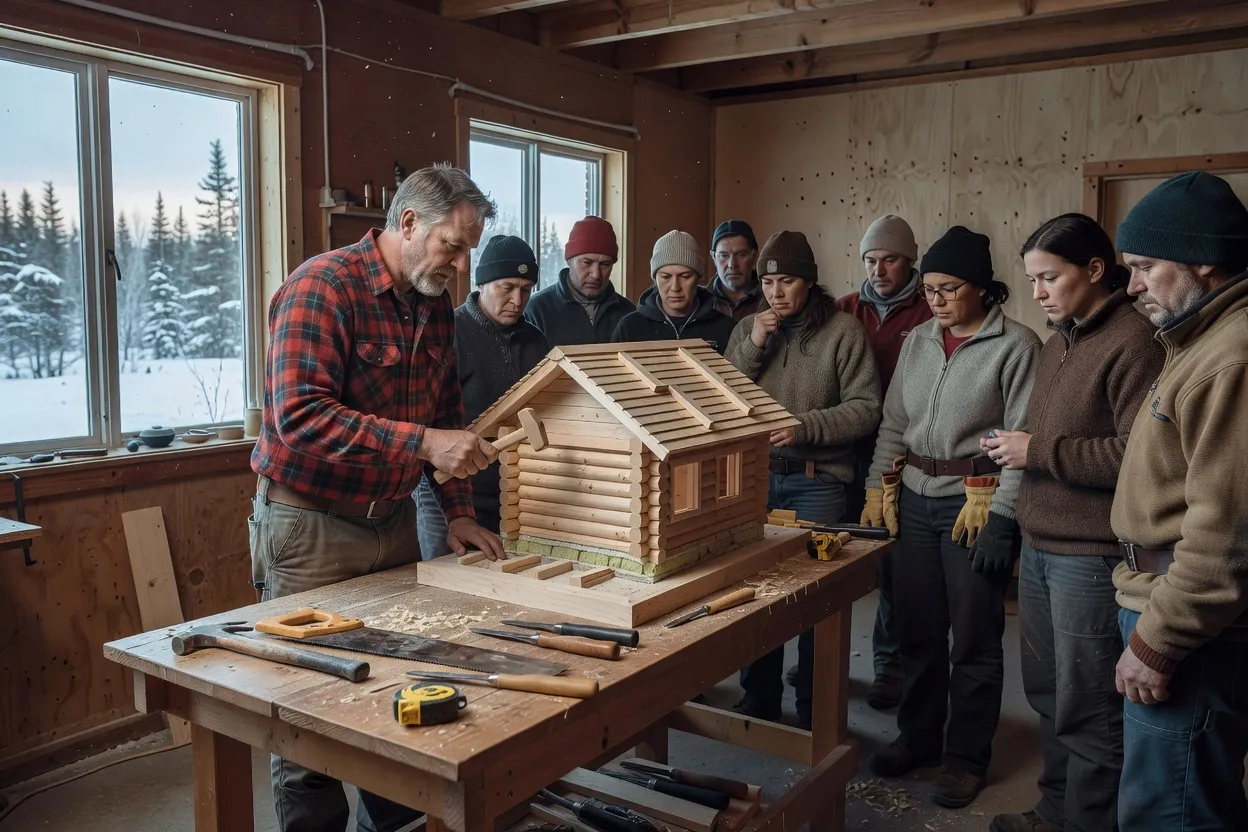
In the construction sector, career paths can involve carpentry, electrical work, plumbing, mechanics, building maintenance, equipment operation or health and safety on job sites. Climate conditions, materials logistics, permafrost-adapted buildings in certain zones, and the importance of preventive maintenance give building trades a particular value in Northern Quebec.
In health care, needs cover a wide range of functions: care support, community intervention, pre-hospital services, health services administration, psychosocial support and coordination. Several professions require college or university studies as well as supervised internships. Others allow for a gradual entry into the sector, with shorter training programs and work experience that later opens the door to greater responsibilities.
Education is another priority field. Schools and educational services need support staff, educators, workers, language and culture specialists, as well as people who wish to become teachers. Career paths can begin with certificates or college training, then continue at university for those aiming to teach or manage schools.
Municipal and community management is also gaining importance. Local administrations, regional organizations and public services need skills in accounting, human resources, governance, project management, secretarial work, procurement, communications and administration. These fields offer interesting prospects for people who want to remain in their community while contributing directly to its development.
| Type of training | Approximate duration | Common access mode | Possible career outcomes |
|---|---|---|---|
| Vocational training | From a few months to about two years | In-community, at a training center, or work-study | Construction, maintenance, mechanics, cooking, administrative support |
| Attestation of College Studies | Often a few months to about a year and a half | Continuing education, sometimes hybrid or intensive | Administration, intervention work, office support, targeted technical sectors |
| Diploma of College Studies | Generally two to three years | CEGEP, sometimes with distance components | Health, social services techniques, management, technology, specialized education |
| University certificate | Usually several courses over a flexible period | Mainly distance or hybrid format | Management, leadership, administration, intervention work, professional development |
| University bachelor’s degree | Generally several years | Campus, partial distance learning, or blended format | Teaching, regulated professions, management, research, specialized services |
Choosing a training program, however, must go beyond the program’s title. Check the admission requirements, prerequisites, language of instruction, internship arrangements, access to required equipment and the real possibilities of completing the program from the North. A program that is entirely online on paper may, for example, require in-person exams or labs in the South.
Before enrolling, it is useful to prepare a short list of questions:
- Can the program be followed while staying in my community, in whole or in part?
- What travel is mandatory for internships, exams or in-person sessions?
- Does the diploma lead to a job that is available or useful in my region?
- What tutoring, academic support and psychosocial support services are available?
- Is it possible to study part-time while keeping a job or family responsibilities?
CEGEP, university and distance learning: real but demanding possibilities
Online learning has expanded access to postsecondary studies for people living in Kuujjuaq, Puvirnituq, Inukjuak, Chisasibi, Mistissini, Waskaganish, Waswanipi and other Northern communities. Quebec CEGEPs and universities now offer distance courses in several fields, particularly in administration, management, social services, education, computer science, accounting and professional development.
This flexibility can make it possible to stay close to family, keep a local job and reduce part of the costs associated with moving to the South. It is particularly attractive for working adults who want to advance without completely interrupting their participation in community life. Some people take a few courses per term, gradually accumulate credits, and complete a certificate or attestation over a longer period.
Distance, however, does not make obstacles disappear. Bandwidth can vary depending on the community, the time of day, the household and the service provider. Synchronous videoconference classes, heavy platforms, video files and remotely proctored exams can become frustrating when the connection is unstable. The availability of a personal computer, a quiet space and technical support is also a determining factor.

Institutions that serve Northern learners well tend to plan for adapted solutions: downloadable documents, low-bandwidth accessible modules, reasonable deadlines, recorded lectures, individual support, flexibility during documented outages, and in-person sessions when necessary. Learners must nevertheless confirm these arrangements before committing, especially if they live in an area where Internet access remains limited.
Cégep de la Baie-James can be a relevant point of contact for exploring college and continuing education programs tied to regional realities. Its role is not necessarily limited to a uniform offering: needs expressed by communities, administrations and employers can influence the organization of cohorts, professional development activities or tailor-made training.
On the Nunavik side, the Nunavik Sivunitsavut Institute and the Kativik School Board are important reference points for adults seeking guidance, basic training, recognition of prior learning, or continuing education. Their knowledge of the communities often helps identify options more consistent with local life than approaches undertaken alone with distant institutions.
Distance university studies are best suited to people who are self-directed, organized and able to set aside regular time for readings, assignments and communication with instructors. They are not necessarily suited to every program or every stage of life. A hybrid path, combining periods spent in the community with a few planned trips, can sometimes offer a better balance between accessibility, support and academic requirements.
Financing a study project without underestimating the costs of leaving
Financing is often the factor that determines whether a study project becomes possible. In Northern Quebec, expenses are not limited to tuition and books. For people who must study in the South, it is necessary to plan for air travel, baggage, housing, food, local transportation, computer equipment, administrative fees and occasional trips back to the community.
Scholarships, allowances and support programs can come from several sources. Depending on the student’s status, the chosen program and the home territory, it can be worthwhile to inquire with Quebec’s student financial assistance services, regional administrations and organizations, local education services, employers, and postsecondary institutions themselves. Institutional scholarships or perseverance funds may also exist depending on the year and the program.
It is important not to assume that a single application will cover all expenses. Financial aid programs sometimes have distinct criteria: level of study, full-time student status, residency, income, academic results, field of study, community involvement or financial need. Some measures are paid early in the program, while others require proof of enrollment or progress.
A realistic budget plan should include:
- Tuition, textbooks, equipment, computer and software costs;
- Plane tickets or other transportation required for departure, internships and return trips;
- Housing deposit, basic furniture and monthly living expenses;
- A reserve for family, medical or logistical emergencies;
- Less visible costs, such as printing assignments, local travel and communications.
People moving to the South benefit from starting early. Finding housing, understanding the school calendar, obtaining the required documents and arranging transportation can take time. Last-minute departures can lead to high costs and add unnecessary pressure even before classes begin.
It is also worthwhile to speak with a guidance counsellor, an Indigenous student services office, a continuing education officer, or a local employment support organization. The goal is to build a credible financial plan, not to rely on an uncertain promise. A longer part-time project can sometimes be preferable to a rushed departure without an adequate budget.
Succeeding in studies away from home: cultural adaptation, family and support network
Leaving Nunavik or Eeyou Istchee to study in Montreal, Quebec City, Val-d’Or, Chibougamau or another Southern city represents a major transition. Geographic distance can be compounded by culture shock: urban pace, traffic, shared housing, different food, anonymity, social atmosphere, institutional rules and a linguistic environment sometimes far removed from familiar surroundings.
Distance from family is one of the most frequently mentioned challenges. Students may feel the difficulty of missing important events, being unable to return quickly in an emergency, or having to balance studies with responsibilities toward their children, parents or community. This reality requires emotional preparation as much as financial preparation.
Cultural adaptation should not be reduced to an individual responsibility. CEGEPs and universities have a role to play by offering culturally safe services, meeting spaces, respectful support, welcoming measures and an understanding of Northern realities. Indigenous students should not have to constantly explain their territory, their language or the travel constraints that affect their attendance in class.
For learners, maintaining a support network remains a major factor in persevering. Keeping regular contact with family, identifying a resource person within the institution, knowing what health and psychosocial support services are available, and joining a student group can reduce isolation. It is also useful to ask for help at the first academic difficulties rather than waiting for setbacks to accumulate.
Successes exist across many profiles. Someone who worked in building maintenance may, after vocational training and some experience, move into supervisory or coordination responsibilities. A community outreach worker may complete a college attestation to strengthen her skills, then continue toward a part-time university program. An administrative employee may take distance management courses and move into a local leadership position.
These paths are not necessarily quick. They may include breaks, a change of program, a temporary return to the community, or a return to studies after several years in the workforce. Success should be viewed as a progression: completing a prerequisite, finishing a term, completing an internship, landing a first relevant experience, or coming back to work within one’s community are already important milestones.
Building a sustainable project with territorial partners
Vocational training and postsecondary studies have a greater chance of leading to success when they are tied to a clear personal project and a real need in the territory. For Nunavik and Eeyou Istchee, training people already rooted in the communities can help strengthen the continuity of services, local management capacity and the transmission of knowledge adapted to the Northern context.
Employers can play a concrete role: partial release time to attend courses, recognition of acquired skills, internships, mentoring, transportation support, or conditional hiring commitments tied to completing a training program. These measures do not replace public funding, but they can make a path much more achievable for an adult already engaged in working life.
Communities, local administrations, educational institutions and regional organizations also have an interest in planning workforce needs together. When a cohort is organized around a priority sector — for example infrastructure maintenance, administration, educational services or intervention work — participants often benefit from a more concrete goal and an already-present professional network.
For someone hesitating between several options, the best approach is to compare programs not only by their duration, but also by their actual conditions. A short training program can allow for a quick return to employment, while a longer diploma can open doors to a stable profession. In some cases, a step-by-step path is the wisest choice: starting with a certificate, gaining experience, and then continuing toward a college or university diploma.
In 2026, the challenge is therefore not simply to multiply the number of courses available online. It is about making career paths accessible from end to end: clear information, realistic prerequisites, sufficient connectivity, academic support, financing, housing, cultural support and employment prospects. Training designed with Northern realities in mind can become a tool for professional mobility, but also for collective development.
Frequently asked questions
Can you complete a CEGEP program entirely at a distance from Nunavik or Eeyou Istchee?
It depends on the program. Some courses and certificates are available at a distance, but many college programs include labs, internships, in-person assessments or mandatory on-site sessions. Check the specific requirements with the CEGEP before enrolling.
Which trades offer good prospects in Northern Quebec?
Needs often concern construction, infrastructure maintenance, health, social services, education, administration, municipal management, logistics and technical services. The best prospects vary, however, from one community to another and depend on local projects.
How can you get financial assistance to study in the South?
This generally requires combining several approaches: Quebec student financial assistance, institutional scholarships, territory-related programs, support from employers or local organizations. Start your applications several months before classes begin so you can compare conditions and plan for transportation and housing expenses.
Is the Internet connection good enough to follow online training in Nunavik?
The situation varies depending on the community, the household and the course format. A connection may be sufficient to consult documents and take part in certain activities, while being less suited to long videoconferences or proctored exams. Ask the institution what solutions are in place in case of bandwidth problems.
Is it possible to return to school after several years in the workforce?
Yes. Adults can access prerequisite courses, general education, prior learning and skills recognition processes, or part-time programs. Work experience can also help clarify a training project and, in some cases, be recognized within the program.