
In 2026, digital municipal governance in the northern villages of Nunavik and Eeyou Istchee rests on a hybrid approach: online services are progressing, but they do not replace local front-desk support, the telephone, or direct exchanges. The Kativik Regional Government (KRG) and the Cree Nation Government of Eeyou Istchee play a structuring role in supporting communities, building regional infrastructure, and coordinating services. The central challenge is to offer digital procedures that are simple, reliable and accessible despite distance, uneven connectivity, linguistic realities and the need for citizen consultation.
Northern Governance Rooted in Local Realities
Digital technology is gradually transforming the relationship between local administrations and residents of northern Quebec. In the northern villages of Nunavik as in the Cree communities of Eeyou Istchee, residents want to be able to get up-to-date municipal information, submit a request, pay a bill or follow a public decision without necessarily having to travel.
This shift does not, however, mean adopting an urban model imported wholesale. The realities of the territory demand governance adapted to place: geographic remoteness, travel that is costly or weather-dependent, uneven access to telecommunications networks, a plurality of languages, the importance of family and community ties, and a strong value placed on direct discussion.
Northern digital municipal governance must therefore remain governance rooted in proximity. It aims in particular to:
- reduce delays linked to paper forms, repeated phone calls and travel;
- improve access to public notices, minutes, calendars and services;
- facilitate exchanges among administrations, elected officials, local organizations and residents;
- preserve non-digital pathways for those who prefer them or need them;
- strengthen trust through information that is clear, accessible and regularly updated.
In this context, a digital portal is only useful if it meets concrete needs: a building permit, a maintenance request, a municipal bill, registration for a community activity, or access to a public document.
The Role of the Kativik Regional Government in Nunavik
The Kativik Regional Government, generally known by the acronym KRG, is a regional institution created under the James Bay and Northern Quebec Agreement. It exercises public responsibilities across the territory of Nunavik, north of the 55th parallel, and works with the northern villages as well as with other bodies and partners involved in regional development.
The KRG does not replace the administrations of the northern villages. Its role is instead regional and coordinating. It is involved in various fields that directly influence the digital capacity of communities: regional development, transportation, public safety, the environment, training, administrative support, planning and technical services, depending on applicable programs and mandates.
For digital municipal governance, this regional dimension matters. A small local administration does not always have the same human or specialized resources as a city in southern Quebec. Pooling certain tools, providing technical support, sharing best practices and training staff can therefore help narrow the gaps between communities.

A useful digital strategy for Nunavik should avoid heavy or hard-to-maintain platforms. It should favor solutions compatible with local capacity, easy to administer, and able to function with sometimes limited connectivity. This can take the form of simple forms, secure spaces, notification systems, lightweight downloadable documents, and backup procedures adapted to the territory.
The challenge is also linguistic and cultural. Administrative information must be understandable, written in plain language and, where resources allow, available in the languages relevant to residents. The quality of translation, the clarity of instructions, and the presence of a local point of contact remain decisive. Our glossary of 30 essential terms for Nunavik and Eeyou Istchee offers useful landmarks for understanding this institutional and linguistic context.
The Cree Nation Government of Eeyou Istchee and Territorial Coordination
The Cree Nation Government, also known as the Cree Nation Government of Eeyou Istchee, represents the Cree of Eeyou Istchee. It results from the institutional evolution stemming notably from the James Bay and Northern Quebec Agreement as well as later agreements between the Cree and the governments concerned.
Its role fits within the governance of the Eeyou Istchee territory and the representation of the interests of the Cree Nation. It works with Cree communities, local authorities, governments and territorial partners on issues such as governance, development, the environment, infrastructure, services and planning.
It is essential to distinguish the Cree Nation Government from the local administrations of the communities. Municipal or local services remain tied to the structures specific to each community and to the powers exercised locally. That said, coordination at the scale of Eeyou Istchee can support the sharing of expertise, common administrative tools, cybersecurity, document management and the modernization of services. Our guide to data protection and cybersecurity in Nunavik and Eeyou Istchee details recommended practices for these organizations.
Digitization can, in particular, support better-connected governance between communities and regional structures. It facilitates the circulation of documents, the holding of hybrid meetings, project follow-up, territorial consultations and the publication of information relevant to residents.
To be credible, this transformation must respect a few principles:
- the decision-making sovereignty and governance practices specific to communities;
- the protection of personal information and sensitive data;
- equitable access for residents with limited digital comfort;
- gradual implementation, accompanied by training and human support;
- tools designed for the real uses of the territory rather than for abstract administrative logic.
Which Municipal Services Can Be Digitized in 2026?
Digitizing services for residents is not limited to posting PDF documents on a website. A genuine digital service allows a resident to understand a procedure, begin it, submit the necessary information, receive confirmation and, where possible, track its progress.
In the northern villages and the communities of Eeyou Istchee, the most relevant services are often those that spare residents an administrative visit for a simple request. Exact arrangements nonetheless vary by community, by the tools chosen and by applicable rules. Civil status matters, for example, fall mainly under Quebec’s competent authorities; a local administration can guide residents, help them understand procedures, or share official links, without necessarily issuing the documents itself.
| Municipal service | Traditional mode | Digital mode available |
|---|---|---|
| Permit application | Paper form, visit to the municipal office, submission by phone or email | Online form or downloadable PDF, attachment upload, follow-up by email |
| Municipal payments | Payment at the counter, cheque, money order or other local arrangements | Electronic payment where the platform and payment agreements allow it |
| Reporting a problem | Phone call, visit to the office, message to a municipal employee | Reporting form, email, message via a portal or an application |
| Public notices and meetings | Posting at the municipal office, local radio, word of mouth, printed documents | Web page, institutional social media, newsletter, remote broadcast or participation where possible |
| Civil status and government documents | Information obtained at the counter or by phone, forms sent by mail | Official links, digital support, online government forms depending on the service |
| Activity registration | In-person or phone registration | Online form, digital waiting list, confirmation by message or email |
Success depends less on the number of features than on the reliability of the pathway. A digital form must clearly indicate the documents required, the expected timelines, the person responsible and the follow-up method. An automatic confirmation should not suggest that a permit has been approved: it should simply state that a request has been received.
Procedures must also be designed for mobile phones. In many remote regions, the phone is often the first digital tool used by residents. Heavy pages, overly long forms, or large files can discourage use.
Remote Governance: Connectivity, Trust and Citizen Consultation
Remote governance has become a lasting reality for northern administrations. It concerns meetings between communities, exchanges with government partners, staff training and citizen consultations. Yet videoconferencing does not solve everything. It can be limited by bandwidth, service interruptions, the cost of data, work schedules and confidentiality needs.
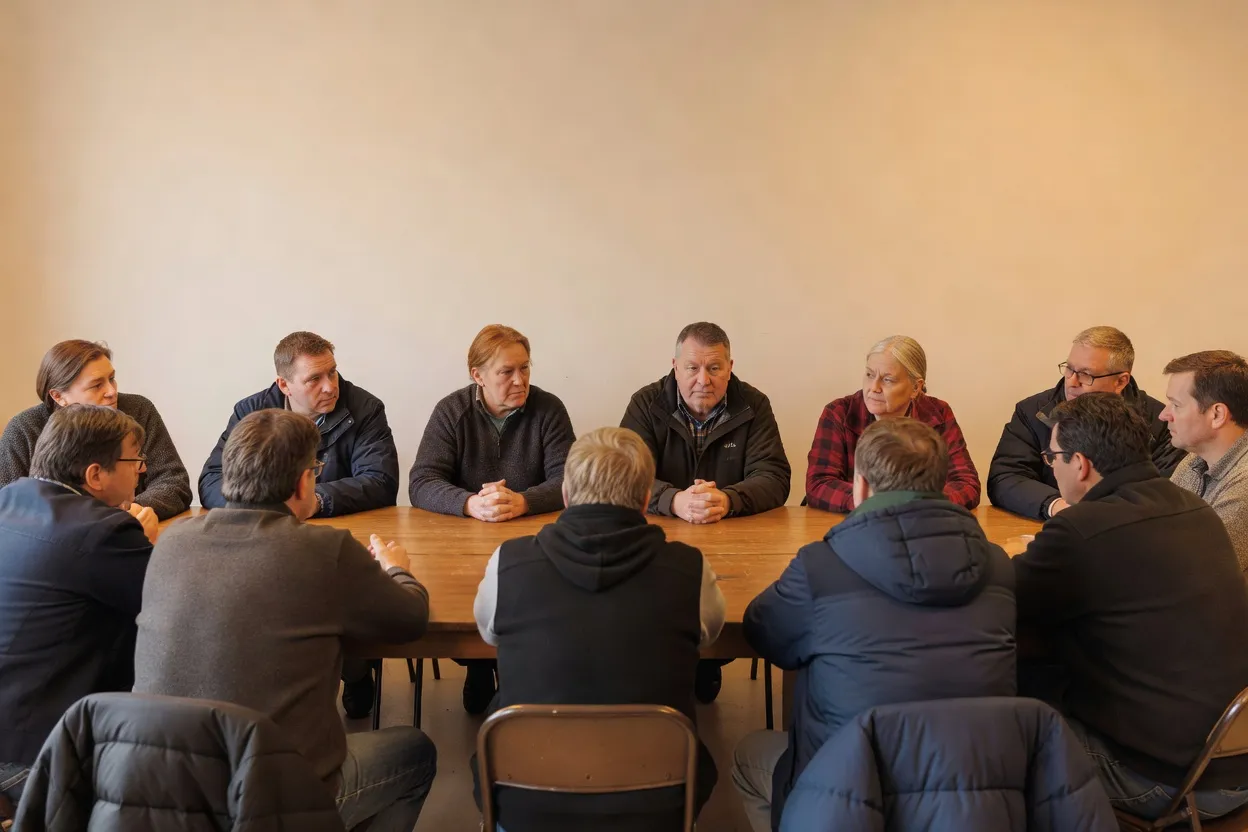
Successful digital consultation therefore does not simply mean publishing an online survey. It must be announced in advance, explained in accessible language, and supported by several ways to participate. Residents should be able to respond according to their preferences: a form, a phone call, a local meeting, a public session, a written message, or an exchange with a resource person.
The main challenges of remote digital governance include:
- connection quality that can vary from one community to another and depending on conditions;
- the difficulty of reaching residents who do not regularly check digital platforms;
- fatigue caused by virtual meetings and overly frequent consultations;
- confidentiality issues when transmitting personal information;
- the need to provide clear information in the appropriate languages;
- the risk that the most connected residents are overrepresented in consultations.
To limit these risks, administrations can adopt a logic of “digital complemented by boots on the ground.” For example, a draft bylaw or infrastructure project can be presented on a web page, relayed through community channels, discussed at a local session, and followed by a comment period accessible through various means.
This approach is especially important when decisions affect land use, essential services, mobility, recreation, the environment, or community development priorities. Digital technology speeds up the flow of information, but it does not replace the quality of dialogue. These same issues of trust and support appear in digital access to government services in Nunavik, where a liaison officer plays a similar bridging role between residents and online procedures.
Transparency, Access to Information and Digital Citizen Participation
Municipal transparency is a lever for trust. For residents of Nunavik and Eeyou Istchee, this means being able to easily find practical information: the date of a meeting, the local office’s contact details, permit procedures, notices of work, service calendars, applicable bylaws, or a recent decision.
A transparent administration does not need to publish complex documents without context. It can create a clear page grouping notices, bylaws, meetings, forms and useful contact information. When minutes or resolutions are published, a short summary in plain language can help residents understand the decisions made.
Privacy protection must accompany this openness. Local administrations must distinguish public information from personal information, confidential files, and data related to health, safety or family situations. Digitization increases the need for solid practices: limited access to files, strong passwords, backups, staff training, and incident procedures.
Digital citizen participation can take several useful forms:
- targeted surveys on schedules, recreation, budget priorities or local projects;
- a digital suggestion box, with a response or visible follow-up where possible;
- webcasts or remote participation options for certain public meetings;
- newsletters and alerts for important notices;
- shared calendars for activities, service closures and consultation periods;
- simplified tracking dashboards for certain community projects.
The goal is not to digitize everything. The goal is to make municipal services and democratic life more accessible, while maintaining strong human contact. In 2026, the best northern digital municipal governance is the kind that combines suitable tools, transparency, security, relevant languages and local presence. The Niskamoon Corporation in Eeyou Istchee is a good illustration of this type of regional coordination in service of communities, a model that digital municipal administrations across the territory can draw inspiration from.
Frequently asked questions
What role does the Kativik Regional Government play in Nunavik's digital governance?
The KRG holds regional responsibilities in Nunavik and can contribute to coordination, technical support, training and the sharing of practices among the northern villages. It does not replace local administrations, but it can strengthen their capacity to roll out digital services suited to the territory.
Does the Cree Nation Government directly manage all municipal services in Eeyou Istchee?
No. The Cree Nation Government of Eeyou Istchee holds a governance and representation role at the scale of the Cree Nation and the territory. Local services also fall under the structures and administrations specific to each community. Regional coordination can, however, support shared digital projects.
Can a municipal permit be requested online in every northern community?
Not necessarily. What is offered varies according to the tools and capacity of each administration. Some procedures may be available through a web form, email or PDF, while others still require an in-person visit, a phone call, or contact through a municipal agent.
How can remote citizen consultation be made inclusive?
Several ways to participate should be offered: a local meeting, phone contact, an online form, printed documents, information shared through community channels, and support from a resource person. This approach avoids excluding residents who are less connected or less comfortable with digital tools.
What municipal information should be easy to find online?
Service contact details, opening hours, public notices, calendars, relevant bylaws, permit procedures, payment methods, meeting dates, and links to useful government procedures should be quickly accessible, in a simple format compatible with mobile phones.