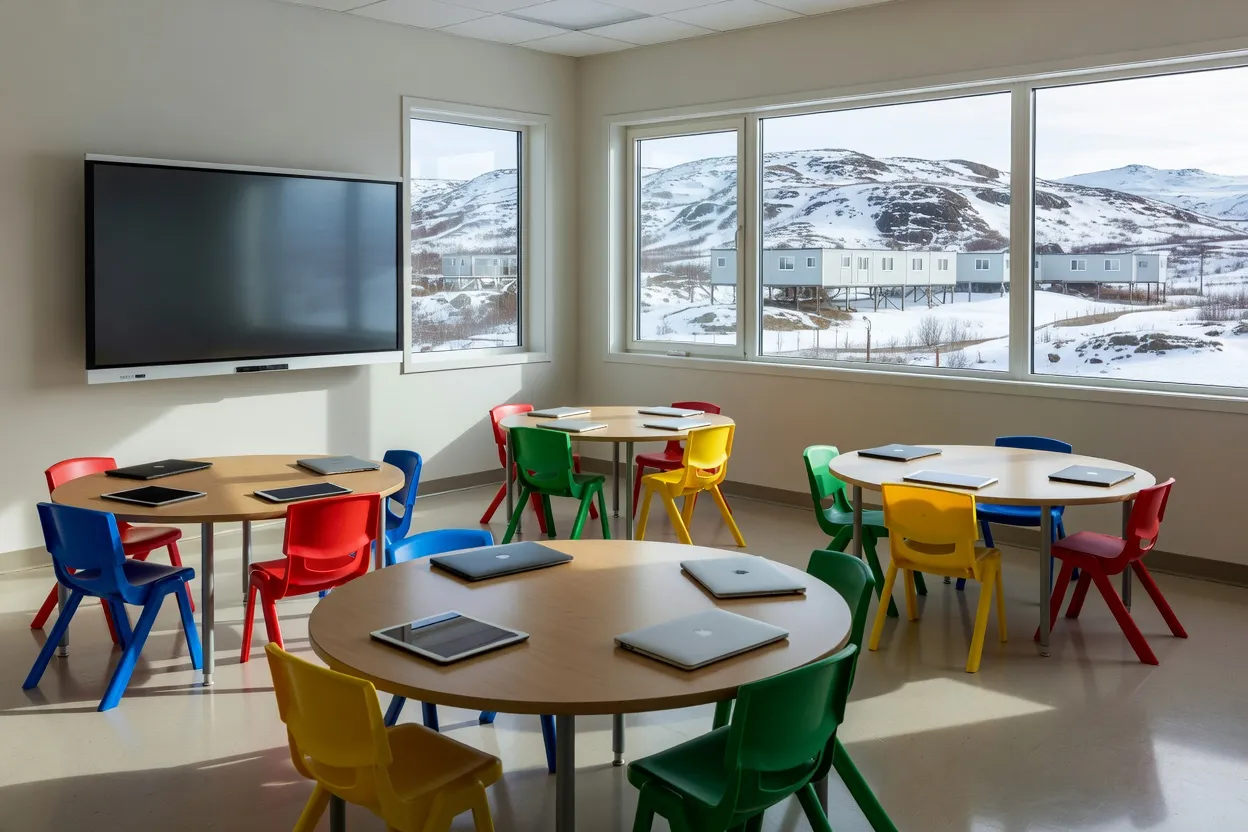
In Nunavik, digital literacy at school depends on three things: a school network serving fourteen scattered communities, computer equipment to acquire, and an internet connection that has long been limited. For broader cultural context, our lexicon of 30 essential Nunavik and Eeyou Istchee terms offers useful reference points, as does our feature on Goose Break goose hunting traditions.
A school network for fourteen communities
The Kativik Ilisarniliriniq school board serves Nunavik’s fourteen communities: Quaqtaq, Kuujjuaraapik, Umiujaq, Inukjuak, Puvirnituq, Akulivik, Salluit, Kangiqsujuaq, Kangirsuk, Aupaluk, Tasiujaq, Kangiqsualujjuaq, Kuujjuaq and Ivujivik. Instruction is given in Inuktitut, French and English, from kindergarten to Secondary 5.
This linguistic richness (three languages of instruction) directly shapes technology education: digital tools must work with Inuktitut syllabics as well as French and English.
Laptops for secondary students
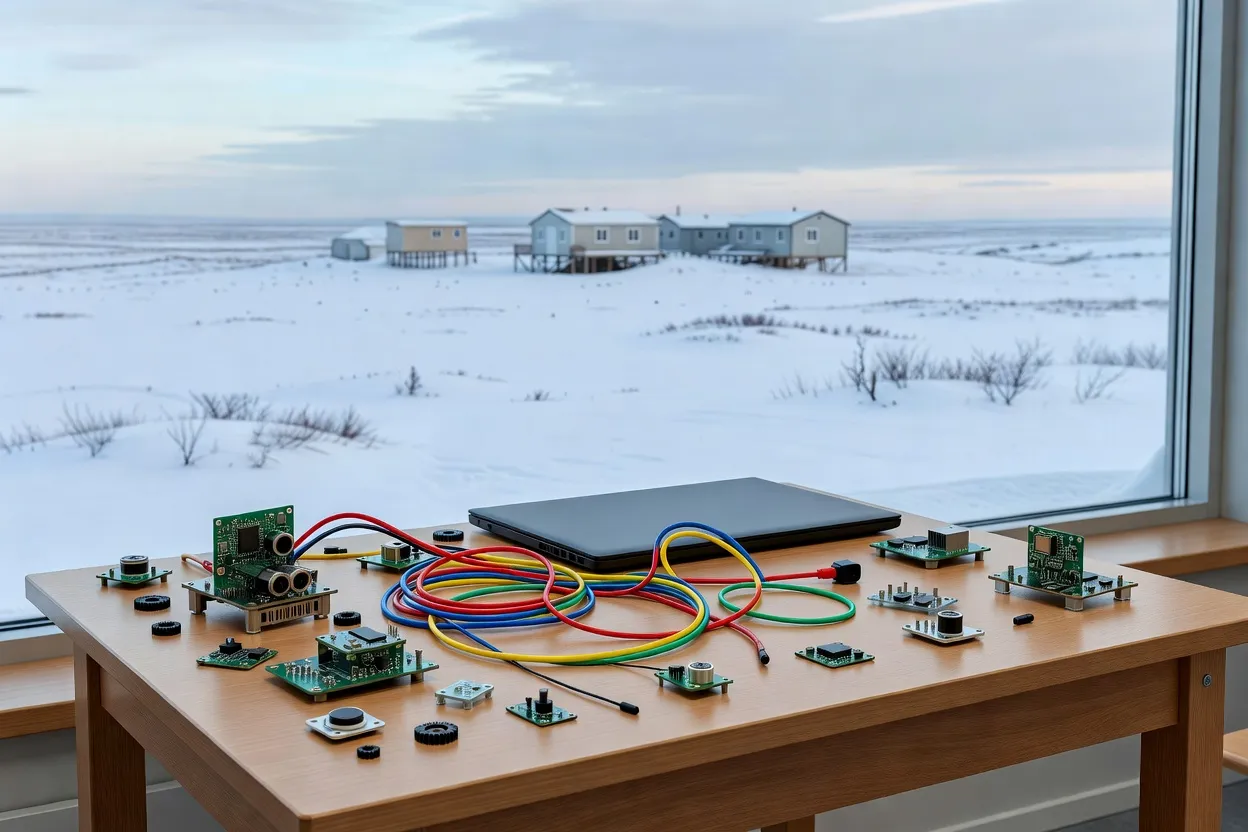
In 2020, during the COVID-19 pandemic, the school board bought 1,400 laptops, first for Secondary 3, 4 and 5 students, to prepare for possible learning from home in 2021. About 3,200 students were enrolled in the network at the time. The board hoped to equip Grade 5 and 6 students next.
Connectivity, a central issue
At the time of the purchase, Nunatsiaq News described a cripplingly slow internet connection should classes move online, and the school board’s council of commissioners passed a resolution urging the Quebec government to quickly fund telecommunications upgrades in Nunavik. Without enough bandwidth, computers alone cannot support online learning.
Since then, fibre optics have advanced along the Hudson coast:
| Stage | Connected communities |
|---|---|
| First phase (2022) | Kuujjuaraapik, Umiujaq, Inukjuak, Puvirnituq |
| February 2024 | Akulivik, Ivujivik, Salluit |
As of August 2025, according to Nunatsiaq News, the seven Ungava coast villages (from Kangiqsujuaq to Kangiqsualujjuaq) were still waiting to be connected: the final phase (EAUFON-3) was expected to start in August 2027 and finish in 2028, and the Kativik Regional Government had installed Starlink terminals as an interim solution.
This improvement in digital access also benefits families: it eases access to online government services for Nunavik residents.
Digital skills for local projects
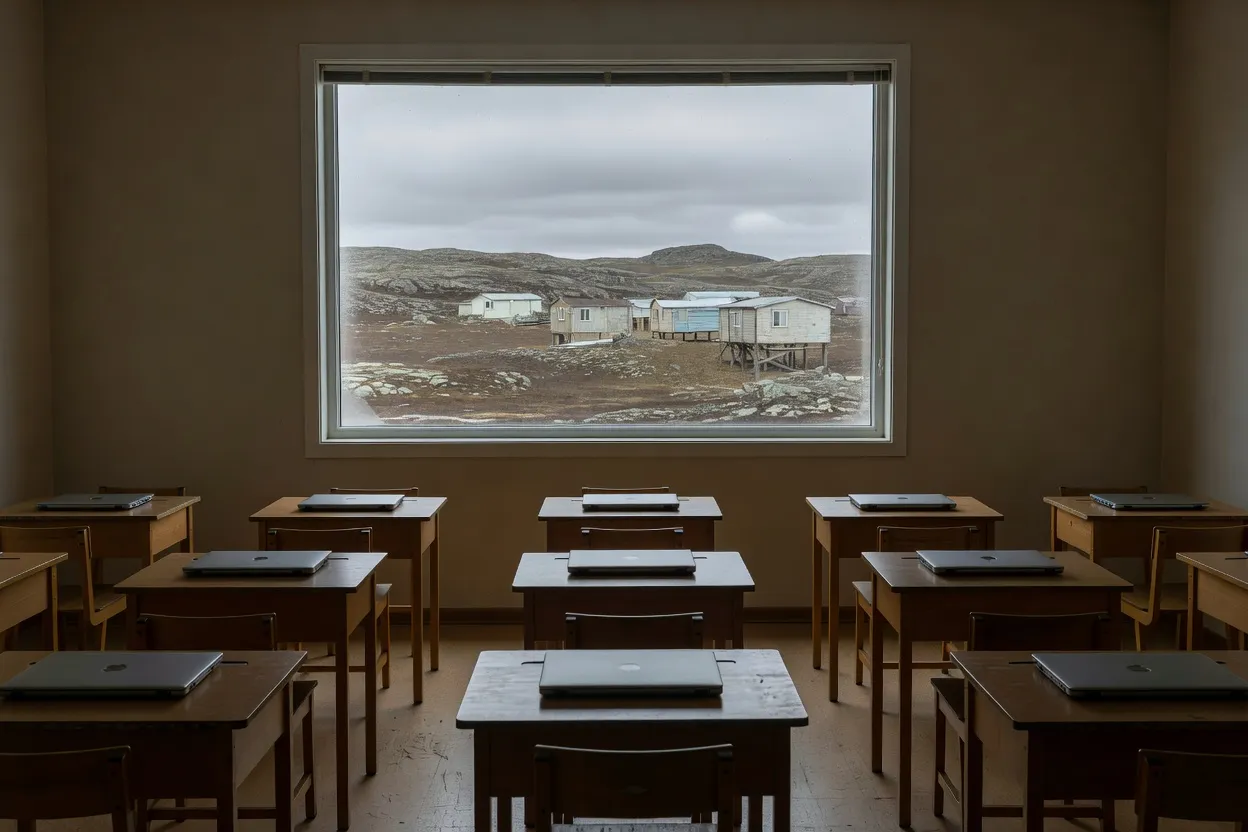
Digital literacy also opens the door to post-secondary vocational and technical studies and to projects such as website development for First Nations organizations. To explore connectivity issues further, our article on telework in Nunavik from Salluit shows how digital access is also transforming the economic life of communities.
For accommodation services adapted to the realities of remote regions of Quebec, Soleica Chalets offers lodging solutions designed for these territories.
Sources
- Kativik Ilisarniliriniq, Nunavik school board
- Nunatsiaq News: Nunavik school board equips students with laptops, but bandwidth still a barrier
- Nunatsiaq News: Nunavik’s Hudson coast communities get fibre optic connection
- Nunatsiaq News: Nunavik fibre optic project entering final stage (KRG)
Frequently asked questions
How many Nunavik communities does the Kativik school board serve?
Kativik Ilisarniliriniq, the Nunavik school board, serves the region's 14 communities. Instruction is offered in Inuktitut, French and English, from kindergarten to Secondary 5.
Do Nunavik students have laptops?
In 2020, during the COVID-19 pandemic, the school board bought 1,400 laptops, first for Secondary 3, 4 and 5 students, to prepare for possible learning from home in 2021. It then hoped to equip Grade 5 and 6 students.
Is internet connectivity an obstacle to digital schooling in Nunavik?
Yes. When the laptops were purchased, Nunatsiaq News described a cripplingly slow connection should classes move online, and the school board's council of commissioners passed a resolution urging the Quebec government to quickly fund telecommunications upgrades in Nunavik. Since then, fibre optics have reached the Hudson coast communities: four in 2022, then three more in February 2024. As of August 2025, the Ungava coast villages were not yet connected.