
Waskaganish is a Cree village located at the mouth of the Rupert River, on James Bay, in Nunavik, Quebec. Its name, ᐙᔅᑳᐦᐄᑲᓂᔥ (wâskâhîkaniš), means “little house” and recalls the former Rupert House post. The place holds a significant place in the history of the fur trade and remains connected to the Rupert River, canoe routes and a living Cree heritage.
The meaning of the name
The name Waskaganish is written ᐙᔅᑳᐦᐄᑲᓂᔥ in syllabics and is pronounced wâskâhîkaniš. It means “little house.” This name recalls the former post known as Rupert House, Fort Charles and Fort Rupert.
The meaning of the name is directly associated with the history of the place. At the mouth of the Rupert River, the post served as a meeting point in a territory travelled by Cree hunters and connected to the interior by waterways. The “little house” thus evokes a specific historic place, whose different names reflect the successive periods of its occupation.
- Waskaganish: ᐙᔅᑳᐦᐄᑲᓂᔥ
- Pronunciation: wâskâhîkaniš
- Meaning: “little house”
- Historical reference: the former Rupert House post
The territory before the village
The territory of Waskaganish is located at the mouth of the Rupert River, on James Bay. The river long served as a route for travel and communication between the interior and the coastal posts. Canoe brigades travelled along it, connecting inland territories with coastal settlements.
Cree hunters were present in the region when the Nonsuch dropped anchor at the mouth of the Rupert. Between 1668 and 1669, a first successful fur trade took place with them. This event gave rise to the first Hudson’s Bay Company trading post in the region, two years before the Company’s official creation in 1670.
The Rupert River has remained a central part of local history. It recalls canoe travel, fur trading and the connections between James Bay and the interior. Even today, it is associated with landscapes, fishing, canoeing and the historic routes that cross the territory.
- The Rupert River joins James Bay at Waskaganish.
- Canoe brigades connected the interior with the coastal posts.
- Fur trading with Cree hunters marked the beginnings of the post.
- The river remains a historic route and a place for canoeing, fishing and discovering the territory.
The creation of the village
The history of Waskaganish is closely linked to the former trading post established at the mouth of the Rupert River. On 29 September 1668, the Nonsuch, commanded by Zachariah Gillam and guided by Médard Chouart des Groseilliers, dropped anchor there. The first successful fur trade with Cree hunters took place during the period from 1668 to 1669.
The post had several names: Fort Charles, Rupert House and Fort Rupert. It underwent different changes of control over the course of its history. In 1686, the French seized the post and named it Fort-Saint-Jacques. The Treaty of Utrecht subsequently resulted in its return to Great Britain in 1713. The Hudson’s Bay Company reoccupied or re-established it in 1776 and 1777.
Thanks to the Rupert River and canoe brigades, the post became a major trading centre until the beginning of the XXe century. Its location, where the river meets James Bay, encouraged trade and travel across a vast network of waterways.
The present-day village still bears a name that recalls this history. Waskaganish thus continues the legacy of the former Rupert House post, the Rupert River and the surrounding Cree territory.
The village timeline
The timeline of Waskaganish highlights the enduring importance of the Rupert River, the trading post and the community. From the first fur trades to the incorporation of the Cree village municipality, several milestones define the history of the place.
| Year | Event |
|---|---|
| 1668 | On 29 September, the Nonsuch drops anchor at the mouth of the Rupert River. |
| 1668-1669 | First successful fur trade with Cree hunters; origin of the first Hudson’s Bay Company trading post in the region. |
| 1670 | Official creation of the Hudson’s Bay Company, two years after the arrival of the Nonsuch. |
| 1686 | The French seize the post and name it Fort-Saint-Jacques. |
| 1713 | The Treaty of Utrecht returns the post to Great Britain. |
| 1776-1777 | The Hudson’s Bay Company reoccupies or re-establishes the post. |
| 1975 | The James Bay and Northern Quebec Agreement is signed on 11 November. |
| 1978 | The Cree Village Municipality of Waskaganish is incorporated on 28 June. |
| 2018 | Waskaganish celebrates the 350th anniversary of the arrival of the Nonsuch. |
| 2025 | A canoe expedition retracing a trading route of approximately 1 200 km between Tadoussac and Waskaganish arrives in the village on 4 September. |
| 2026 | The annual gathering of the Cree Native Arts and Crafts Association is held in Waskaganish from 1er to 3 September. |
The village today
Waskaganish has 2 536 residents according to the 2021 population. The community has been incorporated as the Cree Village Municipality of Waskaganish since 1978. During the Cree Native Arts and Crafts Association gathering held in the village in September 2026, Greta Whiskeychan Cheechoo is mentioned as Chief.
The village is connected by a gravel road to the James Bay Road; this access is seasonal and subject to changing conditions. YKQ airport also provides a connection with the community. In the village, Waskaganish School is part of the Cree School Board, while the Waskaganish Miyupimaatisiiun Community Centre is associated with the CBHSSJB.
The territory also draws attention for the Rupert River, James Bay, the historic site of Fort Rupert or Rupert House, its living Cree heritage and historic canoe routes. The arrival in 2025 of a canoe expedition linking Tadoussac to Waskaganish recalled the continuing importance of water routes in the history of the place.
- Population in 2021: 2 536 residents.
- Municipal status: Cree Village Municipality of Waskaganish.
- School: Waskaganish School.
- Health: Waskaganish Miyupimaatisiiun Community Centre.
- Access: gravel road to the James Bay Road and YKQ airport.
- Territorial landmarks: Rupert River, James Bay and the historic site of Fort Rupert or Rupert House.
Notable Facts and People
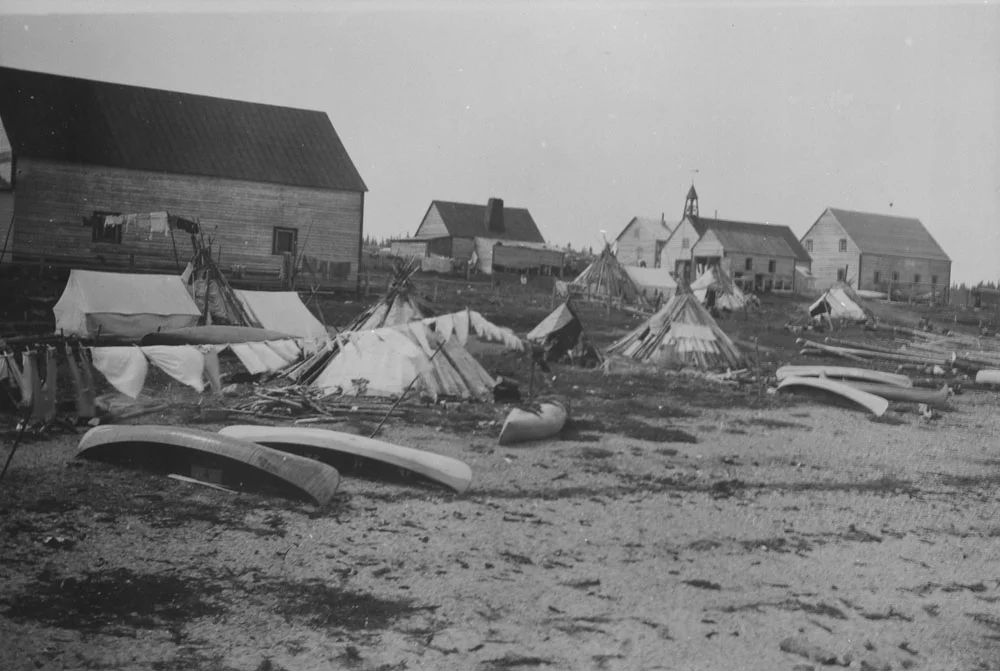
Waskaganish holds a unique place in Canadian history: it was here that the Nonsuch, commanded by Zachariah Gillam and guided by Médard Chouart des Groseilliers, anchored on September 29, 1668. The following winter, the traders concluded their first fur exchanges with Cree hunters — the origin of the Hudson’s Bay Company’s first trading post in the region, two years before the Company was officially chartered. The post, variously called Fort Charles, Rupert House or Fort Rupert, was held by the French from 1686 to 1713 (Fort-Saint-Jacques), then restored by the Treaty of Utrecht and re-established by the Company in 1776-1777.
In 2018, the community celebrated the 350th anniversary of the Nonsuch’s arrival. Among recent events: the arrival, on September 4, 2025, of a canoe expedition retracing an old trading route of some 1,200 kilometres between Tadoussac and Waskaganish, and the hosting, from September 1 to 3, 2026, of the Cree Native Arts and Crafts Association’s annual assembly.
Local Services and Institutions
Nation office and municipality. The community is governed by the Cree Nation of Waskaganish The current chief is Greta Cheechoo. The Cree Village Municipality of Waskaganish has its office at 70 Waskaganish Road, P.O. Box 60, Waskaganish QC J0M 1R0; tel.: 819-895-8650.
School. Elementary and secondary education is provided by the Cree School Board: Waskaganish School.
Health. Health services are operated by the Cree Board of Health and Social Services of James Bay (CBHSSJB): Waskaganish Miyupimaatisiiun Community Centre.
Access and Transportation
Waskaganish Airport (codes YKQ / CYKQ; coordinates: 51.4733, −78.7583) has a gravel runway (06/24) of 3,511 ft / 1,070 m. Air Creebec serves the community, notably to other James Bay villages, Val-d’Or and Montreal. A gravel road also links Waskaganish to the James Bay network.
Tourism and Attractions
The village and its territory offer several attractions:
- the mouth of the Rupert River: coastal landscapes, fishing, canoeing and the historic Cree travel corridor
- the Fort Rupert / Rupert House historic site, tied to the Nonsuch’s arrival in 1668
- historic canoe routes on the Rupert River
- living Cree heritage: crafts, storytelling, fishing and hunting practices
To go further
- Eeyou Istchee and James Bay: landmarks for visiting Cree territory
- Community tourism in Eeyou Istchee: Cree villages and etiquette
- All Cree villages of Eeyou Istchee
Frequently asked questions
What does Waskaganish mean?
Waskaganish is written ᐙᔅᑳᐦᐄᑲᓂᔥ (wâskâhîkaniš) and means “little house” in Cree, probably in memory of the Rupert House post.
Why is Waskaganish famous in Canadian history?
The Nonsuch anchored there on September 29, 1668, and the first fur exchanges of the winter of 1668-1669 originated the Hudson’s Bay Company’s first trading post in the region.
What is the population of Waskaganish?
The 2021 census counted 2,536 residents in Waskaganish.
How do you get to Waskaganish?
By plane (YKQ airport, Air Creebec) or by the gravel road linking the village to the James Bay network.
What are the school and health centre of Waskaganish?
Waskaganish School is operated by the Cree School Board; health services are provided by the Cree Board of Health (CBHSSJB) through the Waskaganish Miyupimaatisiiun Community Centre.