Eastmain is a Cree community located on the east coast of James Bay, in Quebec, near the Eastmain River. Its name comes from the designation “East Main,” used by the Hudson’s Bay Company to refer to the region east of James Bay. In Cree, ᐄᔅᒣᐃᓐ, Îsmein, adapts this name, while the traditional name ᐙᐸᓅᑖᐤ, Wâpanûtâw, means “lands east of James Bay.”
The meaning of the name
The name Eastmain is linked to the geography of James Bay and the history of trade in this region. The English designation “East Main” was used by the Hudson’s Bay Company to refer to the territory east of James Bay. It later gave its name to the trading post, the East Main district and the modern community that developed around this post.
In Cree, Eastmain is written ᐄᔅᒣᐃᓐ and pronounced Îsmein. It is an adaptation of “East Main.” This name coexists with the traditional Cree name ᐙᐸᓅᑖᐤ, transliterated as Wâpanûtâw, which means “lands east of James Bay.”
- Eastmain / East Main: a designation associated with the region east of James Bay.
- ᐄᔅᒣᐃᓐ / Îsmein: Cree adaptation of the name East Main.
- ᐙᐸᓅᑖᐤ / Wâpanûtâw: “lands east of James Bay.”
All of these names express a direct connection with the coastal territory of James Bay. They place the community in a space shaped by the Eastmain River, its mouth and travel across the surrounding waters and lands.
The territory before the village
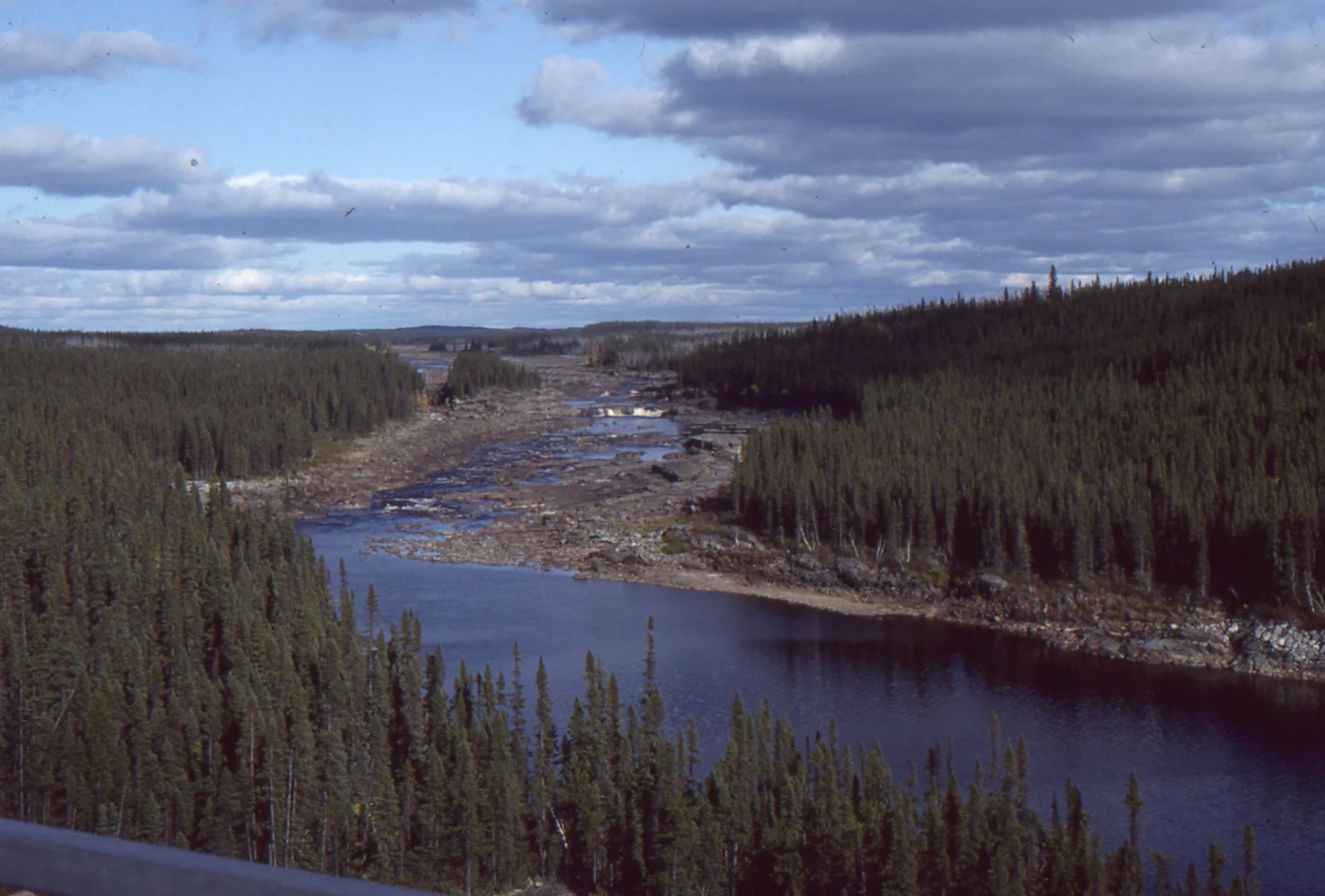
The Eastmain territory is located on the east coast of James Bay, near the mouth of the Eastmain River. The river, James Bay and the coastal landscapes remain important landmarks today for outdoor activities, fishing, observation and Cree cultural tourism.
In the 1670s, Charles Bayly may have reached the area from Rupert House. After the destruction of Rupert House in 1686, Hudson’s Bay Company ships continued to visit the region. This maritime and commercial presence helped establish the area within the networks associated with James Bay.
The territory is also associated with travel practices and outdoor activities. The Eastmain River and its mouth support canoeing, fishing and observation experiences, while James Bay, snowmobile routes and local heritage contribute to the community’s identity.
- The Eastmain River and its mouth offer coastal landscapes and opportunities for fishing and observation.
- James Bay holds a central place in the geography and name of the community.
- Canoeing and snowmobiling are among the outdoor activities associated with the territory.
- The heritage of East Main House recalls the history of the trading post.
The creation of the village
The modern community of Eastmain developed around a trading post. A permanent post, called East Main House, was built by Joseph Myatt in 1723-1724. This post controlled the East Main district, whose name echoed the designation used for the region east of James Bay.
The creation of East Main House provided a lasting anchor for local history. The post was situated in a region already visited by Hudson’s Bay Company ships after 1686. Around this site, the modern community developed, in continuity with the territory of James Bay and the Eastmain River.
Over time, Eastmain became a Cree village municipality. Its municipal incorporation, on 28 June 1978, took place after the signing of the James Bay and Northern Quebec Agreement, on 11 November 1975. These milestones mark the community’s administrative development.
The village timeline
The history of Eastmain includes ships visiting the area, the establishment of a permanent post, the development of the community around this post and major changes affecting the Eastmain River. The following timeline brings together the main available milestones.
| Year | Event |
|---|---|
| 1670s | Charles Bayly may have reached the area from Rupert House. |
| 1686 | After the destruction of Rupert House, Hudson’s Bay Company ships continued to visit the region. |
| 1723-1724 | Joseph Myatt built a permanent post, East Main House, which controlled the East Main district. |
| November 11, 1975 | Signing of the James Bay and Northern Quebec Agreement. |
| June 28, 1978 | Incorporation of the Cree Village Municipality of Eastmain. |
| 1980 | Diversion of 90 % of the flow of the Eastmain River toward the La Grande River as part of the James Bay project. |
| 2016 | The population was 866 residents. |
| 2021 | The population reached 924 residents. |
In 1980, the diversion of 90 % of the flow of the Eastmain River toward the La Grande River represented a major transformation of the territory. Nevertheless, the river remains a prominent feature of the local landscape, access to James Bay and activities associated with outdoor recreation and tourism.
The village today
Eastmain had 924 residents in 2021, compared with 866 residents in 2016. The community is incorporated as the Cree Village Municipality of Eastmain. Its chief is Raymond Shanoush.
The village is accessible by air through Eastmain River Airport, identified by the code ZEM. A gravel road also connects it to the James Bay road network; the trip takes about one hour. These links support travel to and from the community.
Local services include Wabannutao Eeyou School and the Eastmain Miyupimaatisiiun Community Centre. The community also hosts tourism and outdoor activities, particularly around the Eastmain River, its mouth, James Bay and the heritage of East Main House.
- Population: 924 residents in 2021.
- Governance: Cree Village Municipality of Eastmain; chief Raymond Shanoush.
- Access: air service through Eastmain River Airport and a gravel road to the James Bay road network.
- Education: Wabannutao Eeyou School.
- Health: Eastmain Miyupimaatisiiun Community Centre.
From October 20 to 22, Eastmain hosted a gathering marking the 25th anniversary of the Cree Outfitting and Tourism Association, under the theme Future Focused; Culture Driven. This gathering reflects the vitality of tourism and cultural initiatives connected to the territory, James Bay and the community.
Notable Facts and People
Eastmain owes its name to the Hudson’s Bay Company’s historic name for the region east of James Bay (“East Main”). The official Cree name is written ᐄᔅᒣᐡᓐ (Îsmein), and the traditional name ᐙᐸᓅᑖᐤ (Wâpanûtâw) translates as “lands east of James Bay.” The permanent East Main House post was built by Joseph Myatt in 1723-1724; it controlled the Company’s trade across the East Main district.
The community was directly marked by the James Bay Project: in 1980, the diversion of 90% of the Eastmain River’s flow into La Grande River profoundly transformed the territory. Eastmain also hosted, from October 20 to 22, the 25th-anniversary gathering of the Cree Outfitting and Tourism Association, under the theme “Future Focused; Culture Driven.”
Local Services and Institutions
Nation office and municipality. The community is governed by the Cree Nation of Eastmain The current chief is Raymond Shanoush. The Cree Village Municipality of Eastmain has its office at P.O. Box 90, Eastmain QC J0M 1W0; tel.: 819-977-0211.
School. Elementary and secondary education is provided by the Cree School Board: Wabannutao Eeyou School.
Health. Health services are operated by the Cree Board of Health and Social Services of James Bay (CBHSSJB): Eastmain Miyupimaatisiiun Community Centre.
Access and Transportation
Eastmain River Airport (codes ZEM / CZEM; coordinates: 52.2264, −78.5225) has a gravel runway (02/20) of 3,512 ft / 1,070 m. Air Creebec provides scheduled service. A gravel road also links Eastmain to the James Bay network (about one hour’s drive).
Tourism and Attractions
The village and its territory offer several attractions:
- the Eastmain River and its mouth: coastal landscapes, fishing and wildlife viewing
- James Bay and its vast subarctic landscapes
- the heritage of East Main House and the fur trade
- Cree cultural tourism: crafts, cuisine, storytelling and traditional practices
To go further
- Eeyou Istchee and James Bay: landmarks for visiting Cree territory
- Community tourism in Eeyou Istchee: Cree villages and etiquette
- All Cree villages of Eeyou Istchee
Frequently asked questions
What does Eastmain mean?
Eastmain comes from “East Main,” the Hudson’s Bay Company’s name for the region; the Cree name ᐄᔅᒣᐡᓐ (Îsmein) adapts it, and ᐙᐸᓅᑖᐤ (Wâpanûtâw) means “lands east of James Bay.”
When was East Main House built?
Joseph Myatt built a permanent post there in 1723-1724, which controlled the Company’s East Main district.
What is the population of Eastmain?
The 2021 census counted 924 residents in Eastmain.
How do you get to Eastmain?
By plane (ZEM airport, Air Creebec) or by the gravel road linking the village to the James Bay network.
What local services does Eastmain have?
Wabannutao Eeyou School (Cree School Board) and the Eastmain Miyupimaatisiiun Community Centre (CBHSSJB).