The James Bay agreements enabled the Inuit of Nunavik to negotiate territorial rights, compensation and lasting regional institutions. The James Bay and Northern Quebec Agreement, signed in 1975 and brought into force in 1977, established a recognized framework for regional administration, education, health, environmental management and collective development. It also stands as a major milestone in modern land claims agreements in Canada.
The James Bay Project and the opening of negotiations
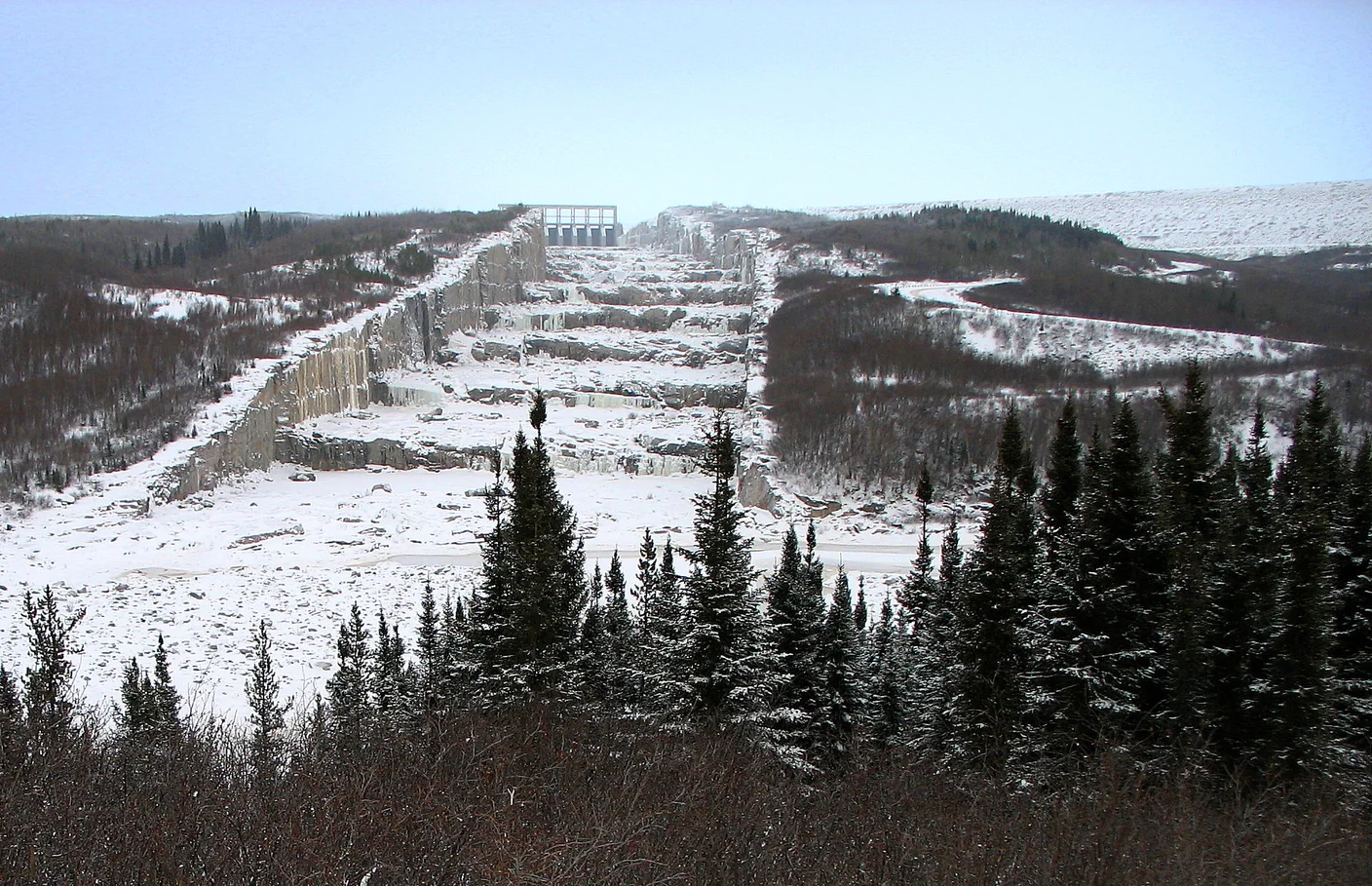
In April 1971, Premier Robert Bourassa announced the James Bay Project, a series of hydroelectric developments. The Société de développement de la Baie James was created that same year. This project quickly transformed the political and territorial context of Northern Quebec, where the Cree and Inuit carried out hunting, fishing, trapping and harvesting activities.
The response of Indigenous organizations led to a decisive legal step. On 15 November 1973, the Quebec Superior Court, presided over by Justice Albert Malouf, granted an injunction to the Association des Indiens du Québec. This decision temporarily halted the work. One week later, the Court of Appeal suspended the injunction. However, the obligation to negotiate remained.
This sequence placed Cree and Inuit organizations at the heart of negotiations concerning land, harvesting rights, economic activities and the institutions that would shape the future of Northern Quebec. It also demonstrated the ability of Indigenous representatives to secure recognition of the need for a negotiated framework.
- The James Bay Project was announced in April 1971.
- The Société de développement de la Baie James was created in 1971.
- On 15 November 1973, an injunction temporarily suspended the work.
- The suspension of the injunction by the Court of Appeal did not end the obligation to negotiate.
An Inuit delegation engaged in the negotiations
On 15 November 1974, an agreement in principle was signed between Canada, Quebec, Hydro-Québec, the Grand Council of the Crees and the Association des Inuit du Nouveau-Québec. The Grand Council of the Crees was then chaired by Billy Diamond. The Association des Inuit du Nouveau-Québec, also known as AINQ or NQIA, represented the Inuit in this process.
The Inuit delegation included Zebedee Nungak, Charlie Watt de Kuujjuaq, Johnny Watt, Lazarusie Epoo, Tommy Cain and Jacob Oweetaltuk. Their participation placed Inuit interests within the discussions that would lead to the James Bay and Northern Quebec Agreement. The issues were not limited to financial compensation: they included land, harvesting activities, public services, regional institutions and mechanisms for managing the territory.
Zebedee Nungak, a member of the Inuit delegation, summarized this experience by speaking of “Wrestling with colonialism on steroids” in 2017. In the history of the negotiations, this wording recalls the political scope of the process and the sustained commitment required of Inuit representatives.
The 1974 agreement in principle thus prepared the way for a more comprehensive agreement. The parties negotiated a regime recognizing categories of land, harvesting rights and the creation of bodies responsible for areas essential to collective life in Nunavik.
The 1975 Agreement: a modern land claims agreement
On 11 November 1975, Canada, Quebec, Hydro-Québec, the Grand Council of the Crees and the Association des Inuit du Nouveau-Québec signed the James Bay and Northern Quebec Agreement, often called the CBJNQ. Quebec was then governed by the Bourassa government. The Agreement was the first modern comprehensive land claims agreement in Canada.
The CBJNQ came into force in 1977. It established a framework of rights, compensation, administration and management that transformed the role of Cree and Inuit organizations in decisions affecting their territories. Its importance lies as much in its territorial provisions as in the institutions that took shape following the agreement.
| Stage | Event | Significance |
|---|---|---|
| April 1971 | Announcement of the James Bay Project and creation of the Société de développement de la Baie James | Beginning of a context that led to territorial negotiations. |
| 15 November 1973 | Injunction granted by the Quebec Superior Court | Temporary halt to the work and continuation of the obligation to negotiate. |
| 15 November 1974 | Signing of an agreement in principle | Preparatory framework between the governments, Hydro-Québec and Cree and Inuit organizations. |
| 11 November 1975 | Signing of the CBJNQ | First modern comprehensive land claims agreement in Canada. |
| 1977 | Entry into force of the CBJNQ | Implementation of the negotiated framework. |
It is important to distinguish the signing of the Agreement from the period in which the institutions arising from it were created. René Lévesque was not premier at the time of the 1975 signing: he was elected on 25 November 1976. It was under his government, from 1976 to 1985, that several institutions provided for or established in the wake of the Agreement were put in place.
Land and harvesting rights structured by categories
The Agreement organizes land into three categories. This structure governs the exclusive use of certain lands, priority hunting, fishing and trapping rights on other territories, as well as harvesting rights in a larger area where use is shared.
For the Cree, Category I lands cover 5,544 km². For the Inuit, they cover 8,151 km². These lands are associated with exclusive use. Category II lands recognize priority hunting, fishing and trapping rights: 69,995 km² for the Cree and 81,596 km² for the Inuit. Category III lands cover approximately 1 million km² and are associated with harvesting rights in a context of shared use.
- Category I: lands reserved for exclusive use, namely 5,544 km² for the Cree and 8,151 km² for the Inuit.
- Category II: lands where hunting, fishing and trapping rights are prioritized, namely 69,995 km² for the Cree and 81,596 km² for the Inuit.
- Category III: a territory of approximately 1 million km² where harvesting rights are exercised within a framework of shared use.
This territorial organization places harvesting rights at the centre of the regime established by the Agreement. It connects territorial rights with management mechanisms and regional institutions called upon to take action on environmental, wildlife, administrative and social matters.
Compensation intended for collective development
The CBJNQ provides for total compensation of approximately 225 million dollars in 1975 dollars, paid by the governments of Quebec and Canada as well as Hydro-Québec. These funds are managed by Indigenous development corporations, including Makivik for the Inuit of Nunavik.
The federal breakdown indicates approximately 135 million dollars for the Cree and approximately 90 million dollars for the Inuit. Some government presentations indicate 168.8 million dollars for the Cree and 91 million dollars for the Inuit; the total to retain remains approximately 225 million dollars.
The compensation forms part of a broader whole than the payment of funds. It accompanies the creation of collective development tools, the establishment of regional institutions and the exercise of greater capacity for action in economic and territorial matters. The Société Makivik became one of these major tools for the Inuit of Nunavik.
Establishing Nunavik institutions
Beginning in 1978, the institutions associated with the Agreement took shape. The Loi sur les villages nordiques et l’Administration régionale Kativik was adopted in 1978. It established the northern villages and the Administration régionale Kativik, also known as KRG. This regional administration is a central element of Nunavik’s public organization.
The Société Makivik was incorporated on 28 June 1978. It became an important organization for managing funds related to the Agreement, development and negotiations conducted on behalf of the Inuit of Nunavik. Makivik also participates in businesses and negotiations with Raglan/Glencore and Hydro-Québec.
The Kativik school board, Kativik Ilisarniliriniq, began its activities in 1978. Its establishment placed education among the regional institutions arising from this period. Health structures, including Kativik Health, as well as environmental management bodies, including KEQC and KEAC, also form part of the institutional framework established.
- The northern villages and the Administration régionale Kativik were established by a 1978 law.
- The Société Makivik was incorporated on 28 June 1978.
- Kativik Ilisarniliriniq began its activities in 1978.
- Health structures and environmental bodies complete the regional framework.
These institutions give concrete continuity to the 1975 negotiations. They make it possible to address, at the regional level, responsibilities that directly affect collective life, services, development and territorial management.
The Northeastern Quebec Agreement and constitutional protection
On 31 January 1978, the Northeastern Quebec Agreement was signed. It concerns the Naskapis of Quebec, who then joined the CBJNQ regime. The agreement provides for compensation of 9 million dollars. The Loi sur les Cris et les Naskapis du Québec was adopted in 1984.
It is important to distinguish this agreement from the James Bay and Northern Quebec Agreement: the Northeastern Quebec Agreement concerns the Naskapis, not the Inuit of Nunavik. This clarification makes it possible to recognize the distinct scope of each agreement and the separate institutional paths of the peoples concerned.
In 1982, the Constitution Act, 1982 protects rights arising from treaties and land claims agreements. The CBJNQ thus benefits from constitutional protection. This recognition strengthens the place of the agreement within the Canadian framework of treaty rights and land claims.
A lasting impact on Nunavik land and waters
The scope of the CBJNQ continues beyond its entry into force. The agreement is recognized as a model for modern land agreements in Canada. It supports, in particular, wildlife co-management mechanisms, including the NMRWB, and provides an institutional foundation for regional action carried out by Inuit organizations.
In 2006, the Nunavik Inuit Land Claims Agreement was signed. It concerns the marine region, waters and islands of Hudson Bay and Ungava Bay. This agreement came into force in 2008, expanding the framework of rights and management to the marine areas concerned.
In 2025, the fiftieth anniversary of the CBJNQ was commemorated in Canada. The documentary James Bay 1975 : The Shock of Two Nations is also part of this remembrance. Fifty years after its signing, the Agreement remains connected to Nunavik institutions, territorial management, negotiations led by Makivik and the ability of Inuit and Cree people to act collectively on issues that concern them.
Frequently asked questions
What is the James Bay and Northern Quebec Agreement?
It is an agreement signed on November 11, 1975 by Canada, Quebec, Hydro-Québec, the Grand Council of the Crees and the Northern Quebec Inuit Association. In force since 1977, it is the first modern comprehensive land claims agreement in Canada.
Who signed the 1975 Agreement?
The Government of Canada, the Government of Quebec then led by Robert Bourassa, Hydro-Québec, the Grand Council of the Crees chaired by Billy Diamond, and the Northern Quebec Inuit Association, whose members included Zebedee Nungak and Charlie Watt of Kuujjuaq.
What is the amount of the compensation?
Total compensation is about 225 million dollars in 1975 dollars: roughly 135 million for the Cree and 90 million for the Inuit, managed by Indigenous development corporations including Makivik.
Did René Lévesque sign the James Bay agreements?
No. The Agreement was signed in 1975 under Robert Bourassa. René Lévesque was elected premier on November 25, 1976, and it was under his government that the institutions flowing from the agreement were put in place: the Kativik Regional Government, Makivik Corporation (June 28, 1978) and the Kativik school board, all in 1978.
What institutions flow from the JBNQA?
The northern villages and the Kativik Regional Government, Makivik Corporation, Kativik Ilisarniliriniq, health structures and environmental management bodies. The Constitution Act, 1982 protects the agreement, and the Nunavik Inuit Land Claims Agreement (2006, in force 2008) extends the regime to the marine region.
To go further
- Eeyou Istchee and James Bay: landmarks for visiting Cree territory
- Digital municipal governance in Nunavik's northern villages