
Chisasibi, ᒋᓵᓰᐲ (Cisâsîpî), is a Cree community in northern Quebec, located near the Chisasibi River, now called the La Grande River. Its name means “great river.” Accessible by the James Bay Road, Chisasibi is the northernmost Cree community in Quebec accessible by road. Its history is closely tied to the land, the river and Fort George Island, an important cultural place.
The meaning of the name
The name Chisasibi is written ᒋᓵᓰᐲ in syllabics and Cisâsîpî in another transcription. It means “great river.” This name refers to the Chisasibi River, now known as the La Grande River.
The name places the river at the heart of the place’s identity. It recalls a territory shaped by water, travel, gatherings and lasting connections between people and their environment. In Chisasibi’s history, the river remains a major geographic landmark, notably because it leads to the island that became Fort George Island.
- Name: Chisasibi
- Syllabic form: ᒋᓵᓰᐲ
- Transcription: Cisâsîpî
- Meaning: “great river”
- Associated river: Chisasibi River, now the La Grande River
The territory before the village
The Chisasibi region has been occupied by Indigenous peoples for more than 5 000 years, according to the community. Long before the creation of a permanent village, the territory was already a place of life, travel and gathering.
The Cree practised a largely nomadic way of life. A nearby island served as a summer gathering place: this island became Fort George Island. Its location at the mouth of the river made it an important place in community and territorial life.
Fort George Island retains this cultural significance today. It is accessible by ferry from Chisasibi, and each year the island hosts the Mamoweedow summer gathering, in July, as well as the Mamoweedow Minstuksh festival. These gatherings continue the island’s collective role as a meeting place.
- Indigenous occupation of the region for more than 5 000 years, according to the community.
- A largely nomadic way of life among the Cree.
- Summer gatherings on the island that became Fort George Island.
- Annual Mamoweedow gathering in July on Fort George Island.
- Mamoweedow Minstuksh festival.
The creation of the village
The village’s history is also linked to the fur trade. In 1803, the Hudson’s Bay Company established the Fort George post, initially on the north shore. In 1837, the post was moved to the island at the mouth of the river, known as Fort George Island and Governor’s Island.
The fur trade shaped the territory from the 19th century until the beginning of the 20th century. Fort George then became an important point of presence near the river’s mouth. The island, already recognized as a summer gathering place, thus remained at the centre of several dimensions of local life.
Around 1940, the population was estimated at approximately 750 people. Settlement took place gradually. Later, changes linked to the hydroelectric project led the community to collectively choose the creation of a new living environment at a different location.
In the late 1970s and early 1980s, a new community was negotiated. The Fort George Relocation Corporation was responsible for the relocation. This process led to the move to the current location of Chisasibi, where homes, services and new buildings were established.
The village timeline
Chisasibi’s timeline reflects territorial and community continuity: from the island’s longstanding role as a gathering place to the creation of the present-day village, the community has gone through major changes while maintaining its ties with Fort George Island and the river.
| Year | Event |
|---|---|
| 1803 | The Hudson’s Bay Company establishes the Fort George post, initially on the north shore. |
| 1837 | The post is moved to the island at the river’s mouth, which became Fort George Island or Governor’s Island. |
| 1940 | The population is estimated at approximately 750 people; settlement takes place gradually. |
| 1975 | The James Bay and Northern Quebec Agreement is concluded. |
| 1970s | The hydroelectric project alters the flow of the La Grande River, accelerates erosion of the island and disrupts the ice. |
| Late 1970s–early 1980s | A new community is negotiated; the Fort George Relocation Corporation is responsible for the relocation. |
| 1980-1981 | The community moves to the current location of Chisasibi. |
| 2021 | Chisasibi has 4 985 residents. |
The 1980-1981 move included the transfer or reconstruction of approximately 200 homes, the clinic and the Catholic church. A new secondary school, stores and housing were also established. These developments responded to the needs of the new community and marked the establishment of the present-day village.
The village today
In 2021, Chisasibi has 4 985 residents, an increase of 2.3% compared with 2016. The population includes approximately 4 305 Cree, 345 members of other First Nations, 240 Inuit, 10 Métis and 245 non-Indigenous people.
Chisasibi is incorporated as the Cree Village Municipality of Chisasibi. The community is served by the James Bay Road and by YKU airport, used by Air Creebec. Fort George Island remains accessible by ferry and retains an important cultural place through the summer gatherings held there.
The community has educational institutions, health services and regional infrastructure. The James Bay Eeyou School, along with Waapinichikush elementary school, contributes to local educational life. Health services include the Chisasibi Miyupimaatisiiun Community Centre and Chisasibi Hospital, which is a regional hospital.
- Population in 2021: 4 985 residents
- Road access: James Bay Road
- Air access: YKU airport, Air Creebec
- Schools: James Bay Eeyou School and Waapinichikush elementary school
- Health: Chisasibi Miyupimaatisiiun Community Centre and Chisasibi Hospital
- Chief: Daisy House, in her second term in October 2025
The municipality is named Cree Village Municipality of Chisasibi. Its mailing address is C. P. 150, Chisasibi (Québec) J0M 1E0, and its telephone number is 819-855-2878. Today, Chisasibi brings together the services of a contemporary community and an enduring relationship with the river and Fort George Island.
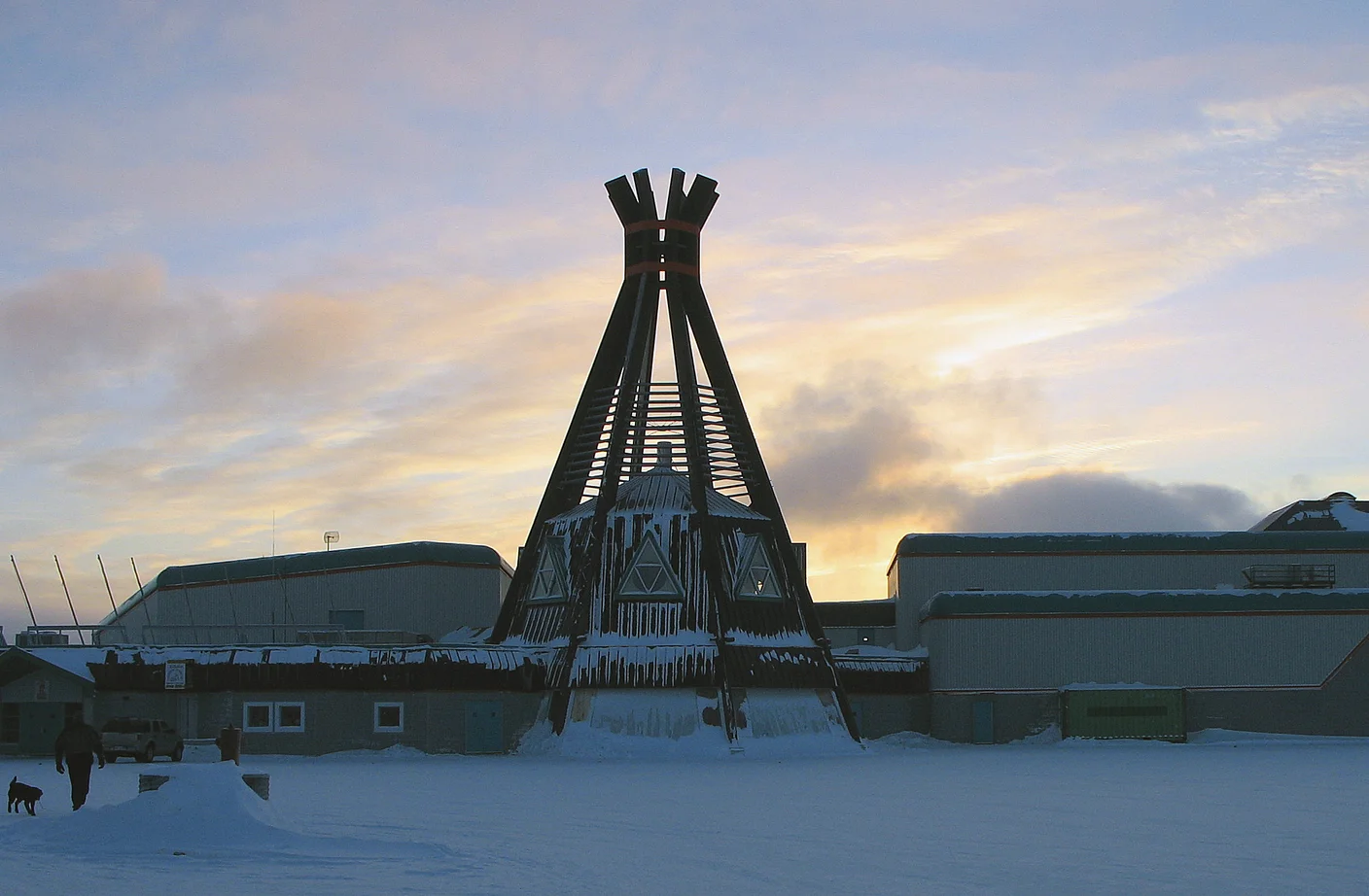
Notable Facts and People
Chisasibi is the direct result of one of northern Quebec’s largest community relocations. In the 1970s, the La Grande hydroelectric complex altered the river’s flow, sped the erosion of Fort George Island and disrupted the ice. The Cree and Quebec then negotiated a new community: the Fort George Relocation Corporation oversaw the move, and in 1980-1981 some 200 houses, the clinic and the church were transferred or rebuilt at the present site, facing the island.
The region bears traces of continuous Indigenous occupation going back more than 5,000 years, according to the community. Every year, Fort George Island hosts the Mamoweedow summer gathering. Chisasibi has 4,985 residents (2021) — about 4,305 Cree, 240 Inuit and 245 non-Indigenous people — and its chief, Daisy House, was serving her second term in the fall of 2025.
Local Services and Institutions
Nation office and municipality. The community is governed by the Cree Nation of Chisasibi The current chief is Daisy House. The Cree Village Municipality of Chisasibi has its office at P.O. Box 150, Chisasibi QC J0M 1E0; tel.: 819-855-2878.
School. Elementary and secondary education is provided by the Cree School Board: James Bay Eeyou School.
Health. Health services are operated by the Cree Board of Health and Social Services of James Bay (CBHSSJB): Chisasibi Miyupimaatisiiun Community Centre, en plus de l’hôpital de Chisasibi.
Access and Transportation
Chisasibi Airport (IATA code YKU) is served by Air Creebec, notably to the other James Bay coastal communities. Chisasibi is also Quebec’s northernmost Cree community accessible by road, via the James Bay Road; a ferry reaches Fort George Island in season, an important cultural site.
Tourism and Attractions
The village and its territory offer several attractions:
- the Mamoweedow summer gathering, held every July on Fort George Island
- Atlantic salmon fishing and boating on La Grande River
- James Bay coastal wildlife viewing
- the Mamoweedow Minstuksh festival and Cree cultural life
To go further
- Eeyou Istchee and James Bay: landmarks for visiting Cree territory
- Community tourism in Eeyou Istchee: Cree villages and etiquette
- All Cree villages of Eeyou Istchee
Frequently asked questions
What does Chisasibi mean?
Chisasibi is written ᒋᓵᓰᐲ (Cisâsîpî) and means “great river” — the river now called La Grande.
Why was Chisasibi relocated?
Erosion of Fort George Island, sped up by changes to La Grande River’s flow in the 1970s, led to the 1980-1981 relocation: about 200 houses, the clinic and the church were transferred or rebuilt at the present site.
What is the population of Chisasibi?
The 2021 census counted 4,985 residents in Chisasibi.
Is Chisasibi accessible by road?
Yes: it is Quebec’s northernmost Cree community accessible by road, via the James Bay Road.
What health services are found in Chisasibi?
The Chisasibi Miyupimaatisiiun Community Centre and Chisasibi Hospital, the Cree region’s main hospital, operated by the CBHSSJB.