
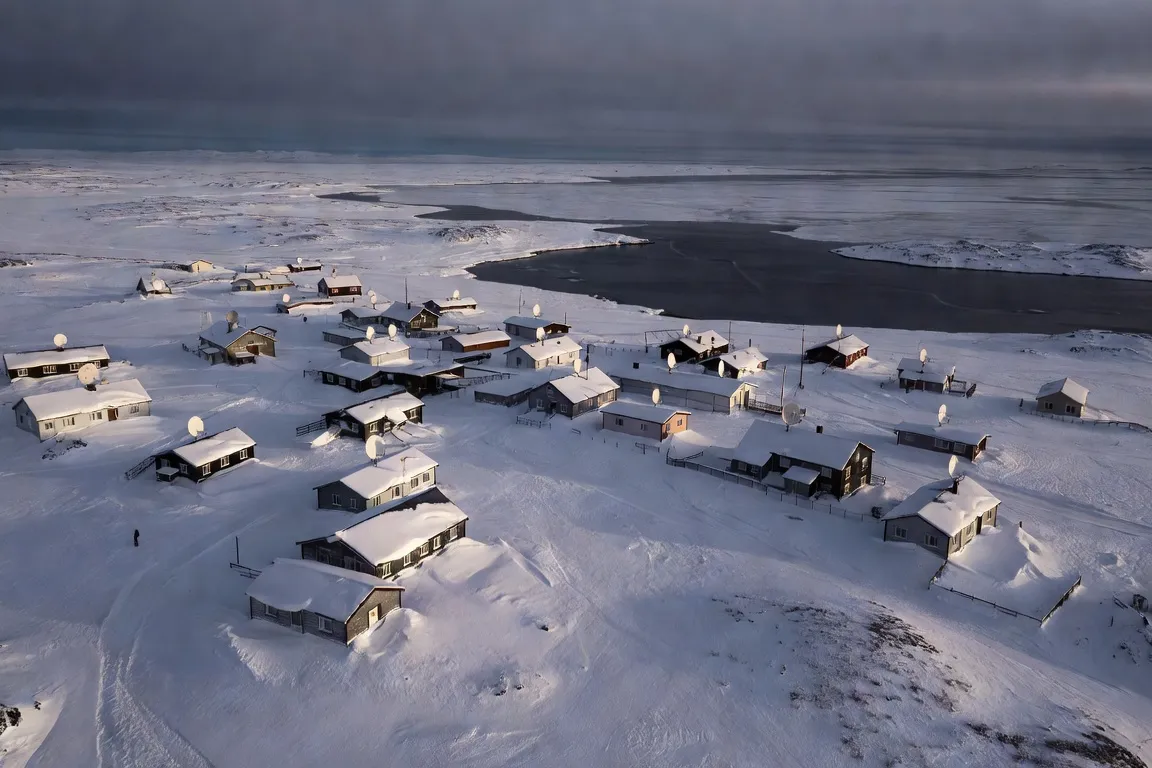
Nunavik covers 500,000 square kilometres — the northern third of Quebec. Its 14 coastal villages, accessible only by plane or by ship during the brief summer navigation season, are home to approximately 14,000 residents, the majority Inuit. For these communities, internet access is not a convenience: it is a critical infrastructure on par with electricity, drinking water and healthcare.
Yet connectivity varies considerably from village to village. The regional capital Kuujjuaq has infrastructure that rivals some mid-sized Quebec cities. At the other end of the spectrum, villages like Umiujaq or Kangirsuk rely on geostationary satellite links whose latency and capacity remain limited despite recent improvements.
This guide covers the 8 most populated communities village by village. For the 6 more isolated villages — Ivujivik, Akulivik, Quaqtaq, Aupaluk, Tasiujaq and Kuujjuaraapik — see our guide to the most isolated Nunavik villages.
How to read this guide — methodology and data sources
The data in this guide are estimates drawn from public sources: CRTC reports, Kativik Regional Government (KRG) documents, Makivik Society communications, and field experience documented by Soleica teams during on-site missions. No speed or price is guaranteed to the decimal — real conditions vary by season, network load and provider pricing changes.
For each village, we assess four dimensions: available providers and technologies; typical speeds, latency and weather resilience; approximate residential and institutional cost ranges; and recent trends and ongoing projects.
Kuujjuaq — Nunavik’s connected capital
Population: approximately 2,800 (Nunavik’s largest community)
Kuujjuaq is by far Nunavik’s best-connected community. Its role as regional capital and primary air hub has justified infrastructure investment that has no equivalent elsewhere in the region. Bell/Télébec maintains wired connections for institutions and businesses. Tamaani Internet offers an extended network including public Wi-Fi. Starlink is increasingly adopted by households and professionals since 2023. Xplore completes the offering for specific segments.
Speeds in Kuujjuaq are the best in Nunavik for individuals. Starlink typically delivers 50 to 200 Mbps with 30 to 50 ms latency — comparable to DSL or cable in a small southern Quebec city. Tamaani provides 10 to 50 Mbps depending on peak hours. Bell offers dedicated connections reaching 100 Mbps for institutional uses.
Residential Tamaani plans range from $80 to $150/month for 10 to 25 Mbps. Starlink requires an initial equipment investment of approximately $650, followed by a monthly subscription in the range of $140 to $170. Institutional Bell connections can exceed $500/month for guaranteed speeds and telemedicine-grade SLAs.
Trend: a partial fibre project is under study for Kuujjuaq, backed by Makivik Society and KRG with provincial government support. It would connect institutional buildings and the densest residential areas to wired infrastructure, reducing satellite dependence for critical uses.
Main uses in Kuujjuaq:
- Telemedicine (Kuujjuaq Hospital, Nunavik’s only hospital)
- Regional administration (KRG, Makivik, Kativik Ilisarniliriniq)
- Commerce (cooperatives, grocery stores, garages)
- Professional remote work
These residential and institutional uses do not cover mobility, however: for a full picture of 4G/5G cellular coverage in Nunavik, village by village, mobile telephony follows a deployment logic quite distinct from the fixed residential internet described here.
Puvirnituq — seasonal connectivity and the Snow Festival
Population: approximately 1,900
Puvirnituq is Nunavik’s second-largest community and one of the most culturally dynamic. It hosts the annual Snow Festival, which puts connectivity challenges in the spotlight: thousands of visitors and media connect simultaneously from a village whose total bandwidth is structurally limited. Tamaani and Starlink are the two main operators; Xplore covers some specific uses.
Under normal conditions, Tamaani delivers 10 to 30 Mbps for residents, with congestion peaks in the evening. Starlink performs comparably to Kuujjuaq (50-200 Mbps) with better stability. During the Snow Festival, network pressure is such that speeds can drop significantly for non-priority Tamaani users — event organizers use dedicated links. Residential Tamaani plans range from $100 to $180/month.
Trend: Starlink adoption is growing rapidly in Puvirnituq, particularly among healthcare professionals, teachers and local entrepreneurs. For an on-the-ground perspective on remote work from Puvirnituq and the broader region, see our interview with an Inuit entrepreneur from Salluit on northern connectivity.
Salluit — geographic isolation and high costs
Population: approximately 1,400
Salluit is situated in Hudson Strait at one of Nunavik’s highest latitudes. Its extreme geographic isolation translates to higher infrastructure costs and connections more vulnerable to weather. Tamaani and Starlink are the only providers; Bell and Xplore have no presence.
Hudson Strait’s frequent storms can disrupt geostationary satellite links for several hours. Starlink’s LEO constellation is generally more resilient to weather, though snow accumulation on the antenna can cause temporary outages. Typical speeds: 5 to 25 Mbps for Tamaani, 50 to 150 Mbps for Starlink. Residential Tamaani plans can exceed $200/month — among Nunavik’s highest.
Inukjuak — east Hudson Bay IT hub
Population: approximately 1,800
Inukjuak, on the east coast of Hudson Bay, is recognized as one of Nunavik’s most active technology hubs. Several IT infrastructure projects have been deployed there in recent years, including installations documented by Soleica in our Hyper-V and satellite fibre deployment case study. Tamaani and Starlink are the backbone; Xplore covers some segments.
Inukjuak has one of the most solid Tamaani infrastructures on the east coast. Residential speeds reach 15 to 40 Mbps on Tamaani, with less pronounced congestion peaks than comparable-sized villages. Costs are comparable to Puvirnituq ($100-$180/month for Tamaani).
Kangiqsujuaq — variable connectivity in Hudson Strait
Population: approximately 700
Located on the south shore of Hudson Strait, Kangiqsujuaq faces some of Nunavik’s most severe weather. Tamaani and Starlink are the available providers. Summer Tamaani speeds: 10 to 25 Mbps. Hudson Strait storms can cause multi-hour interruptions on geostationary links. Starlink offers better service continuity.
Kangiqsualujjuaq — digital community projects and George River
Population: approximately 900
At the mouth of the George River on Ungava Bay, Kangiqsualujjuaq has developed ambitious community digital projects in recent years. Tamaani and Starlink; no Bell or Xplore. Typical Tamaani speeds: 8 to 20 Mbps; Starlink: 50-150 Mbps.
Trend: the community has developed a pilot digital governance project — participatory management of local resources via an online platform — illustrating progressive Inuit digital adoption.
Kangirsuk — basic connectivity in a compact community
Population: approximately 600
At the mouth of the Arnaud River on Ungava Bay, Kangirsuk’s connectivity infrastructure remains basic compared to larger villages. Tamaani and Starlink only. Typical Tamaani: 5 to 15 Mbps, sufficient for basic uses but limiting for bandwidth-heavy applications. Residential plans: $120-$170/month.
Umiujaq — Nunavik’s newest community and evolving infrastructure
Population: approximately 600
Umiujaq has a unique history: it is Nunavik’s newest community, founded in 1986 when part of Kuujjuaraapik’s population relocated voluntarily. Its relative youth and more recent infrastructure give it certain advantages, including earlier exposure to new connectivity technologies. Tamaani and Starlink; typical speeds 8 to 20 Mbps on Tamaani.
Comparative summary table
| Village | Pop. | Providers | Typical residential speed | Reliability | Est. Tamaani cost/month |
|---|---|---|---|---|---|
| Kuujjuaq | ~2,800 | Bell, Tamaani, Starlink, Xplore | 10-200 Mbps | Very good | $80-150 |
| Puvirnituq | ~1,900 | Tamaani, Starlink | 10-150 Mbps | Good | $100-180 |
| Inukjuak | ~1,800 | Tamaani, Starlink, Xplore | 15-200 Mbps | Good | $100-180 |
| Salluit | ~1,400 | Tamaani, Starlink | 5-150 Mbps | Fair | $150-200 |
| Kangiqsualujjuaq | ~900 | Tamaani, Starlink | 8-150 Mbps | Good | $130-180 |
| Kangiqsujuaq | ~700 | Tamaani, Starlink | 10-150 Mbps | Variable | $150-200 |
| Kangirsuk | ~600 | Tamaani, Starlink | 5-100 Mbps | Fair | $120-170 |
| Umiujaq | ~600 | Tamaani, Starlink | 8-100 Mbps | Fair | $120-170 |
Indicative data. Speeds shown combine Tamaani and Starlink options. Tamaani costs are estimated residential ranges.
Key takeaway: geography weighs more heavily than population size on connection quality. Kuujjuaq and Inukjuak, better sheltered, show “Very good” to “Good” reliability despite very different population sizes, while Salluit and Kangiqsujuaq, exposed to Hudson Strait storms, remain “Fair” to “Variable” regardless of provider chosen. Tip: for a newcomer (healthcare professional, teacher, municipal employee) settling into one of these 8 villages, expect a 2 to 4 week delay for Starlink activation, and check ahead with the local cooperative or school about community Tamaani Wi-Fi access in the meantime.
For a detailed cost comparison by provider — including subsidy programmes and comparison with southern Quebec rates — see our Nunavik internet costs guide for 2026.
For long-term infrastructure trends and 2030-2035 projects, our interview with northern telecom policy expert Marc-Antoine Desjardins offers an essential strategic perspective.
Soleica has supported northern communities in digital infrastructure projects for over 15 years. For a detailed analysis of your village or institution’s situation, contact our teams.
For broader context on Canada’s remote northern regions, the guide to remote regions of Northern Canada on Voyage Canada provides useful geographical and logistical background.
Frequently asked questions
Which Nunavik village has the best internet connection in 2026?
Kuujjuaq has the best connectivity in Nunavik in 2026: Bell, Tamaani, Starlink and Xplore are all present, and a partial fibre project is underway. Speeds can exceed 100 Mbps for institutional uses. Inukjuak and Puvirnituq follow closely, with solid Tamaani infrastructure and growing Starlink adoption for residential and professional uses.
Does Tamaani Internet cover all Nunavik villages?
Yes, Tamaani Internet (operated by Makivik Society) has a presence in the vast majority of Nunavik's 14 coastal villages. Its network relies primarily on geostationary satellite links and community access points. Service quality varies by village: Kuujjuaq, Puvirnituq and Inukjuak have better bandwidth than smaller villages like Kangirsuk or Umiujaq.
Is Starlink replacing Tamaani in Nunavik villages?
Starlink doesn't replace Tamaani — it complements it. In 2026, most households and businesses in the 8 villages covered in this guide use Tamaani for basic connectivity (institutional services, community Wi-Fi) and Starlink for bandwidth-intensive uses (video conferencing, cloud, remote work). Starlink's cost (equipment ~$650, subscription ~$140-170/month) makes it a complement rather than a universal replacement.
What is the average internet speed available in Kuujjuaq in 2026?
In Kuujjuaq, available speeds vary by provider: Bell offers 25 to 100 Mbps on its wired connections in certain areas; Tamaani provides 10 to 50 Mbps depending on network load; Starlink offers 50 to 200 Mbps with latency reduced to 30-50 ms. Public institutions (CLSC, schools, municipal offices) may access higher speeds via dedicated contracts.
Do public institutions (hospitals, schools) have different internet than residents in Nunavik?
Yes. Public institutions — CLSCs, Kativik School Board schools, Kativik Regional Government offices — generally have dedicated connections at negotiated rates subsidized by provincial and federal governments. These connections are often separate from Tamaani's residential network, with guaranteed speeds and service level agreements (SLAs) suited to critical uses like telemedicine or emergency data transmission.