
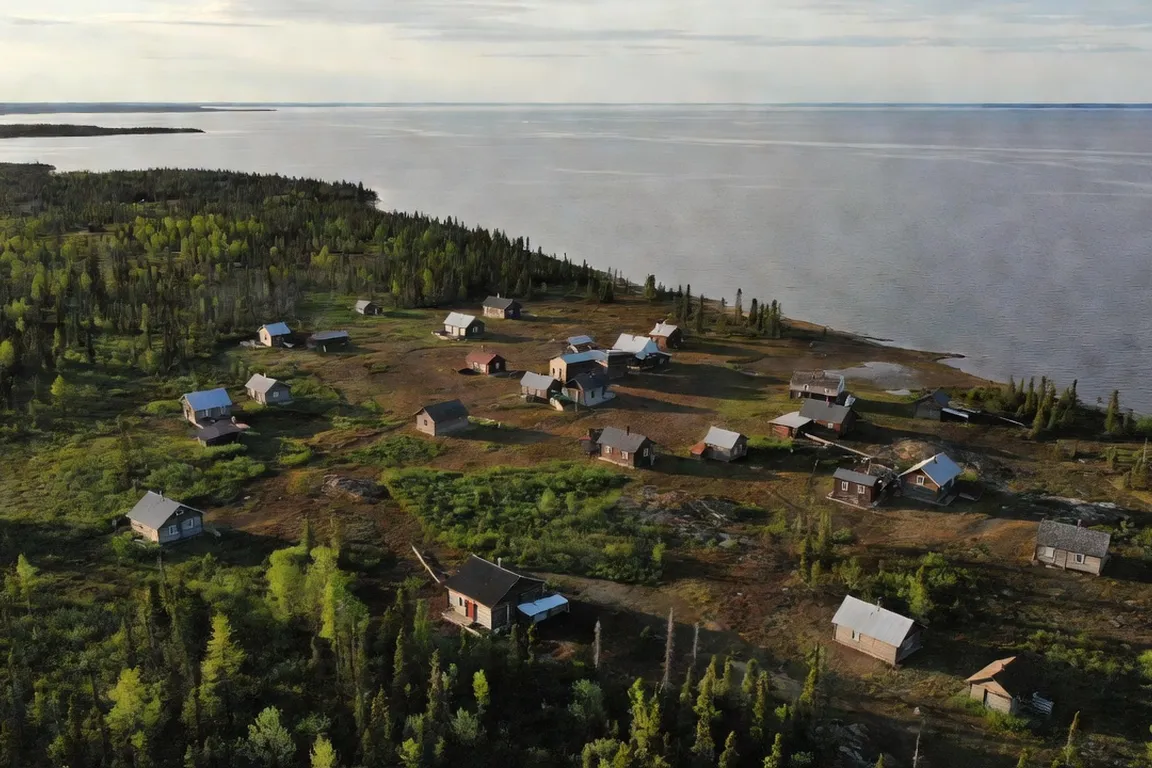
Eeyou Istchee: Territory and 11 Cree Communities
Eeyou Istchee refers to the traditional territory of the Cree, located in the James Bay region of Quebec. Its area approaches 400,000 square kilometres and encompasses taiga and boreal forest environments. The climate is subarctic, with long winters and short summers marked by high luminosity. The Cree Nation Government (CNG) is based in Nemaska and coordinates the political affairs of the eleven recognized Cree communities. These include Mistissini, Oujé-Bougoumou, Waswanipi, Nemaska, Waskaganish, Eastmain, Wemindji, Chisasibi, Whapmagoostui, and Washaw-Sibi, which is in the process of gaining recognition. Chibougamau, although predominantly composed of non-Indigenous residents, maintains close ties with neighboring Cree communities in terms of services and development. These communities share the Cree-eeyou language and governance systems based on family trapping territories.
The 11 Villages: Presentation and Identity
Mistissini, the most populous of the interior communities, has about 3500 residents and is located on the shores of Lake Mistassini, Quebec’s largest natural lake. The village is renowned for its ice fishing festival in February, attracting amateurs and professionals. Oujé-Bougoumou stands out for its award-winning contemporary architecture, influenced by the famous architect Douglas Cardinal, and for the presence of the Aanischaaukamikw Cultural Institute. Waswanipi, located further south, maintains an economy tied to forestry and sustainable logging. It is also known for its traditional craft workshop, where one can learn to make birch bark objects. Nemaska hosts the headquarters of the Cree Nation Government and remains an important administrative center despite a smaller population. The village celebrates the Summer Solstice Festival each year, a major cultural gathering. Waskaganish, at the mouth of the Rupert River, is the site of the first European trading post and retains historical infrastructure. Eastmain stretches along the river of the same name and serves as a gateway to inland fishing activities. The village organizes the Polar Bear Festival, a unique event highlighting the richness of local biodiversity. Wemindji, on the coast of James Bay, functions as a hub for travel to the bay’s islands and is famous for its summer music festival. Chisasibi, with nearly 4500 inhabitants, is the largest Cree community and concentrates several health and education services. The village is also known for its annual Pow-wow, which attracts visitors from across the region. Whapmagoostui, at the northernmost point on the Hudson Bay coast, shares its territory with the Inuit village of Kuujjuarapik and hosts snowmobile races on spring snow. Washaw-Sibi, in the process of structuring, aims to achieve official recognition and develop its own services, with a particular focus on ecotourism and nature conservation.
Comparison of the 11 Cree communities of Eeyou Istchee
| Village | Population | Access | Specialty / festival |
|---|---|---|---|
| Mistissini | ~3500 residents | Billy-Diamond Road | Ice fishing festival (February) |
| Oujé-Bougoumou | — | Billy-Diamond Road | Douglas Cardinal architecture, Aanischaaukamikw Cultural Institute |
| Waswanipi | — | Billy-Diamond Road | Sustainable forestry, birch bark crafts |
| Nemaska | — | Billy-Diamond Road | Seat of the Cree Nation Government, Summer Solstice Festival |
| Waskaganish | — | Secondary road (Rupert River mouth) | First European trading post |
| Eastmain | — | Coastal secondary road | Polar Bear Festival |
| Wemindji | — | Coastal secondary road | Hub to the bay islands, summer music festival |
| Chisasibi | ~4500 residents | Coastal secondary road, Air Creebec flights | Largest community, annual Pow-wow |
| Whapmagoostui | — | Air Creebec flights (far north) | Spring snowmobile races, neighbours Inuit village Kuujjuarapik |
| Washaw-Sibi | — | Structuring in progress | Official recognition pending, ecotourism and conservation |
Common mistake: assuming the 11 villages are interchangeable. Each community has its own family trapping territory, its own festival calendar, and its own visitor protocols — check village by village before planning a stay.
Access: Billy-Diamond Road (109), Air Creebec Flights
The Billy-Diamond Road, formerly the James Bay Road and numbered 109, is the main road access route. It begins in Matagami and stretches 620 kilometres to Radisson, paved throughout the journey. Gravel secondary roads then connect coastal villages like Wemindji, Chisasibi, and Eastmain. Air Creebec provides regular flights from Val-d’Or and Montreal, with stops in Chibougamau, Chisasibi, and Whapmagoostui. The cost of a round-trip flight varies between 800 and 1500 Canadian dollars depending on the destination and booking period. Travelers should anticipate possible delays due to winter weather conditions. Ground shuttle services between airports and villages are coordinated by local administrations.
Accommodation and Tourist Infrastructure 2026
The Cree Village Eco-Lodge in Oujé-Bougoumou, recognized by awards jointly given by Niskamoon and the Cree Outfitting and Tourism Association, offers environmentally compliant rooms and can accommodate up to 50 people. Rates for 2026 start at 250 Canadian dollars per night in double occupancy, including breakfast. The Auberge Mistissini and the Mistissini Mountain Lodge offer packages including guides and equipment for lake activities, with prices ranging from 200 to 300 Canadian dollars per night depending on the season. The hotel in Chisasibi has a larger capacity with 70 rooms, serving both business and tourist clientele. Rates start at 180 Canadian dollars per night. Community inns in Wemindji and Waskaganish, directly managed by local families, offer a more immediate contact with local culture, starting at 150 Canadian dollars per night. Package deals typically include catering services, local transportation, and guidance by trained residents. Sanitary facilities and internet connections have improved since 2020 but remain variable depending on the villages, with access often more limited in inns compared to lodges.
For complementary chalet lodging in remote Quebec, see Soleica Chalets four seasons.
Authentic Cultural Experiences: Trapping, Fishing, Crafts
Stays at Cree outfitting camps allow participation in winter trapping activities alongside host families who hold traditional rights on specific trapping lines. These excursions, usually lasting between three and five days, cost about 1200 Canadian dollars per person and include necessary equipment. Walleye and pike fishing takes place on inland lakes between May and October, periods when Quebec fishing regulations apply alongside local protocols. A guided fishing day costs about 200 Canadian dollars, equipment and permits included. Craft workshops offer learning in techniques for making babiche snowshoes, leather moccasins called lechabis, and pottery from local clay. These workshops, lasting two to three hours, are available year-round and cost between 50 and 100 Canadian dollars per participant. For a deeper look at the artistic side of these skills, our feature on Inuit and Cree artistic heritage, sculpture and printmaking in Nunavik covers the techniques and the artists behind them. All these experiences are organized only with the prior agreement of the concerned families and band councils. Participants must respect confidentiality rules related to trapping sites and ceremonial practices. The Cree Outfitting and Tourism Association certifies operators who return a portion of the revenue to the communities.
To place these experiences in their Indigenous context, see our Cree tourism guide to Eeyou Istchee James Bay 2026, an interview with a local guide.
Iconic Natural Sites: Otish Mountains, James Bay, Rupert River
The Otish Mountains are the subject of a proposed national park named Albanel-Témiscamie-Otish, whose impact study is still underway. This mountain range, with peaks exceeding 1100 meters, offers opportunities for hiking and wildlife observation, including black bears and forest caribou. The Rupert River, whose flow has been altered by partial water diversion, remains visited for guided canoe descents lasting several days. These expeditions, available from June to September, cost between 500 and 1000 Canadian dollars depending on the duration and level of guidance required. James Bay welcomes large concentrations of snow geese in spring, observed during the goose break. Observation excursions, which include an experienced guide, cost about 150 Canadian dollars for a half-day. The Eastmain River Aquatic Park protects a spawning sector and offers interpretive tours on aquatic ecosystems. Visits to the La Grande hydroelectric facilities are coordinated by Hydro-Québec and require prior reservation. These sites are accessible while respecting family trapping zones that traverse the territory.
Cultural Etiquette: Visit Protocols, Consent
Any request for photography of people or ceremonial places must be explicitly authorized. Trapping territories are allocated to specific families and require a prior agreement for access. Learning basic Cree-eeyou phrases, such as Wachiya (hello) and Meegwetch (thank you), facilitates initial exchanges. The consumption of alcohol in public is prohibited in most villages. Bear safety guidelines must be followed during any forest activity. A pronounced territorial acknowledgment at the beginning of the stay, prepared with the help of a local guide, is an expected practice. Visitors are encouraged to refrain from any comparisons with stereotypes derived from American cinema. It is also recommended to show an open mind and sincere respect for local traditions, which enrich the travel experience and strengthen ties with the communities.
- Request explicit authorization before photographing people or ceremonial places
- Never enter a family trapping territory without prior agreement
- Learn a few Cree-eeyou words: Wachiya (hello), Meegwetch (thank you)
- Respect the ban on public alcohol consumption in most villages
- Follow bear safety guidelines during any forest activity
- Prepare a territorial acknowledgment at the start of the stay, with the help of a local guide
Tip: always go through a COTA-certified operator or a local guide before any activity on the territory (trapping, fishing, hiking). This ensures respect for family protocols and keeps the economic benefits within the community.
On the Inuit side (Nunavik), see our responsible travel guide to Nunavik 2026.
Festivals and Events 2026: Goose Break, Pow-wow, Cree Days
The Goose Break, held in April and May, leads to the closure of schools for two weeks to allow participation in the traditional goose hunt. This event is a privileged opportunity to discover ancestral practices and community solidarity. Summer pow-wows take place in Chisasibi and Mistissini according to schedules published by the band councils. These gatherings, open to visitors, are an opportunity to witness traditional dances and drum competitions. The Cree Days, organized in July, bring together participants from several villages for cultural and sports activities. The Wapikoni International Indigenous Film Festival travels between communities and showcases productions by young Cree, offering a platform for contemporary cultural expression. The Aanischaaukamikw Cultural Institute in Oujé-Bougoumou hosts temporary exhibitions and conferences throughout the year. Exact event dates are confirmed each winter by local tourism offices.
Main 2026 events by village:
- Goose Break (April-May, all of Eeyou Istchee): traditional goose hunt, schools closed for two weeks
- Summer Pow-wow (Chisasibi and Mistissini): traditional dances and drum competitions
- Cree Days (July, several villages): cultural and sports activities
- Wapikoni Festival (traveling): Indigenous films made by young Cree
- Exhibitions and conferences (Aanischaaukamikw Cultural Institute, Oujé-Bougoumou): year-round
The Goose Break is the subject of a complete report: Goose Break 2026: Cree & Inuit Snow Goose Hunt Traditions.
Local Operators and Non-profit Tourism Organizations
The Cree Outfitting and Tourism Association (COTA) acts as an umbrella organization certifying outfitters and training guides. Eeyou Istchee Baie-James Tourism collaborates with Tourisme Québec for regional promotion and visitor data collection. About twenty establishments currently hold COTA certification, ensuring authentic and respectful experiences. The Niskamoon Corporation funds tourism development projects whose benefits remain within the communities. The Cree School Board offers guide-interpreter training programs that integrate ecological and cultural knowledge. Among local operators are Eeyou Istchee Outdoor Adventures, specializing in canoe expeditions and hiking, and Mistissini Outfitting Camps, which offers fishing and trapping stays. Whapmagoostui Tours provides cultural and historical tours, while Eastmain Eco-Experiences focuses on ecotourism and conservation. Reservations made through certified operators ensure that payments directly support the local economy.
Official regional tourism data is published by Eeyou Istchee Baie-James Tourism (regional partner of Tourisme Québec).
To understand the funding and governance structures of Cree communities, read our Niskamoon Corporation: mission and services in Eeyou Istchee report (V4).
Indicative budget for 5 days of community tourism
| Expense item | Estimated cost (CAD) |
|---|---|
| Round-trip Air Creebec flight | ~$1000 |
| Certified lodge accommodation (5 nights) | ~$1250 ($250/night) |
| Guided activities (trapping, fishing) | $150 to $300/day |
| Meals, taxes, local transportation | $400 to $700 depending on village |
| All-inclusive total per person | $2500 to $4500 |
Key takeaway: this budget does not cover souvenirs or participation in local craft workshops, which remain a direct way to support the communities’ artisans.
Cree Tourism FAQ Eeyou Istchee
What is the best season to visit Eeyou Istchee?
The summer period from June to August is suitable for hiking and lake fishing, while September and October offer marked autumn colors. Winter, from December to March, allows for snowmobiling and aurora borealis observation on cleared territories. Spring, in April and May, coincides with the goose break, when cultural activities related to goose hunting are prioritized, although schools are closed. Each season presents different logistical constraints that should be verified with local operators. In summer, milder temperatures facilitate travel and outdoor activities, while in winter, equipment adapted to cold conditions is essential. Travelers should also be aware that some roads may be impassable due to snow or ice.
Is a permit required for fishing in Cree rivers?
A standard Quebec fishing permit remains mandatory throughout the territory. Access to water bodies located on family trapping lines also requires specific authorization, the terms of which vary by family. Outfitting camps certified by COTA include these authorizations in their packages and ensure quota compliance. It is discouraged to approach families directly without going through these intermediary structures. Specific permits are a way to respect traditional rights and support the local economy. Additionally, experienced guides can offer valuable advice on the best fishing spots and techniques to use, ensuring an enriching and respectful experience of natural resources.
Is it possible to visit Eeyou Istchee without a local guide?
The Billy-Diamond Road remains accessible without accompaniment and allows reaching several villages independently. Outside official lodge infrastructures, the absence of a Cree guide exposes the visitor to risks of ignorance of family trapping protocols and ceremonial practices. Band councils systematically recommend using trained escorts for activities in the territory. This practice protects both visitors and communities. Local guides also add value by sharing their knowledge of history, culture, and traditional practices, enriching the travel experience. Moreover, their accompaniment can facilitate integration into village cultural and festive activities, allowing for a more complete and respectful immersion.
How does Eeyou Istchee differ from Nunavik in terms of tourism?
Eeyou Istchee is connected by a paved road and has a denser network of community accommodations. The population is predominantly Cree and speaks Cree-eeyou, while the landscape is dominated by boreal forest. Nunavik, located further north, is only accessible by plane and is inhabited by Inuit whose language is Inuktitut. Fjords and tundra characterize this latter territory, whose tourism structures differ significantly. In Eeyou Istchee, activities are often centered around the culture and ecology of the boreal forest, while Nunavik offers experiences related to the Arctic tundra and Inuit traditions. Visitors can expect significant differences in hospitality, customs, and landscapes, requiring preparation adapted to each region.
What budget should be planned for 5 days of community tourism in Eeyou Istchee?
A round-trip flight with Air Creebec costs about 1000 Canadian dollars. Accommodation in a certified lodge costs an average of 250 dollars per night for five nights. Guided activities, including trapping or fishing, range from 150 to 300 dollars per day. Meals, taxes, and local transportation services add between 400 and 700 dollars depending on the chosen village. The overall package for one person, all-inclusive, ranges from 2500 to 4500 Canadian dollars. It is advisable to book well in advance to benefit from the best rates and to check cancellation policies in case of unfavorable weather conditions. Travelers should also plan for additional costs for purchasing souvenirs or participating in local craft workshops, which offer a unique opportunity to directly support artisans and bring home a piece of Eeyou Istchee.