
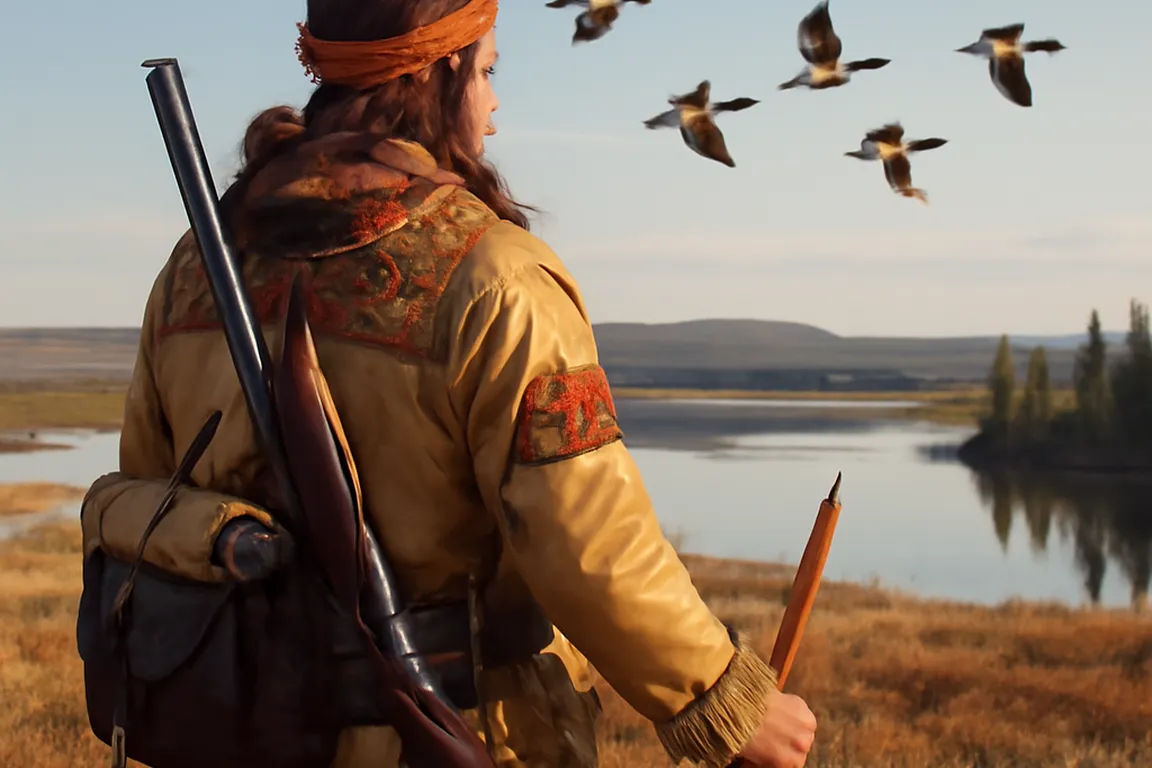
Every spring, when the first Snow geese appear on the horizon and Canada geese cross the sky in long V formations, the Cree communities of Eeyou Istchee and the Inuit communities of Nunavik experience an exceptional moment. The Goose Break is not simply a hunting season. It is one of the most important events in the Indigenous calendar of northern Quebec.
To understand the Goose Break, you first need to understand what it means to live on a territory like Eeyou Istchee or Nunavik: a vast space governed by the rhythms of nature, where the relationships between humans and other species have shaped cultures, languages and spiritualities for millennia.
What is the Goose Break? Definition and meaning
The term “Goose Break” is primarily used in the Cree communities of Quebec and Ontario. It refers to the spring period of goose hunting — a term that covers primarily the Canada goose (Branta canadensis) and the Snow goose (Anser caerulescens) in local usage. “Goose Break” literally means “the break for geese”: schools close, administrations slow down, families leave the villages to join their traditional hunting camps.
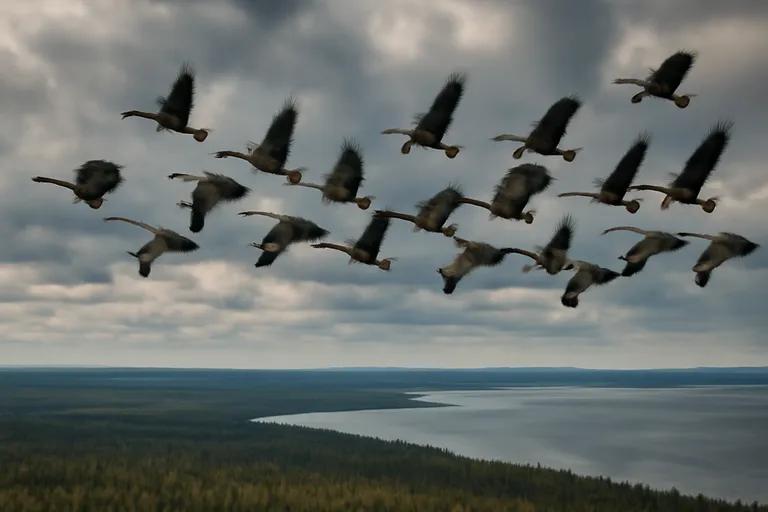
This period coincides with the major spring migrations: each year, millions of Canada geese and Snow geese fly north toward their Arctic nesting grounds, passing over James Bay and the Eastmain River basin. For a few weeks, the lands of Eeyou Istchee and Nunavik transform into spectacular migration corridors.
For the Cree and Inuit peoples, this moment is central to their relationship with the land and with subsistence. It is not only about food — though goose meat is an essential protein source — but a profound cultural act: returning to the land, transmitting hunting knowledge to younger generations, reconnecting with ancestors and honouring animals according to traditional protocols.
Key takeaway: the Goose Break is not just a hunting season — it is a major event in the Indigenous calendar of northern Quebec that combines food subsistence, intergenerational transmission of knowledge and spiritual reconnection with the land, for both the Cree of Eeyou Istchee and the Inuit of Nunavik.
In Cree communities of Eeyou Istchee
The Cree of Eeyou Istchee — which comprises nine communities including Chisasibi, Wemindji, Eastmain, Waskaganish, Nemaska, Mistissini, Waswanipi, Ouje-Bougoumou and Whapmagoostui — organise the Goose Break as a major social occasion.
From the first weeks of April, families prepare their equipment: camp tents and shelters, watercraft, decoys, guns and ammunition. Family trapping territories are carefully maintained from generation to generation and transmitted according to a customary system that predates the 1975 JBNQA, which partially recognised it.
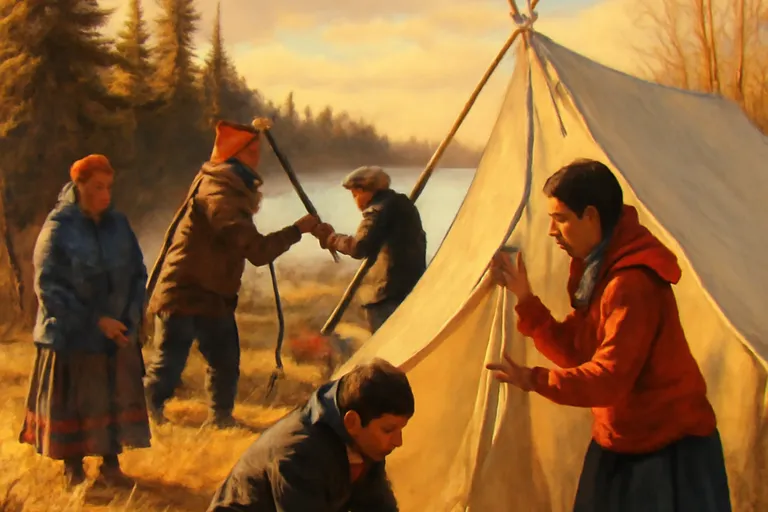
At camp, life organises around hunting but also communal meals, storytelling, prayers and ritual gestures. Elders play a central role: they transmit local ecological knowledge (species identification, reading the wind, knowledge of migration corridors), respectful hunting techniques and the moral obligations toward hunted animals.
Meat sharing is a fundamental dimension of the Goose Break. Families returning from camp systematically share their catch with village elders, less mobile families and neighbours. This redistribution system strengthens community bonds and maintains a form of collective food security — an issue explored in more depth in our interview on food security and the cost of living in Nunavik, covering both traditional food and grocery prices.
In Inuit communities of Nunavik
In Nunavik, the tradition of spring migratory bird hunting — Canada geese and eiders in particular — is just as deeply rooted. It has different names in different villages (Inuktitut variants differ by region), but its meaning is similar.
The Inuit of Nunavik hunt in environments distinct from those of the Cree: open tundra, Hudson Bay coastlines, Hudson Strait, coastal wetlands. Hunting techniques differ slightly — stalking and approaching on the tundra are favoured over forest hunting.
The migration period is slightly later than in Eeyou Istchee: in the northernmost villages (Ivujivik, Akulivik), geese typically arrive in May, sometimes as late as mid-May. At Kuujjuaraapik-Whapmagoostui, a mixed Inuit-Cree village at the southern tip of Nunavik, the two traditions coexist.
The spiritual significance is also central for the Inuit. The Inuit concept of sila — wind, air, cosmic intelligence — is intimately linked to bird migrations. To hunt in accordance with sila means recognising that humans are not the only actors on the land but participants among others.
Canada geese and Snow geese — species and regulation
The Canada goose (Branta canadensis) is the species primarily hunted during the Goose Break in both regions. Recognisable by its black neck and white face patch, it nests on the banks of lakes and rivers in northern Quebec before flying south toward Atlantic coasts in autumn. The Snow goose (Anser caerulescens) is also hunted in spring.
Indigenous peoples hold hunting rights derived from the Indian Act, treaties and specifically the James Bay and Northern Quebec Agreement (JBNQA, 1975) for the Cree and Inuit of Quebec. These rights grant them hunting seasons distinct from those applicable to non-Indigenous people, in recognition of their traditional dependence on wildlife as a food source.
Special arrangements, such as the agreement on migratory birds with First Nations, allow certain communities to hunt protected species outside standard regulatory seasons, under subsistence criteria.
Goose Break 2026 — dates and forecasts
In 2026, the first northward Canada geese migrations were observed in southern Quebec from the beginning of April. Passages over Eeyou Istchee (Chibougamau, Waswanipi, Nemaska) were reported between April 15 and 30 depending on the area. In Nunavik, coastal passages (Kuujjuaraapik, Inukjuak, Puvirnituq) began around April 25.
Seasonal forecasts indicate slightly earlier migrations than the ten-year average, linked to a warmer-than-normal spring 2026 across the James Bay basin. This progressive shift in the migration calendar has been observed for several years and is itself a challenge for Indigenous communities whose hunting practices are aligned with natural cycles that are changing.
2026 Goose Break calendar by area
| Area | Observed/expected passage | Communities concerned |
|---|---|---|
| Southern Quebec | Early April | Southern transit zones |
| Eeyou Istchee | April 15 to 30 | Chibougamau, Waswanipi, Nemaska |
| Nunavik (coastal) | From April 25 | Kuujjuaraapik, Inukjuak, Puvirnituq |
| Nunavik (northernmost villages) | May, sometimes mid-May | Ivujivik, Akulivik |
The spring hunting camp — logistics and traditional food
A spring hunting camp in Nunavik or Eeyou Istchee is a rigorous undertaking, not improvised. Families leave for periods of one to three weeks, often on family lands tens or hundreds of kilometres from the village. Access is by snowmobile, ATV, canoe or bush plane depending on the season and distance. For these long snowmobile trips, connected weather stations and winter travel safety provide an increasingly used technological complement to elders’ traditional knowledge of ice and terrain conditions.
Camp food relies largely on the hunt itself: roasted, boiled, smoked or frozen goose meat for preservation. Traditional recipes are numerous and vary by family and region. Canada goose is appreciated for its rich meat and natural fat, precious in a harsh climate.
Preparing the meat is itself a teaching. Young people learn to butcher properly, to set aside certain parts of the animal (heart, liver, feathers) according to customary protocols, and to avoid waste. This respect for the hunted animal is a core value transmitted from childhood.
Traditional activities associated with the spring hunting camp:
- Preparing and transporting equipment (tents, watercraft, decoys, ammunition) from the first weeks of April
- Travelling to family hunting lands, by snowmobile, ATV, canoe or bush plane
- The hunt itself, guided by customary protocols of respect for the animal
- Communal meals, storytelling and knowledge transmission by elders
- Preparing and preserving the meat (roasted, boiled, smoked or frozen)
- Systematically sharing the catch with village elders, less mobile families and neighbours upon returning from camp
Ecological and spiritual significance
The Goose Break concretely illustrates what Indigenous intellectuals call a “relational relationship with the land”: a worldview in which humans do not own the land but participate in a larger ecosystem.
For the Cree and Inuit, geese are not merely a food resource. They are beings with whom they maintain a relationship of reciprocity. Hunting protocols — not taking more than necessary, thanking the animal for its life, treating the meat with respect — are simultaneously cultural practices and ecological regulation mechanisms that have enabled sustainable hunting for millennia.
This vision contrasts with the industrial approach to wildlife management, which is partly why Indigenous hunting rights are fundamental: they preserve responsible subsistence practices that have no equivalent in the market economy.
How visitors can participate respectfully
To experience the Goose Break as a non-Indigenous visitor, the recommended path always goes through a recognised Indigenous tourism operator or a family invitation.
Some Cree Nations (notably the Cree Nation of Chisasibi and Wemindji) offer spring cultural tourism experiences in partnership with certified guides. These experiences allow spending a few days at camp, observing hunting practices, sharing meals and exchanging knowledge with elders — without participating directly in hunting if you are non-Indigenous or lack the required federal licence.
Important: during the Goose Break, schools and administrations in Cree and Inuit communities close or slow down their activities. Visitors must respect this institutional slowdown — it is not a simple administrative closure but the priority the community gives to an essential cultural and food-related time, non-negotiable and not adjustable for tourist convenience.
For more on responsible tourism in these regions, see our complete guide to responsible travel in Nunavik and our interview with an Indigenous guide on Eeyou Istchee.
The word “iynu” — Iynu/Innu language and neighbouring nations
The term “iynu” (or “ilnu”) means “human being” in the Iynu/Innu language, spoken by the Innu (or Montagnais) of Quebec and Labrador — a nation distinct from the Cree of Eeyou Istchee but sharing similar hunting traditions.
Some internet users search this term in association with Nunavik and Eeyou Istchee, partly because the territories of certain Inuit and Innu communities are adjacent in northeastern Quebec, and because spring hunting practices are similar across nations. The Innu nations of Quebec (notably those of Pessamit, Uashat mak Mani-Utenam) also conduct spring migratory bird hunts in a similar but distinct cultural framework.
News and current affairs from Quebec’s Indigenous communities, including hunting rights and territorial issues, are well covered by sources such as actualités des communautés autochtones du Québec.
Frequently asked questions
What exactly is the Goose Break?
The Goose Break (or Goose Week) is the spring period of goose hunting — primarily Canada goose and Snow goose — in Indigenous communities of northern Quebec. It coincides with the annual migration of birds between southern wintering areas and Arctic nesting grounds. For the Cree of Eeyou Istchee, this period (generally late April to early May) is one of the most important of the year culturally, spiritually and from a food sovereignty perspective. The Inuit of Nunavik share a similar tradition centred on the same migratory species.
When does the Goose Break take place in 2026?
In 2026, the main migration period for Canada geese in Eeyou Istchee and Nunavik falls between late April and mid-May. Precise dates vary by weather conditions and geographic zone. The northernmost communities (Ivujivik, Akulivik, Puvirnituq in Nunavik; Chisasibi and Wemindji for the Cree) typically see passages one to two weeks later than communities further south. Some autumn hunts complement the spring cycle.
Is goose hunting legal for everyone?
No. Hunting Canada geese and Snow geese is regulated by the federal government under the 1994 Migratory Birds Convention Act. Indigenous peoples — including the Cree and Inuit — hold recognised hunting rights derived from treaties and the James Bay and Northern Quebec Agreement (JBNQA, 1975). For non-Indigenous people, migratory bird hunting licences are required and seasons are set annually by the federal government.
Can non-Indigenous visitors participate in the Goose Break?
Yes, but only through a respectful, guided approach. Some Cree and Inuit communities offer cultural tourism experiences during this period in partnership with certified Indigenous guides. These are not 'hunting tours' but cultural immersions: accompanying hunters to camp, sharing traditional meals and exchanging knowledge about practices and the relationship with the land. Showing up alone in hunting areas without an invitation is considered an intrusion.
What is the difference between the Cree Goose Break and the Inuit version?
Both traditions share the same foundation — spring hunting of migratory Canada geese and Snow geese — but differ in their cultural expressions, languages (Cree / Inuktitut), territories (Eeyou Istchee to the south, Nunavik further north) and certain culinary and ceremonial practices. Cree communities, further south, often have access to boreal forests for hunting camps, while Inuit hunt more in open tundra and Arctic coastal environments.