
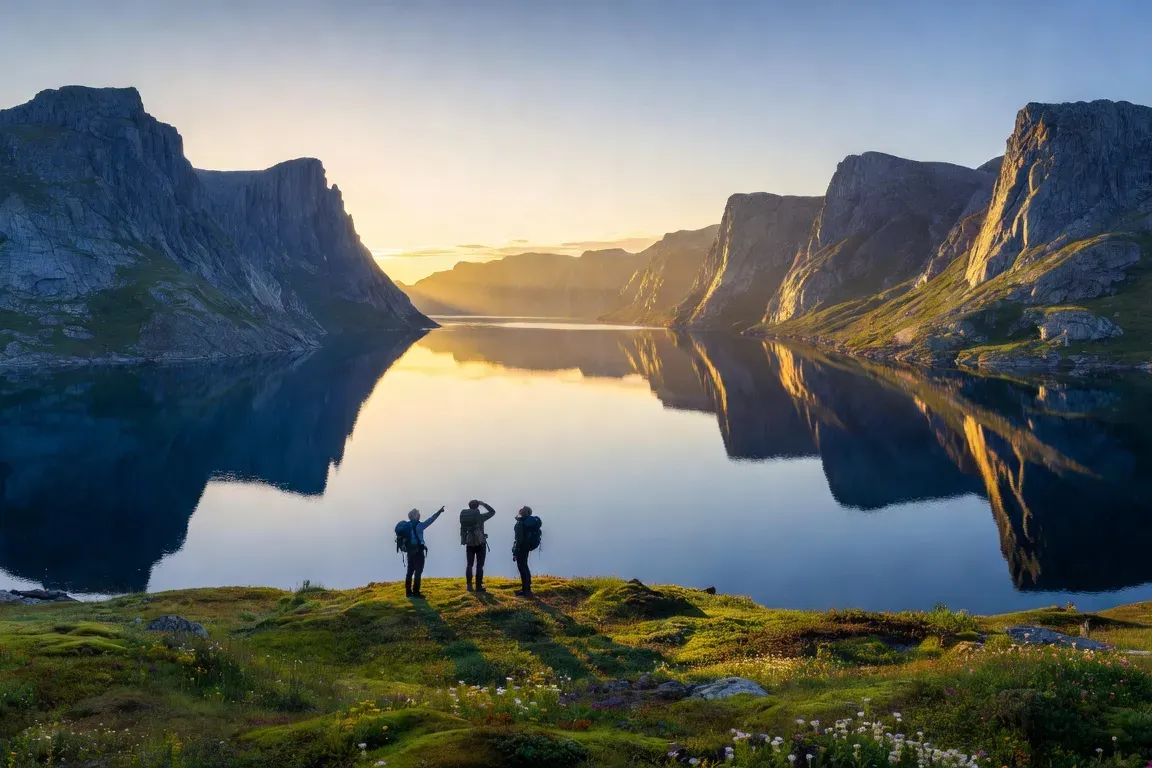
Nunavik is not a tourist destination in the conventional sense of the term. It is not a place where one disembarks to tick off an exotic experience, take photos and leave the next day. It is a living territory, inhabited by Inuit communities who have lived there for millennia, and whose opening to tourism happens cautiously, at their pace and according to their conditions.
For those who really want to discover Nunavik — and the human encounter that makes its richness — this guide gathers concrete elements: access conditions, seasons, real costs, possible itineraries, and especially the ethical rules that distinguish respectful travel from intrusive tourism.
Why Nunavik is different from other Canadian destinations
Nunavik covers about 500,000 square kilometres north of the 55th parallel. Fourteen coastal villages dot the coast of Hudson Bay, Hudson Strait and Ungava Bay. None is connected to the south by road. Everything arrives by plane or, during the short navigation season, by boat. This simple fact conditions all relationship to travel: one does not detour through Nunavik, one goes there voluntarily and with preparation. This same logistical constraint is pushing some communities to experiment with drones for urgent deliveries: our feature on drones and delivery logistics in Nunavik’s isolated communities explores these pilot projects.
Nearly 90% of residents are of Inuit origin. The main language is Inuktitut, spoken daily and taught in school. French and English are understood in most administrative and commercial contexts, but the experience remains that of an Indigenous territory whose culture, social organisation and life codes do not align with those of southern Quebec.
This distinction is essential. Travelling to Nunavik while keeping classic urban or rural tourism reflexes — wanting to see everything in little time, comparing prices, negotiating services, photographing without asking — invariably produces unpleasant situations for everyone. Conversely, a carefully prepared trip, at an adapted pace, in an encounter logic rather than a collection logic, can be one of the most marked a traveller’s life allows.
Seasons: what you need to know before choosing your window
Summer (mid-June to mid-September)
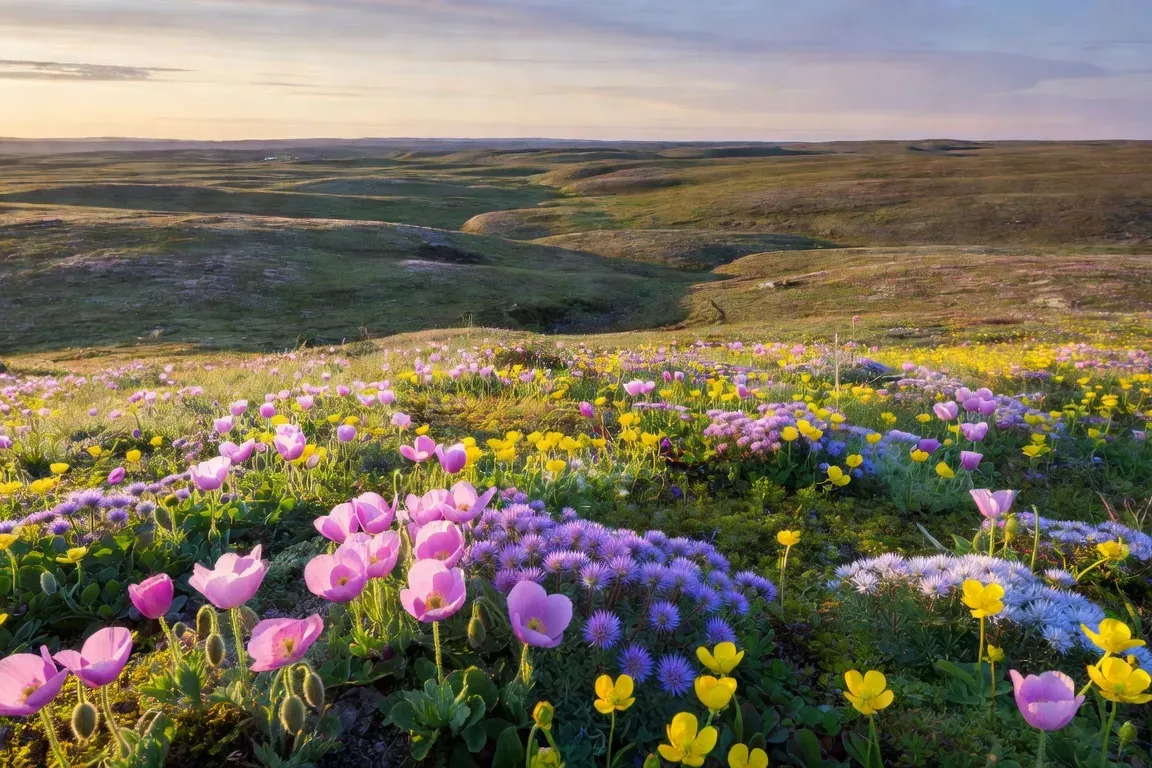
This is the most accessible season and the most recommended for a first trip. Temperatures oscillate between 5 and 18°C depending on village and time. The tundra is in full bloom, with surprisingly vivid colours — white cotton grass, purple fireweed, red ericaceous plants on the ground. Days are long: in Salluit, the midnight sun reigns in June and early July. Wildlife is active: caribou in migration, snow geese, beluga whales along the Hudson Bay coast, polar bears more rarely (and with mandatory accompaniment).
It is also the season when most tourism operators run at full capacity, when flights are most frequent, and when accommodation is more available.
September: the golden window
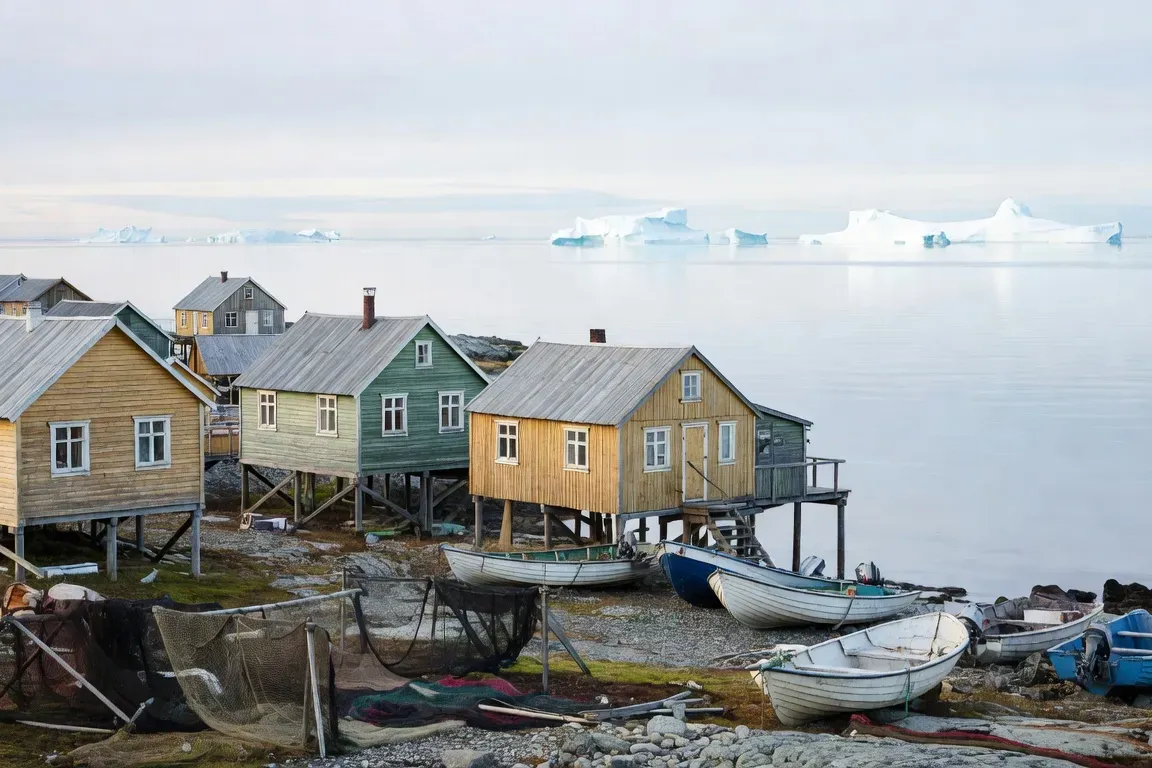
September deserves special mention. Temperatures remain acceptable (0 to 12°C), light becomes extraordinarily golden with Arctic autumn, and the first northern lights appear in skies that begin to regain darkness. Tourism is calmer than in July-August. It is probably the best period to combine photography, observation and comfort.
Winter (November to April)
Winter in Nunavik is spectacular but demanding. Temperatures of -25 to -45°C, very short days (sometimes only two or three hours of daylight in December in the northernmost villages), unpredictable weather conditions. The advantages are very real: frequent and intense northern lights, possibility of dog sledding experiences accompanied by local operators, incomparable winter atmosphere, and the chance to be present for cultural events like the Puvirnituq Snow Festival in April.
But it is a season that forgives no approximation. Very high quality technical clothing essential, accompaniment by a local guide strongly recommended, significant logistical margins to absorb plane delays. Not a “tourist” discovery trip, rather a supervised expedition.
Spring (April-May)
Transitional season, interesting for observing ice break-up and migratory returns. Temperatures rise toward 0°C, days lengthen, but melting makes some terrain impassable and ambient humidity may be harder to bear than the dry winter cold. A good window for experienced travellers wanting to avoid the high summer season.
Season comparison for travelling to Nunavik
| Season | Temperatures | Highlights | Constraints |
|---|---|---|---|
| Summer (mid-June to mid-September) | 5 to 18°C | Maximum accessibility, active wildlife, midnight sun | Peak season, limited accommodation |
| September | 0 to 12°C | Golden light, first northern lights, calmer tourism | Short window |
| Winter (November to April) | -25 to -45°C | Intense northern lights, dog sledding, Snow Festival | Very short days, demanding logistics |
| Spring (April-May) | Around 0°C | Ice break-up, migratory returns, fewer tourists | Impassable terrain, humidity |
Tip: for a first trip to Nunavik, favour summer or September. Winter offers a more spectacular experience but requires local guidance and technical preparation that few first-time travellers master right away.
Possible itineraries
There is no Nunavik circuit in the manner of classic circuits. Each trip is built according to villages of interest, local contacts and operator availability.
The “base + excursions” format
The most common for a first trip. You establish your base in Kuujjuaq (administrative capital, best served in hospitality and services) for a week, and you radiate according to opportunities: guided excursions in the tundra, visits to artistic workshops, days on the bay by boat, hikes in the surroundings. It is the simplest format logistically and the one that gives the best discovery/effort ratio for a first contact.
The “multi-village” circuit
For a 10-14 day trip, it is possible to visit two or three distinct villages using regional air links (Air Inuit). A typical circuit could be Kuujjuaq → Inukjuak → Puvirnituq, or Kuujjuaq → Kangirsuk → Salluit. Each transition requires at least one buffer day (frequent weather cancellations), and the cost of domestic flights is significant.
Specialised expedition
For experienced and well-supervised travellers, several operators offer expeditions focused on a specific activity: wildlife photography, beluga observation, tundra hiking, citizen science (caribou monitoring, climate observations). These formats require adapted physical preparation and a larger budget, but offer unique experience depth.
Cultural travel during an event
Several events punctuate the year: the Puvirnituq Snow Festival (April), the Kuujjuaq music festival (summer), the National Indigenous Peoples Day celebrations (June 21). Programming a trip around a cultural event offers opportunities for encounters and discoveries one would not make in ordinary visit.
Real cost of a trip: concrete figures
Let’s be precise to avoid disappointment. A 10-day trip to Nunavik in supervised format represents a budget of 5,000 to 8,000 Canadian dollars per person, excluding transport to Montreal. Here is the typical breakdown:
- Round-trip Montreal-Kuujjuaq flight: 1,500 to 2,500 CAD depending on season and anticipation;
- Domestic flights between villages (if circuit): 800 to 1,500 CAD;
- Accommodation (10 nights): 2,000 to 3,500 CAD;
- Meals (10 days): 600 to 1,200 CAD — Nunavik grocery prices are two to three times higher than southern;
- Supervised activities: 1,000 to 2,500 CAD;
- Crafts and souvenirs: variable, 200 to 1,000 CAD for significant artist support.
These figures may seem high. They simply reflect the real cost of life in a remote territory where everything must be transported. Comparatively to a trip in international Arctic destinations (Svalbard, Greenland, Alaska), Nunavik remains competitive and has the advantage of being in Canadian territory.
Detailed 10-day budget (per person, excluding flight to Montreal)
| Expense item | Range (CAD) |
|---|---|
| Round-trip Montreal-Kuujjuaq flight | $1,500 to $2,500 |
| Domestic flights between villages (if circuit) | $800 to $1,500 |
| Accommodation (10 nights) | $2,000 to $3,500 |
| Meals (10 days) | $600 to $1,200 |
| Supervised activities | $1,000 to $2,500 |
| Crafts and souvenirs | $200 to $1,000 |
Important: grocery prices in Nunavik are two to three times higher than in southern Quebec. This is not a one-off anomaly but a structural reality of transport in a remote region — factor it into any travel budget.
Essential ethical rules
This is probably the most important part of this guide. No other destination demands as much attention to respect for residents and their culture. Here are the principles that make the difference.
Ask before photographing
Never a photo of a person, especially a child, without having asked and obtained explicit consent. This rule, banal elsewhere, is fundamental here. Communities have lived through decades of intrusive tourism and folkloric representations that have left traces. A simple question — “May I photograph you?” — changes everything, even if the answer is no.
Buy local at fair prices
Inuit crafts (soapstone sculptures, jewellery, traditional clothing) are a major economic source for community artists. Buy directly in local cooperatives, accept displayed prices without trying to negotiate as in a flea market, and keep in mind that you are paying for several days or weeks of work done in demanding conditions.
Respect cultural sites
Inuksuit (stone cairns), hunting and fishing sites, ancient summer camps are elements of living heritage. One does not sit there for a selfie, one does not move stones, one does not take anything. If you are accompanied by a local guide, follow their indications without arguing.
Learn a few words of Inuktitut
“Atii” (hello), “nakurmiik” (thank you), “illaqquaa” (yes), “aaka” (no). Four words are enough to show your consideration and change the welcome you receive. The simple linguistic effort counts as much as the word itself.
Avoid condescending tone
You are not arriving in an “isolated community at the end of the world” where people “still live like their ancestors.” You are arriving among residents who follow international news, who use the same digital tools as you, who have sophisticated political opinions on the issues that concern them, and who only ask to be treated with the same consideration a traveller would receive in Montreal or Quebec City. See our feature on Nunavik’s digital infrastructure in 2026 to understand that technical modernity is very present in the region.
Understand recent history
A few hours of reading before leaving makes a considerable difference. The James Bay and Northern Quebec Agreement (1975), the Makivik Society, residential schools, the consequences of forced sedentarisation, the forced relocations of families in the 1950s-1960s — pages of history useful to know to avoid asking naive questions that may hurt.
How to choose your operator
Several structures organise trips to Nunavik. Some criteria for choosing:
- Does the operator work in partnership with community organisations (Makivik Society, Kativik, local cooperatives)?
- Does a significant portion of revenue go to visited communities?
- Are guides from communities or in training to become so?
- Does the operator communicate concretely about its ethical practices, not in vague terms?
- Does the program include non-commercial time for human encounter, or only consumable “activities”?
Network sites that share a similar approach to respectful hospitality in remote regions — for example Soleica Chalets in Quebec — can also serve as a reference to compare practice standards.
Practical preparation
A few often-neglected practical points:
- Technical clothing adapted to the chosen season; do not underestimate the wind even in summer;
- Complete travel pharmacy, because there is no commercial pharmacy in the majority of villages;
- Cash in reasonable quantity — payment terminals exist but can fail, and some craft transactions are in cash;
- Phone: your standard plan works in most villages, but with data caps that can saturate quickly;
- Mosquito and blackfly repellent in industrial quantity for summer season;
- Prior reading: at least one history or Inuit literature book before departure.
To go further on the human aspect of accompaniment, see our interview with a Nunavik travel companion specialised in community tourism.
Conclusion
Travelling to Nunavik is not a decision to take lightly, but it is an experience that lastingly marks those who engage with respect and preparation. The territory is of raw and powerful beauty. Inuit communities welcome visitors who make the effort to understand their culture and respect their codes.
To plan a stay in detail in the administrative capital and entry point to Nunavik, see our complete guide to Kuujjuaq in 2026.
Responsible tourism is not a marketing slogan. It is a travel mode requiring more effort and more attention than conventional destinations, but which returns in intensity and authenticity what it requires in investment. For Nunavik in particular, it is also a survival condition for a fragile economic sector: if tourism becomes disrespectful or massive, communities will close, and no one will benefit.
The trip worth taking is the one that leaves behind a smaller trace than what one received. In Nunavik, more than anywhere else.
Frequently asked questions
Is a permit or authorisation required to visit Nunavik?
No, no specific permit to enter the region. Nunavik is part of the Quebec territory, accessible to Canadian residents and international tourists under the usual conditions of entry to Canada. However, certain specific activities (hunting, fishing in protected areas, access to sensitive cultural sites) may require permits or accompaniment by a local guide. It is strongly recommended to go through a local agency or operator rather than attempting an unaccompanied individual trip.
What is the best season to visit Nunavik?
It depends on what you are looking for. The mid-June to mid-September window is the most accessible: mild temperatures (5 to 18°C depending on village), visible vegetation, active wildlife, long days. September offers the first northern lights and exceptional golden light. Winter (November to April) is spectacular but requires rigorous preparation: temperatures of -25 to -45°C, very short days, and more complex logistical conditions. Spring (April-May) is a transitional season, interesting for observing ice break-up.
How much does a 7 to 10 day trip to Nunavik cost?
Plan between 4,000 and 9,000 Canadian dollars per person for an organised trip of about ten days, excluding transport from your home city to Montreal. The main item is the round-trip flight to Kuujjuaq (1,500 to 2,500 CAD depending on season), followed by accommodation (200 to 350 CAD per night), meals (60 to 120 CAD per day) and supervised activities (200 to 600 CAD per day). Independent travel without supervision is possible but discouraged for safety and community respect reasons.
Which villages are most accessible to visitors?
Kuujjuaq, the administrative capital, is the main entry point and offers the most infrastructure (hotel, restaurants, vehicle rental). Inukjuak and Puvirnituq are historically more open to cultural tourism thanks to their artistic initiatives (Inukjuak Cooperative, Puvirnituq Snow Festival). Salluit attracts spectacular landscape enthusiasts. Smaller villages require a more cautious approach — it is essential to be invited or accompanied, not to arrive without notice.
What ethical rules should be respected with Inuit communities?
A few simple but essential principles. Ask before photographing people, never without explicit consent. Buy local and pay fair prices — Inuit crafts are an important source of income for communities. Respect cultural sites and traditional hunting areas. Learning a few words of Inuktitut ("atii" hello, "nakurmiik" thank you) shows your consideration. Avoid condescending tone or folklorism. Understand that you are invited on an Indigenous territory that is not an amusement park, but a place of life.
What is the difference between organised travel and independent travel?
Organised travel via a local operator or specialised agency (often partnered with the Makivik Society or community organisations) guarantees access to activities, respect for community protocols, and safety. Independent travel is technically possible but requires very thorough preparation: complete logistical autonomy, ability to deal with weather unforeseen events, fine knowledge of cultural protocols. For a first trip, the supervised format remains very strongly recommended.