
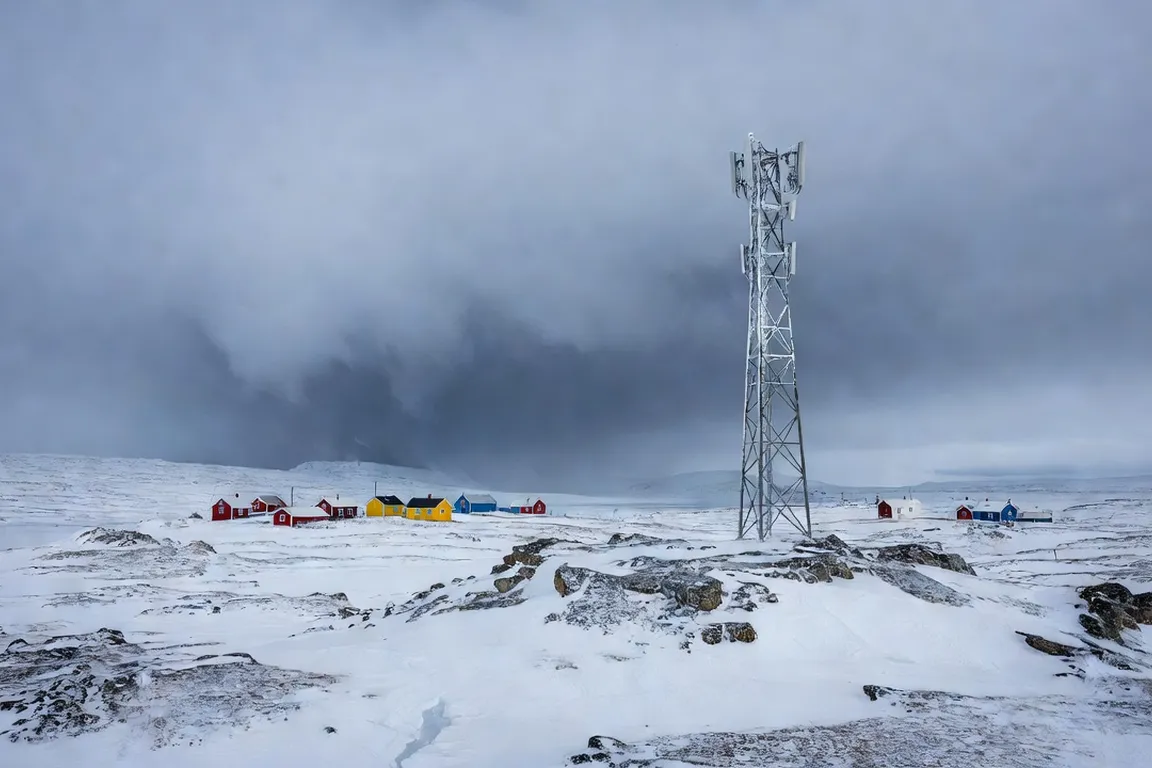
In Nunavik and Eeyou Istchee, cellular mobile telephony operates under constraints that differ sharply from fixed residential broadband. Fixed connections rely on microwave backhaul or satellite links to deliver household internet, while cellular service depends on individual towers serving only the immediate perimeter of each village. This separation arises because population density remains extremely low outside settlement boundaries, making continuous corridor coverage economically unviable for carriers. As a result, residents experience reliable voice and data only within a few kilometers of community centers, with service typically dropping once they travel by snowmobile, boat, or all-terrain vehicle toward hunting grounds or neighboring settlements. It is not unusual for a hunter leaving a village on a long trail to lose cellular signal within a few kilometers of the village edge, forcing reliance on a pre-arranged VHF schedule with family members or a personal satellite communicator instead. Terrain features such as eskers and river valleys can further attenuate signals beyond what simple distance calculations would suggest.
The deployment logic prioritizes emergency and administrative needs within villages rather than inter-community travel. Each tower typically uses 4G LTE equipment mounted on masts powered by diesel generators or hybrid solar-wind systems. Backhaul often routes through the same satellite or microwave paths used for residential internet, which can create shared capacity limits during peak hours when many users are online at once. For a full breakdown of how these shared resources affect daily connectivity, consult the village-by-village internet guide for Nunavik.
The difference between residential internet and cellular coverage in Nunavik
Residential internet in Nunavik has expanded through community connectivity projects and upgraded satellite gateways in recent years, yet cellular infrastructure generally follows a separate capital-expenditure cycle managed by mobile carriers. Fixed services target indoor usage, whereas cellular plans emphasize mobility within the village footprint. Tower sites must withstand extreme wind loads, permafrost heave, and very low temperatures, which drives up construction and maintenance costs considerably compared with towers built in southern Canada. Maintenance crews typically visit remote sites only a few times a year, which can lead to longer outage windows than would be tolerated in southern Quebec, particularly when replacement parts must be flown in rather than trucked from a nearby depot.
This separation also affects spectrum allocation and planning. Carriers generally lease specific bands for 4G in the region, while residential providers focus on backhaul spectrum for satellite and microwave links. The practical result is that a household may enjoy a decent fixed internet connection indoors while a phone carried outside shows no cellular signal just a short distance from the village center, since the two networks are engineered around fundamentally different design goals.
This distinction has concrete consequences for local organizations. A clinic or municipal office may have a perfectly reliable fixed connection for its administrative systems while still depending on a comparatively less robust cellular network for staff communications while traveling. This dual reality forces local planners to think about communications resilience holistically, rather than assuming that one type of network can cover every use case for a community.
2026 status: which villages have 4G, which don’t
By early 2026, 4G coverage exists in most of Nunavik’s fourteen villages, though the strength and reliability of that coverage vary considerably. Kuujjuaq, Inukjuak, and Puvirnituq host the strongest deployments, generally with multi-sector LTE sites and the highest indoor speeds in the region. Smaller communities such as Ivujivik, Akulivik, Quaqtaq, Aupaluk, and Tasiujaq have gained 4G access more recently, often through upgrades funded in part by federal connectivity programs. A handful of the smallest or most remote villages still rely primarily on 3G fallback, with full LTE expected only in the coming years.
Eeyou Istchee communities including Chisasibi and Wemindji have had 4G for some time, while more remote communities like Eastmain and Nemaska still rely more heavily on extended 3G. The table below summarizes the general status for major settlements.
| Village | 4G Status (2026) | Network type |
|---|---|---|
| Kuujjuaq | Full LTE | Multi-tower |
| Inukjuak | Full LTE | Multi-tower |
| Puvirnituq | Full LTE | Single or dual tower |
| Ivujivik | LTE, recently upgraded | Single tower |
| Umiujaq | 3G fallback mostly | Single tower |
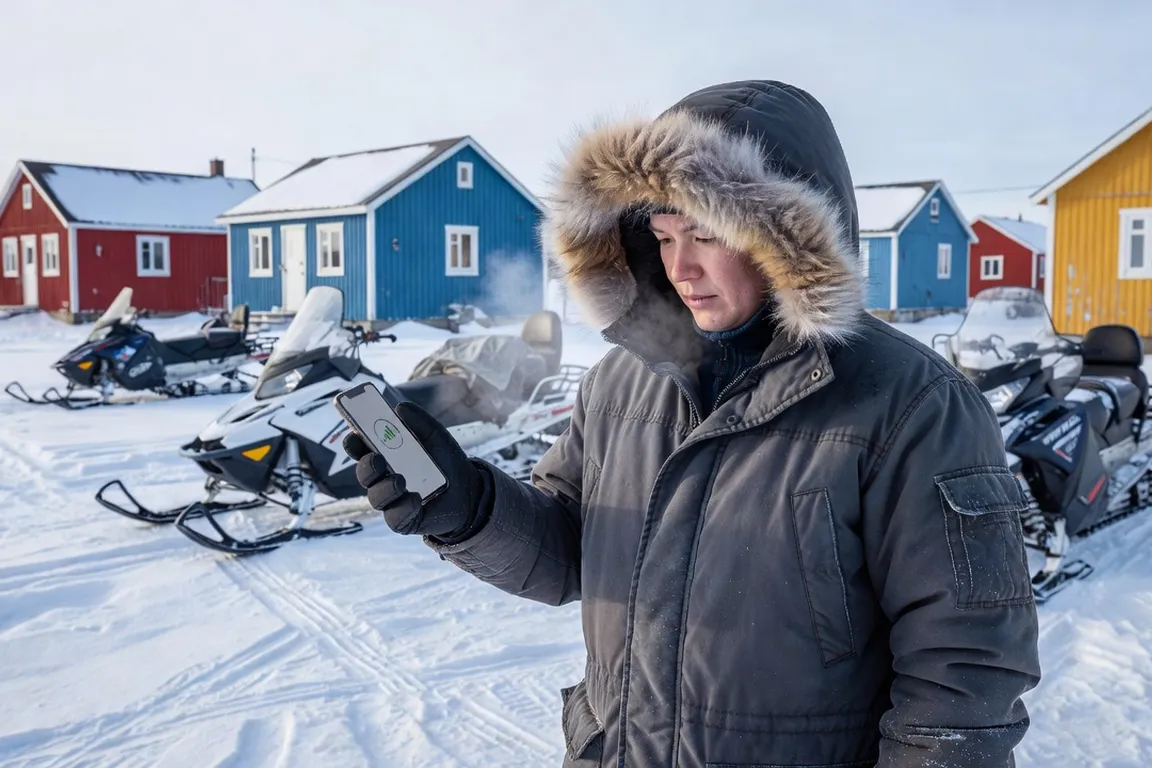
For deeper statistics on the most remote locations, see the dedicated report on connectivity in Nunavik’s most isolated villages. Even in villages with LTE towers, packet loss and signal degradation during heavy snowfall or icing events remain a recurring technical challenge, which is why heated radomes and other weatherproofing measures are increasingly common on newer installations.
Why 5G remains marginal in Northern Quebec
5G deployment requires dense small-cell infrastructure and fiber backhaul that northern geography largely precludes. The mid-band spectrum favored for 5G offers limited propagation in subarctic terrain, while millimeter-wave bands suffer even greater attenuation from snow and ice. Carriers have generally limited themselves to laboratory-style trials or small institutional deployments for users such as health centers and airports, rather than any commercial rollout to the general public.
Power constraints further restrict rollout. A typical 5G radio draws meaningfully more electricity than a comparable 4G unit, which strains diesel micro-grids that are often already running close to capacity. Until hybrid renewable upgrades reach a much larger share of tower sites, 5G will likely stay confined to proof-of-concept installations rather than widespread residential or mobile use.
Blind spots between communities: a real risk
Travel corridors between villages can span dozens to hundreds of kilometers of tundra and coastline with zero cellular signal. Snowmobile trails used for traditional hunting and medical evacuations cross these blind zones routinely. Search-and-rescue cases involving lost cellular contact during a sudden whiteout or mechanical failure far from the nearest tower are a recurring, well-documented pattern across the region, and satellite beacon coordinates are often the only reliable way to locate a stranded party.
These gaps persist because economic models favor population-centric towers over linear coverage. Community leaders have repeatedly requested corridor repeaters along the busiest routes, but cost-benefit analyses generally show a negative return on investment for carriers unless subscriber density along a given corridor is unusually high for the region.
Key takeaway: Travelers must assume complete loss of mobile service once they leave village limits and plan accordingly with redundant communication devices.
Safety and emergencies: calling for help without a network
Emergency services in Nunavik rely on a patchwork of VHF radio, satellite phones, and community dispatch centers. When a snowmobile accident occurs beyond tower range, the first response often comes from nearby hunters monitoring the same frequency rather than 911 routed through cellular networks. The regional police service maintains repeater stations at strategic high points, yet coverage remains incomplete on secondary trails. Personal locator beacons and satellite communicators have become the standard fallback in this context, since they can reach search-and-rescue coordination centers directly regardless of cellular coverage.
A practical checklist for winter travel includes:
- Registering satellite communicator details with local search-and-rescue before departure
- Carrying a fully charged VHF handheld with spare batteries
- Filing a float plan with family or the local hunter support program
- Avoiding travel during forecast whiteout conditions
Recent integration of drone logistics in isolated communities has begun to supplement these protocols in some pilot cases. When weather grounds helicopters, small fixed-wing drones can potentially deliver emergency equipment to trail-side caches faster than ground transport would allow. Expanded use of these systems appears in the dedicated overview of drone logistics in isolated communities.
Roaming, plans and costs for visitors and professionals
Major Canadian carriers generally offer roaming on the regional network, though daily rates and data throttling policies vary by carrier and are often stricter than in southern Canada. Mining contractors and government employees frequently purchase local prepaid SIMs from community stores, which can work out considerably cheaper than roaming for extended stays. International visitors should verify device compatibility with the LTE bands used locally before travel, as older handsets may fall back to unusably slow connections.
| Carrier | Typical Roaming Approach | Local Prepaid Option |
|---|---|---|
| Bell | Daily roaming rate | Available in some communities |
| Telus | Daily roaming rate | Available in some communities |
| Rogers | Limited footprint | Not widely offered |
Present operators and their deployment strategies
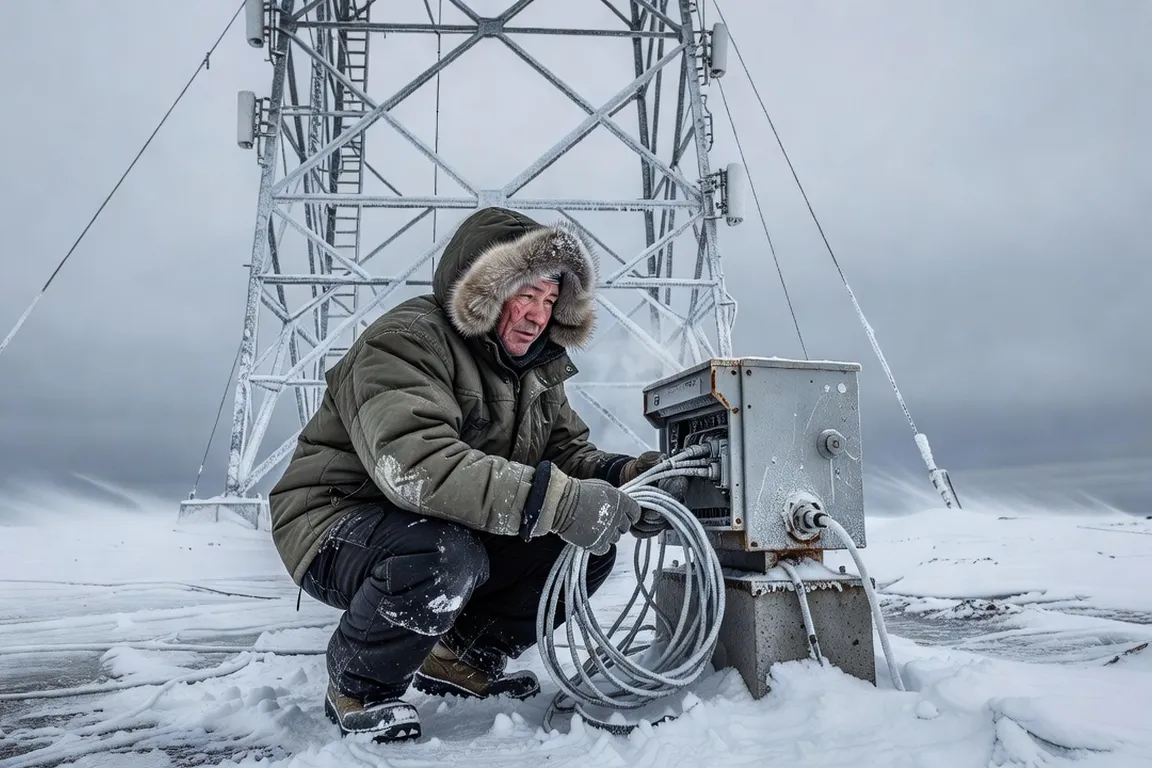
A small number of major carriers, alongside a regional consortium, share the spectrum and infrastructure across Nunavik. Deployment generally prioritizes villages with airports and health centers first, followed by phased expansion to outlying settlements, since these institutional needs justify the high fixed cost of a new tower more reliably than residential demand alone. Technical teams increasingly coordinate with IT development and infrastructure partners to integrate remote monitoring systems that can flag power anomalies before they cause a full outage, which meaningfully shortens repair timelines compared with waiting for a failure to be reported manually. Municipal offices themselves are increasingly reliant on this same connectivity backbone as their own services move online, a shift covered in our feature on digital municipal governance in Nunavik’s northern villages.
This shift toward shared infrastructure and remote monitoring reflects a broader trend across the region: rather than each carrier building and maintaining fully independent towers, sharing agreements reduce the total number of physical sites that need diesel fuel, spare parts, and technician visits. For a region where every additional truck, boat, or cargo flight adds real cost and carbon footprint, this kind of consolidation is often the most realistic path to gradually improving coverage without dramatically increasing the number of installations that must be serviced each year.
Alternative technologies: personal satellite and emergency communication
Satellite messengers such as Garmin inReach have become standard equipment for long-distance travel. These devices use dedicated satellite constellations to send short text messages and trigger SOS beacons with location data, independent of any cellular network. Adoption among outfitters and experienced travelers has grown steadily over the past several years, since these devices remain one of the few reliable ways to coordinate logistics or signal distress once cellular coverage ends at the edge of a village.
Battery life under real winter conditions remains a practical limitation worth planning around: extreme cold reduces the effective capacity of most consumer batteries, so experienced travelers generally carry a spare power source and keep the device insulated close to the body when not in active use. HF radio and community-coordinated frequencies remain a robust complement to satellite messengers in this region, particularly during the rare occasions when solar activity temporarily disrupts satellite communication.
Soleica’s role in local telecom support
Soleica, based in Kuujjuaq, supports tower maintenance and coordination work across several Nunavik villages. Its technicians perform regular inspections and train local apprentices in antenna alignment and generator troubleshooting, which helps reduce the region’s historical dependence on flying in specialized personnel from the south for every routine repair. Building this local technical capacity is widely seen as one of the more durable ways to improve network reliability over time, since it shortens response times for the kind of minor faults that would otherwise sit unresolved for days while awaiting a technician’s travel schedule.
Training a resident workforce also has knock-on benefits beyond telecom itself: apprentices who learn antenna alignment, generator troubleshooting, and basic electrical safety often go on to apply those skills in adjacent fields, from municipal infrastructure to small-scale renewable energy installations. This kind of skills transfer is one of the more durable, if less visible, outcomes of investing in local technical training rather than relying solely on fly-in contractors for every maintenance visit.
Coverage expansion outlook for 2026-2028
Planned investments generally target the remaining 3G-only villages plus corridor coverage along the most heavily used snowmobile routes, though the exact pace of rollout depends heavily on available public funding and the logistics of shipping equipment to remote sites. Community consultations have emphasized the value of a glossary of essential Nunavik terms to standardize reporting of coverage gaps between Inuktitut-speaking residents and southern engineers, since terminology mismatches can slow down the diagnosis of a reported problem.
Regulatory bodies at both the provincial and federal level increasingly require carriers to report service availability and restoration times for northern communities, which gives residents somewhat more visibility into planned improvements than was historically the case. Even so, the fundamental economics of building cellular infrastructure in a region with very few potential subscribers per site mean that full highway-style coverage between villages is unlikely to arrive on the same timeline as urban network upgrades. Residents and visitors alike are best served by treating any coverage map as an approximation rather than a guarantee, and by carrying backup communication equipment for any trip that leaves the immediate vicinity of a village.
Tip: Monitor Industry Canada spectrum auction results and Kativik Regional Government announcements for the earliest indication of new site approvals.
Frequently asked questions
Which Nunavik villages have 4G coverage in 2026?
In 2026, the best-served 4G villages in Nunavik remain Kuujjuaq, Inukjuak and Puvirnituq, where the operators present (Bell, Tamaani) offer stable coverage within the inhabited perimeter. All 14 villages have at least one active cell tower, but coverage generally stops abruptly right outside the built-up area, without a gradual buffer zone as in southern Quebec.
Is 5G available anywhere in Nunavik or Eeyou Istchee?
5G remains marginal and, where it exists, is limited to test or institutional installations in the regional capital Kuujjuaq. Widespread 5G deployment requires backhaul bandwidth (the link between the tower and the rest of the network) that most villages do not yet have in 2026, with 4G remaining the functional standard across the region.
What should you do in an emergency outside cellular coverage on a road or snowmobile trail?
Outside cellular coverage, the reference solution remains a personal satellite communicator (such as a Garmin inReach or a distress beacon), which can send an SOS signal with GPS coordinates independently of the mobile network. Local authorities also recommend always informing someone of a planned route before heading out by snowmobile or on an isolated road.
Why does coverage stop abruptly right outside villages?
Coverage stops quickly because cell towers are sized to serve a village's inhabited perimeter, with no relay stations between communities that can be dozens to hundreds of kilometres apart. Installing relay towers along these stretches would be very costly for a small number of users, which limits the economic case for operators.
Does roaming with a plan from southern Quebec work in Nunavik?
Roaming with a plan from southern Quebec generally works inside covered villages, but roaming fees may apply depending on the carrier and plan type. It is recommended to check with your operator about conditions specific to Nunavik before departure, as some regional plans explicitly exclude this zone.
What mobile coverage expansion projects are planned for 2026-2028?
Several expansion projects are being discussed by operators and regional bodies for the 2026-2028 period, with priority given to the villages currently least well served. The pace of deployment nonetheless depends on public funding and the logistical constraints specific to transporting equipment to the Far North.