
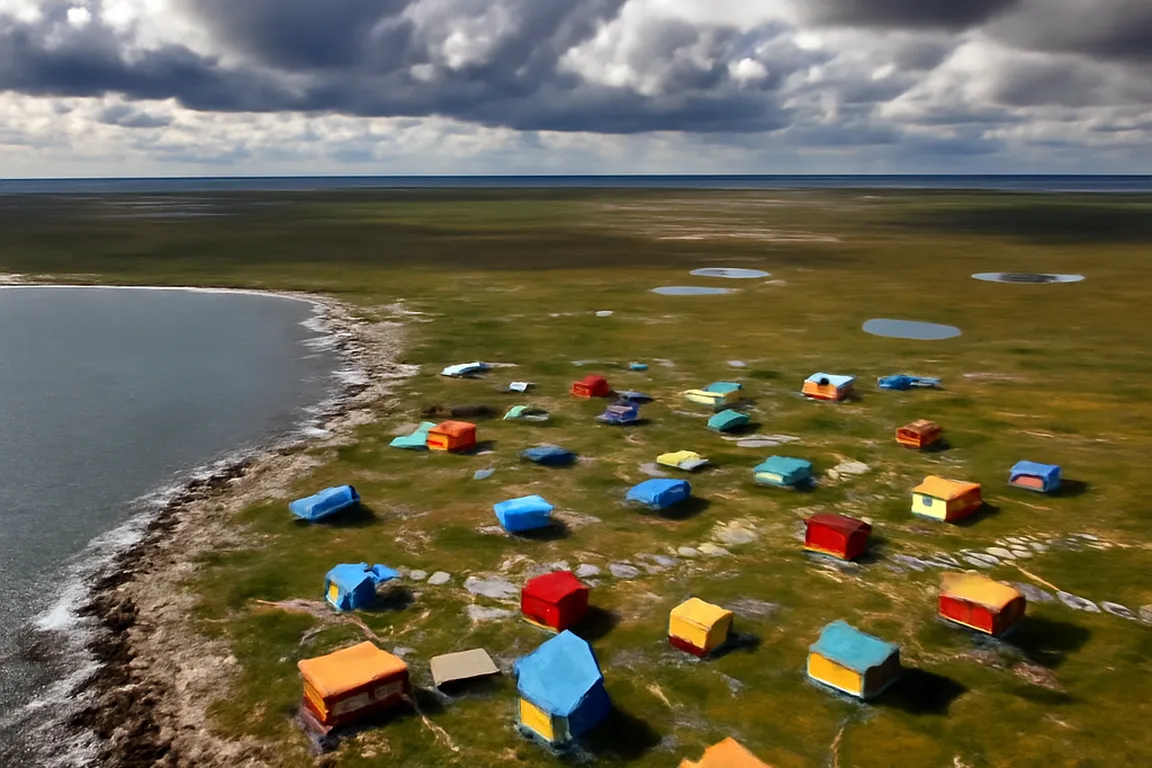
Among Nunavik’s 14 villages, six stand out for a particularly pronounced degree of geographic isolation — and the connectivity challenges that follow directly. Ivujivik, Quebec’s northernmost community, sits roughly 1,700 km north of Montreal as the crow flies, accessible only by plane. Aupaluk, the smallest, has fewer than 200 residents. Each faces specific constraints that this guide attempts to document accurately.
This report complements our guide to Nunavik’s 8 main villages to offer a complete picture of connectivity across the entire region.
What makes these villages “extremely isolated” for connectivity?
Connectivity isolation is not simply about geographic distance. It results from the combination of several factors: the absence of road access (all Nunavik villages, with the partial exception of Kuujjuaraapik-Whapmagoostui, are inaccessible by road, making every piece of telecom equipment arrive by expensive air freight or by ship during the brief summer navigation season); small populations (200 to 1,000 residents each, where the commercial economics of infrastructure investment are structurally difficult without public subsidies); extreme climates (-40°C temperatures, frequent Arctic storms, permafrost complicating ground equipment installation); and single-operator dependency (in several villages, Tamaani is the only de facto operator). Facing these same constraints, several organizations are now testing drone transport for urgent, low-tonnage deliveries: see our feature on drones and delivery logistics in Nunavik’s isolated communities.
Important: among the six villages in this guide, five — Ivujivik, Akulivik, Quaqtaq, Aupaluk and Tasiujaq — share a common profile of very small population (200 to 600 residents), no road access whatsoever, and near-exclusive reliance on Tamaani and Starlink. Only Kuujjuaraapik-Whapmagoostui escapes this profile thanks to its seasonal road access, making it a special case in this list rather than a seventh “extremely isolated” village on par with the other five. Common mistake: underestimating installation and equipment delivery timelines in these five villages. A Starlink terminal or Tamaani equipment ordered outside the short summer navigation window (July to October) may require costly air freight, or in the worst case wait for next season’s ship — a potential delay of several months to a full year over a simple scheduling oversight.
Ivujivik — at the digital end of the world
Population: approximately 400 | Latitude: ~62°N (Quebec’s highest)
Ivujivik is Quebec’s northernmost community, perched at the tip of the Ungava Peninsula on Hudson Strait. Tamaani Internet (geostationary satellite) and Starlink (LEO, available since 2023) are the two providers. Typical Tamaani speeds: 5 to 20 Mbps; latency 600 ms+. Starlink reduces latency to 30-50 ms with speeds of 50 to 150 Mbps, but adoption remains partial due to cost. Residential Tamaani plans can exceed $200/month — among Nunavik’s highest, with no economies of scale from the small subscriber base.
The high latency of geostationary satellite particularly affects telemedicine — essential in a community so far from Kuujjuaq Hospital. Hudson Strait storms cause regular service interruptions on geostationary links.
Akulivik — between Tamaani and a community micro-network project
Population: approximately 600 | Location: east Hudson Bay coast
Akulivik stands out for a notable community initiative: a local micro-network project that seeks to pool connectivity costs between institutions, businesses and households. Tamaani and Starlink are the providers. The community’s collective approach — several institutions sharing a dedicated Starlink connection to reduce per-user cost — is being watched closely by other Nunavik villages as a potentially replicable model.
Quaqtaq — connectivity in a dynamic small community
Population: approximately 400 | Location: Hudson Strait, south shore
Quaqtaq presents a more dynamic connectivity profile than its small size might suggest. Tamaani and Starlink are available. Typical Tamaani speeds: 8 to 20 Mbps. Quaqtaq’s location on the south shore of Hudson Strait gives it slightly less severe weather exposure than Ivujivik, translating to better geostationary satellite reliability. The local cooperative has developed e-commerce capabilities. See also our log-book entry on Quaqtaq.
Aupaluk — the challenge of connecting the smallest village
Population: approximately 200 | Location: Ungava Bay, east shore
Aupaluk is Nunavik’s smallest community. With 200 residents, the economies of scale that justify infrastructure investment are nearly non-existent for a commercial operator. Tamaani is the main provider; Starlink is technically available but little adopted due to cost. Tamaani speeds: 3 to 12 Mbps — Nunavik’s weakest. Federal and provincial subsidy programmes targeting communities under 500 inhabitants have funded infrastructure upgrades for the school and municipal office, including a Starlink subsidy for institutions awarded in 2024-2025.
Tasiujaq — fjord and satellite
Population: approximately 300 | Location: fjord, Ungava Bay
Tasiujaq — “resembling a lake” in Inuktitut — is nestled in an Ungava Bay fjord. Its topography creates satellite antenna orientation constraints that slightly complicate installations. Tamaani and Starlink are available; typical Tamaani speeds 8 to 18 Mbps. Starlink’s LEO constellation, accessible from multiple angles, generally works around the fjord elevation issue. Tasiujaq is one of the few Nunavik villages with a seasonal ice road connection to Kangiqsujuaq, facilitating winter equipment resupply.
Kuujjuaraapik-Whapmagoostui — the terrestrial gateway
Population: approximately 1,000 (Inuit + Cree) | Location: south Hudson Bay tip
A unique case in Nunavik: a bilingual Inuit-Cree village at the mouth of the Great Whale River — and the only northern community accessible by a paved road from Radisson via the James Bay Road. Providers: Bell/Télébec (thanks to road access), Tamaani, Xplore, Starlink. Bell wired connections deliver 25 to 50 Mbps — Nunavik’s best connectivity among these six villages, and costs slightly lower than other Nunavik communities due to provider competition.
Common challenges: frost, storms, permafrost and infrastructure
All six villages share structural infrastructure challenges: permafrost that prohibits buried cables; Arctic storms that can damage antennas or cut satellite signals; reliance on air freight for replacement equipment between navigation seasons; and dependence on locally-trained technicians whose maintenance training is often limited.
Residential internet outages are one thing, but residents traveling between these isolated villages face a related but distinct challenge: the current state of 4G/5G mobile coverage remains extremely limited outside the immediate village perimeter, which is why a personal satellite communicator is generally recommended for anyone traveling by snowmobile or on isolated routes between these six communities.
Comparative table of the six villages
| Village | Pop. | Providers | Typical speed | Reliability | Distinctive feature |
|---|---|---|---|---|---|
| Ivujivik | ~400 | Tamaani, Starlink | 5-150 Mbps | Low | Quebec’s northernmost |
| Akulivik | ~600 | Tamaani, Starlink | 5-150 Mbps | Low-Fair | Community micro-network project |
| Quaqtaq | ~400 | Tamaani, Starlink | 8-150 Mbps | Fair | Active local e-commerce |
| Aupaluk | ~200 | Tamaani (Starlink limited) | 3-12 Mbps | Low | Nunavik’s smallest village |
| Tasiujaq | ~300 | Tamaani, Starlink | 8-120 Mbps | Fair | Fjord, winter ice road |
| Kuujjuaraapik | ~1,000 | Bell, Tamaani, Xplore, Starlink | 10-50 Mbps | Good | Only road-accessible village |
Indicative data. Estimated residential Tamaani costs: $120-200/month depending on village.
For cost details and available subsidy programmes, see our Nunavik internet costs guide 2026.
For connectivity in the most populated villages — Kuujjuaq, Puvirnituq, Salluit, Inukjuak — see our village-by-village guide for the 8 main communities.
For news and analysis on isolated Indigenous communities in Quebec, Le Peuple Actu regularly publishes coverage on isolated Indigenous communities in Quebec.
Frequently asked questions
Is there internet in Ivujivik, Quebec's northernmost village?
Yes, Ivujivik has internet access in 2026. Tamaani Internet provides coverage via geostationary satellite link, and Starlink is available for residential and professional uses. Speeds remain modest compared to larger villages — between 5 and 20 Mbps for Tamaani — and the connection is more vulnerable to extreme weather typical of Hudson Strait.
How is Quaqtaq connected to the internet in 2026?
Quaqtaq is served by Tamaani Internet (geostationary satellite) and Starlink. Despite its small size (approximately 400 inhabitants), the community has developed several local digital initiatives that have driven gradual infrastructure improvements. Tamaani speeds are typically 8 to 20 Mbps, complemented by Starlink for bandwidth-intensive uses.
Does Aupaluk have access to Starlink?
Yes, Starlink is technically available in Aupaluk as throughout Nunavik. However, adoption remains limited in this village of approximately 200 residents due to the upfront equipment cost (~$650) and monthly subscription ($140-170). Tamaani remains the primary provider, with limited service quality — speeds of 3 to 12 Mbps — making Aupaluk the least-connected of Nunavik's 14 villages.
Is Kuujjuaraapik accessible by car from the south?
Kuujjuaraapik-Whapmagoostui is the only Nunavik village accessible by road from the south via the James Bay Road, at least during winter (ice road). This explains why its connectivity is better than most other villages: Bell can maintain partial wired infrastructure there, and equipment logistics are simpler.
How do emergency services communicate in villages without stable connections?
Emergency services in northern Nunavik communities rely on a redundancy network combining: VHF/UHF radio for local communications, dedicated satellite links for medical emergencies (CLSC telemedicine), and Iridium satellite phones for situations where other systems fail. Public institutions (CLSCs, Kativik Police Force) have priority connections separate from the residential network.