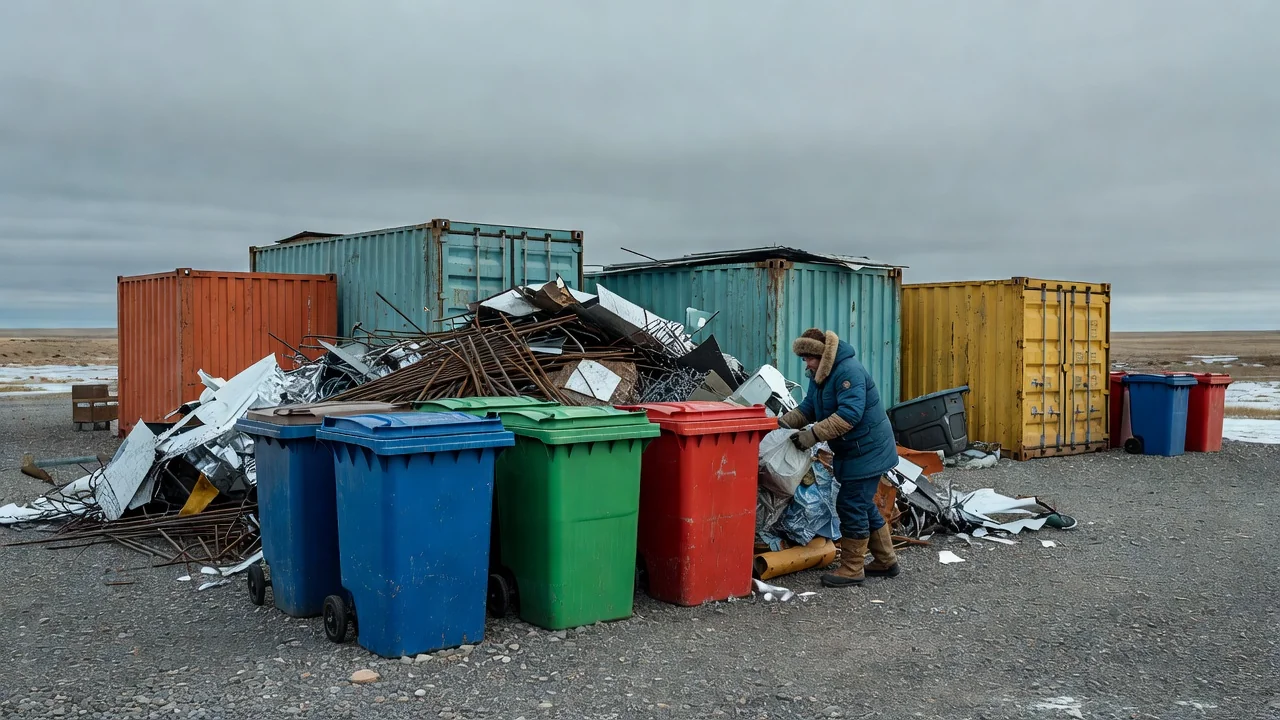
Waste management in Nunavik cannot replicate the models used in southern Québec. The 14 villages are connected neither to one another nor to the south by a road network: air transport runs year-round, but heavy materials leave the region only by sealift, the seasonal marine transport. Permafrost, climate and remoteness affect every stage: collection, sorting, storage and shipment.
The practical response, ingenious and adapted to the territory, relies on targeted streams rather than the immediate implementation of universal collection. The Kativik Regional Government (KRG) and its partners are making progress mainly on metal recovery, used oil management and composting.
Large volumes and little curbside recycling
In 2015, according to the residual materials management plan adopted by the KRG, no region-wide curbside recycling system existed. The roughly 12,000 tonnes of waste produced each year by the 14 communities were then buried, burned or stored at local disposal sites.
The KRG’s 2021-2027 plan uses a higher estimate: about 15,742 tonnes of residual materials a year for Nunavik as a whole. It also recalls the objectives of Québec’s policy, such as recycling 75% of paper, cardboard, plastic, glass and metal, to which Nunavik must contribute while taking its geographic context into account.
The 2015 plan provided for selective collection of plastic, metal, glass and paper, with each community choosing between voluntary drop-off at a central container or door-to-door collection, along with a metal recycling plant, operated by the KRG’s municipal works department, that would visit communities by sealift.
In this context, waste management distinguishes among several realities:
- residual waste, which is difficult to recover locally;
- recyclable materials that can be sorted, compacted and shipped;
- regulated products, which require separate handling;
- materials that can sometimes be reused within the community;
- organic matter, for which local solutions are being set up.
Why recycling is costly in northern villages
The KRG’s 2021-2027 plan stresses that sealift is the only way to move residual materials out of the region, and that it is seasonal, costly and complex. In November 2022, Radio-Canada reported that the KRG was paying $300 per tonne to ship metal to Montréal, compared with an estimate of under $200 during the 2019 tender process.
These figures illustrate a structural reality: a recyclable material is only useful if it is sufficiently well sorted, consolidated, compacted and safely stored before departure.
Several factors weigh on these costs:
- the dispersion of Inuit communities across a vast territory;
- the absence of a road network linking the villages;
- seasonal and navigation constraints;
- the need for containers, compaction equipment and storage space;
- the need to coordinate departures with the sealift schedule.
Understanding northern sealift logistics helps illustrate why return shipments must be planned well in advance. Before shipment, municipalities must also mobilize staff, identify materials, protect them from the weather and avoid mixing that would make a shipment unusable. In a northern environment, storage becomes a central step in the chain.
Metals: remove fluids, compact, ship by sealift
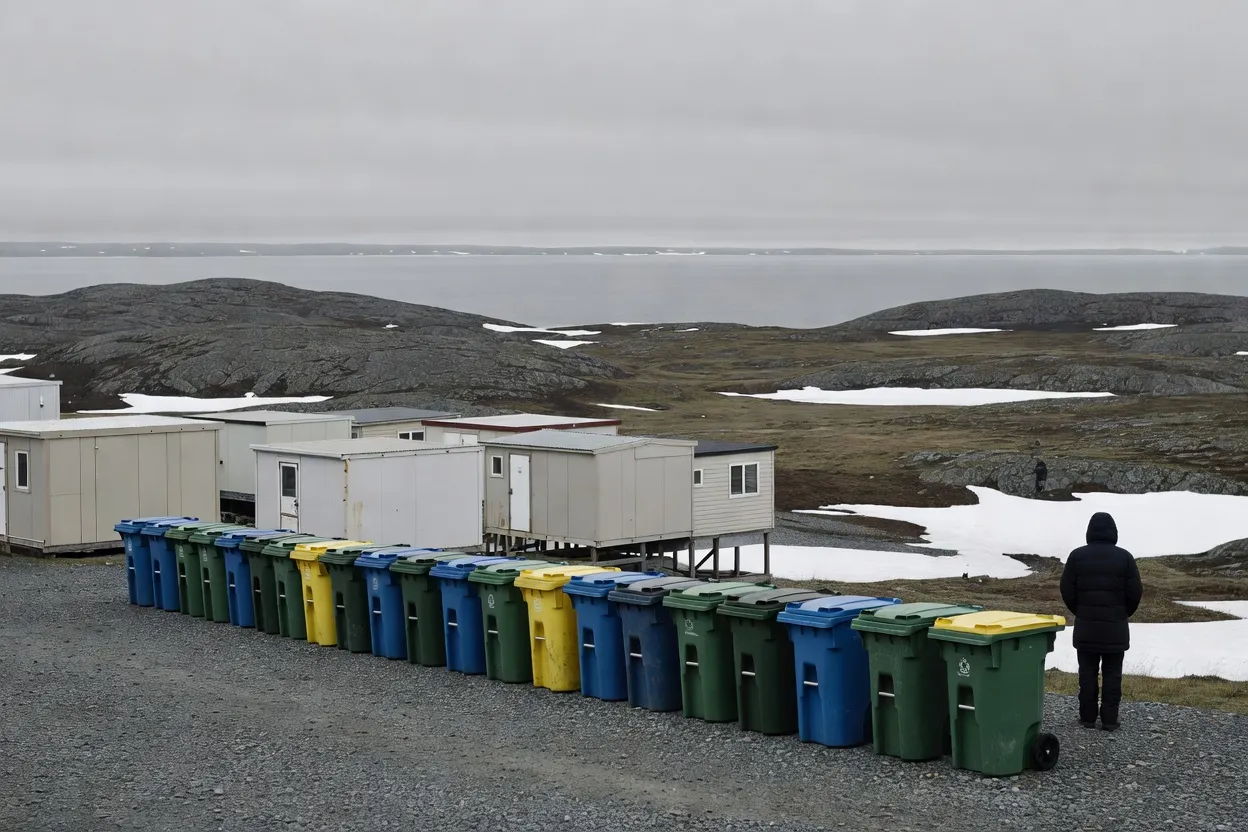
The Kativik Environmental Advisory Committee (KEAC) describes the KRG’s metal recycling project: scrap metal accumulated at landfills and elsewhere in the villages, notably unserviceable vehicles and heavy equipment, is first stripped of hazardous materials (batteries, oil, gas, antifreeze and other fluids), then compacted and stored until it can be loaded onto the sealift.
According to the KEAC, in issue 135 of Tarralik magazine, the project was under way in Aupaluk, Kangirsuk and Quaqtaq, and the committee announced its next rollout in Kangiqsujuaq and Umiujaq in 2025, Salluit in 2026, and Ivujivik and Akulivik in 2027. The choice of metal follows a practical logic: this material can be separated, accumulated and prepared for transport more systematically than light or soiled materials.
Used oil and regulated products
According to the Kativik Regional Government’s 2021-2027 plan, used oil is burned in Inukjuak in a specially designed furnace installed at the municipal garage; the landholding corporation in Salluit also reclaims its own used oil at its garage; used oil from the power plants in all the communities is collected and shipped south each year by Hydro-Québec to be recycled.
In Québec, extended producer responsibility covers in particular the following products, which require separate collection:
- mercury lamps, including fluorescent bulbs;
- batteries;
- electronic products;
- paints and their containers;
- oils, antifreeze, their filters and containers.
These materials must not be mixed with ordinary waste.
Composting
The KEAC reported, in issue 135 of Tarralik magazine, that a closed thermophilic composting system was already in place in Inukjuak. It then planned further systems for Kuujjuaq, Kangiqsualujjuaq and Kangiqsujuaq in 2024-2025, and for Tasiujaq, Kuujjuarapik and Quaqtaq in 2026-2027. This type of project opens a path for organic matter, but its success depends on local conditions: site availability, equipment operation, team training and monitoring capacity despite the Arctic winter.
The role of municipalities and the Kativik Regional Government
Northern village municipalities handle much of the day-to-day management: organizing drop-offs, operating local sites and communicating with residents. The KRG acts at the regional level by planning shared streams, which is particularly relevant when a community cannot have its own transport chain or full technical expertise.
Operational management relies on concrete tasks:
- defining accepted and refused materials;
- providing clearly identified containers;
- training the people in charge of sorting and storage;
- documenting the volumes collected;
- coordinating departures with the sealift schedule;
- informing residents of changes to instructions.
The digital transformation of services can support this organization, for example by tracking requests, inventories or collection schedules. Issues related to municipal services in northern villages show that management tools must remain suited to local realities.
Communication is an equally practical lever: a poorly understood poster leads to improper sorting.
Reuse and the circular economy: reduce before shipping
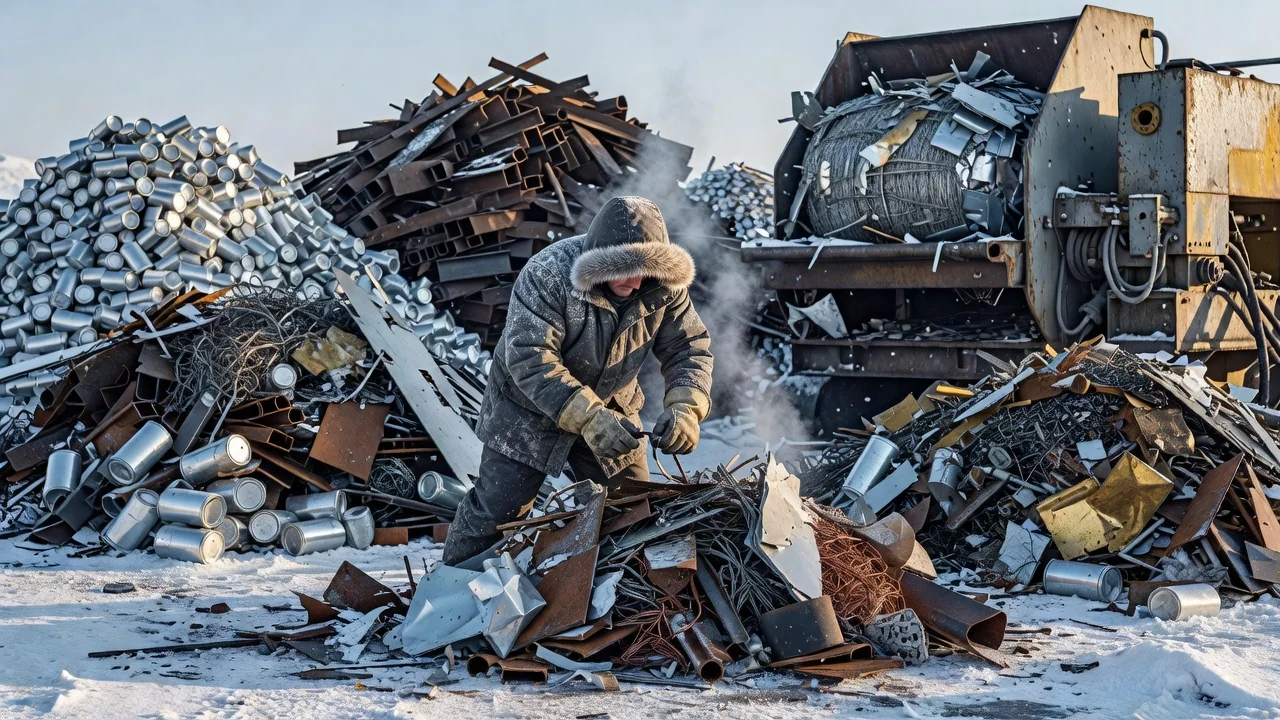
The circular economy in Nunavik is not just a matter of sending more material south. It starts with reduction at the source, reuse and longer product lifespans.
Reuse requires careful organization, however. Some items can remain useful within a community, but others fall under regulated streams or pose risks when damaged. Batteries, paints, antifreeze and electronic devices must not be redistributed without checking.
An appropriate approach can rely on several principles:
- favouring durable, repairable products;
- limiting unnecessary packaging in orders and supplies;
- quickly separating metals and regulated products;
- keeping recyclable materials from being contaminated by residual waste;
- building storage needs in from the moment goods arrive.
Every package brought in by air or sealift subsequently becomes a material that must be managed locally. This also concerns visitors: the practices described in respectful travel in Nunavik remind us that visitors must avoid adding volumes that are difficult to handle and follow the instructions established in each village.
Physical constraints: permafrost and storage
In Nunavik, permafrost influences where infrastructure can be built, site access and operating conditions across the seasons. When departures depend on sealift, recyclable materials must be able to wait without scattering, becoming excessively damp, mixing with other materials or creating risks for workers. This requirement is stronger still for used oil, batteries and other regulated products.
A technical solution is assessed through concrete questions:
| Element to organize | Challenge in a northern village | Result sought |
|---|---|---|
| Drop-off point | Resident access and protection of materials | Identified containers and suitable location |
| Sorting | Risk of contaminating recyclable streams | Simple instructions and staff training |
| Storage | Waiting for a marine departure | Secure, orderly and monitored area |
| Transport | High costs and seasonal schedule | Compacted materials and planned volumes |
| Processing | Limited local capacity | Local streams or targeted shipping |
Collection without storage space, or storage without a transport solution, is not enough to durably reduce pressure on local sites.
In conclusion
Waste management in Nunavik relies on a pragmatic approach, suited to northern villages rather than copied from southern urban systems.
Three points sum up the file:
- the absence of regional curbside recycling in 2015 explains the importance of targeted streams;
- sealift, the only way to move materials out of the region, demands rigorous sorting, efficient compaction and secure storage;
- metal recovery, used oil management and composting show that the circular economy can progress in stages, with municipalities, the KRG and the communities involved.
The 2024-2026 numbers: volumes, funding and pilot projects
The KRG’s regional plan 2021-2027 sets the scale: about 15,742 tonnes of residual materials per year for all of Nunavik, with the estimated composition of landfilled waste breaking down to roughly 41% construction, renovation and demolition materials, 18% paper and cardboard, and 15% organics. Six drop-off points were established in Kangirsuk, Kuujjuaq, Salluit, Kuujjuaraapik, Inukjuak and Kangiqsujuaq, with the goal of one in every community by 2027. The Government of Quebec granted $5,393,032 to the KRG to improve residual materials management — scrap metal, organics, household hazardous waste, construction materials and eco-centres — and about $4.3 million over five years is earmarked for landfill site management, notably the assignment of local operators.
Two projects illustrate the ramp-up. The metal recovery project launched in Kangirsuk in 2022, after the local landfill closed, provides for sorting, decontamination, compacting and marine shipment of end-of-life vehicles to southern recyclers; in 2026, the KRG planned about $6.7 million to extend scrap metal recycling region-wide, with the goal of serving all 14 villages. And Inukjuak was set to launch a municipal composting pilot in 2026 — a collection truck and a treatment centre — valued at $1.2 million, with the possibility of replicating it in other villages if successful.
Sources
- Nunatsiaq News, “KRG OKs Nunavik’s waste management plan” (March 2, 2015)
- Kativik Regional Government, Nunavik Residual Materials Management Plan 2021-2027
- Kativik Environmental Advisory Committee, “Upcoming Residual Materials Management Projects in Nunavik Communities”
- Radio-Canada, metal dump clean-up in Nunavik (November 3, 2022)
- RECYC-QUÉBEC, extended producer responsibility
Frequently asked questions
Which regulated wastes require separate management in Nunavik?
In Québec, extended producer responsibility covers in particular mercury lamps (including fluorescent bulbs), batteries, electronic products, paints, and oils, antifreeze, their filters and containers. These materials should not be mixed with ordinary waste, as they require appropriate collection, storage and processing streams.
Why should sorting instructions be provided in several languages?
Effective instructions must be understood by residents, municipal employees, visitors and local businesses. Inuktitut, the main language of Nunavik's Inuit communities, French and English may all have a role depending on the village and target audience. Clear information on accepted materials, drop-off locations and the risks associated with hazardous products reduces sorting errors.
Does recycling completely eliminate landfill disposal in Nunavik?
No. Recycling reduces certain materials sent to local disposal sites, but it does not replace all waste management. Soiled packaging, non-accepted materials or products without an outlet may still need to be disposed of locally. The challenge is therefore to prioritize materials for which sorting, compaction, storage and transportation remain feasible.
What role can visitors play in reducing northern waste?
Visitors can reduce the amount of waste brought into northern villages by limiting disposable packaging, taking certain products back with them when no local stream is available, and following municipal instructions. Batteries, electronic devices and other regulated materials must not be left behind at accommodation sites or in natural areas.
Why is local data important when planning a recycling stream?
A stream must be sized according to the materials actually generated, their quality, storage options and available logistics departures. In an isolated village, poor sorting can compromise an entire shipment. Local data help select priority materials, plan equipment and monitor results.
Which recycling project is most advanced in Nunavik?
Metal recovery: a project launched in Kangirsuk in 2022 (sorting, decontamination, compacting, sealift shipment), which the KRG wants to extend to all 14 villages with about $6.7M planned for 2026.