
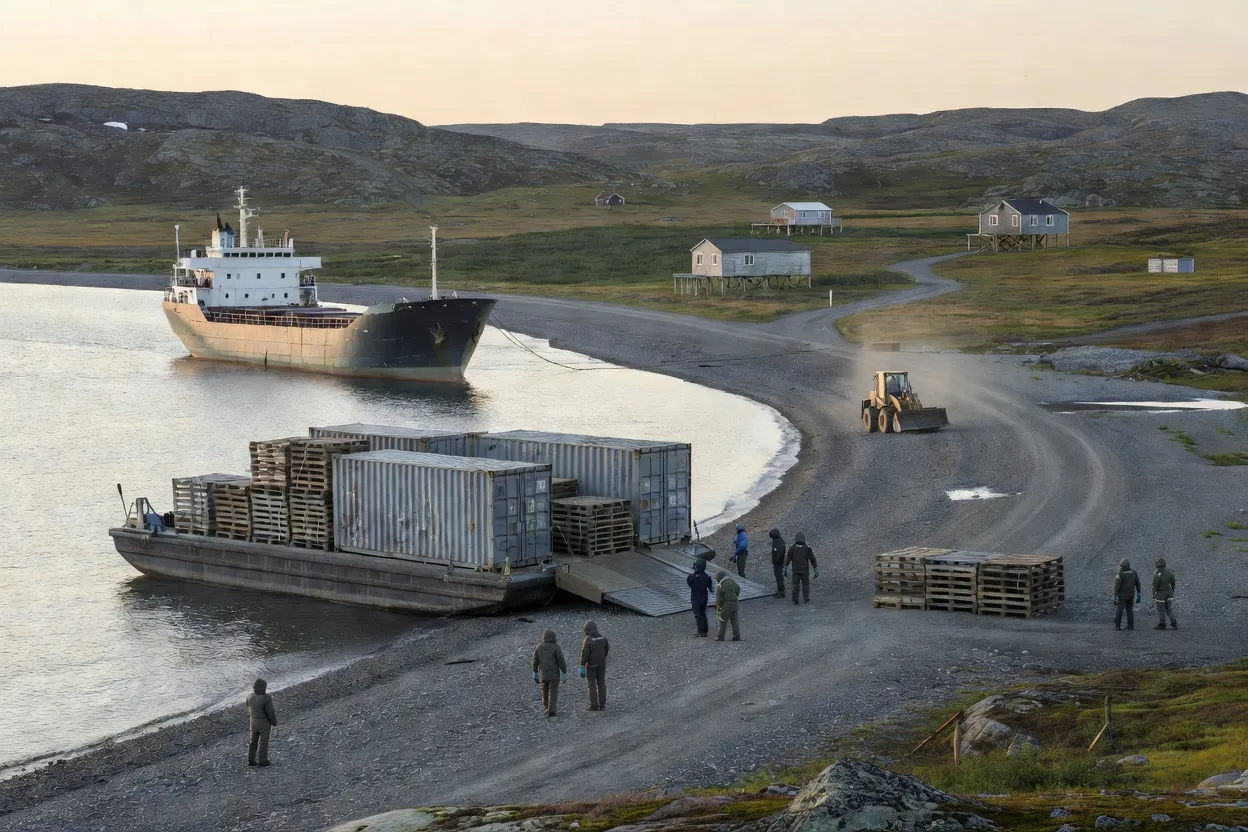
In Nunavik, no road or rail network connects the 14 communities to each other or to southern Quebec, according to the Kativik Regional Government. In summer, marine transport delivers food and supplies, often referred to as the sealift. In 2023, grocery prices were around 33.6% higher than in southern Quebec, according to a report by Université Laval published in 2024.
A territory of 14 coastal villages
The 14 northern villages lie along the coasts of Hudson Bay, Hudson Strait and Ungava Bay, according to the Government of Quebec. With no road, air service must be maintained year-round, while marine transport handles the delivery of food and supplies in summer.
The Kativik Regional Government holds certain jurisdictions in the northern villages, including transport. For the Makivik Corporation, the 14 communities are first and foremost coastal villages that depend on safe and reliable marine access. Marine facilities have been built in every community, and a second phase aims to upgrade them to facilitate sealift operations.
An ice-free season
According to Radio-Canada, the marine supply season runs from mid-June to October, when waters are free of ice. Some communities are ice-bound for most of the year, so ships can reach them only in summer.
Nunatsiaq News describes a short summer sailing season, July to October, on routes that can be choked with ice, and mentions cargo transfers to barges among the risky operations of resupply.
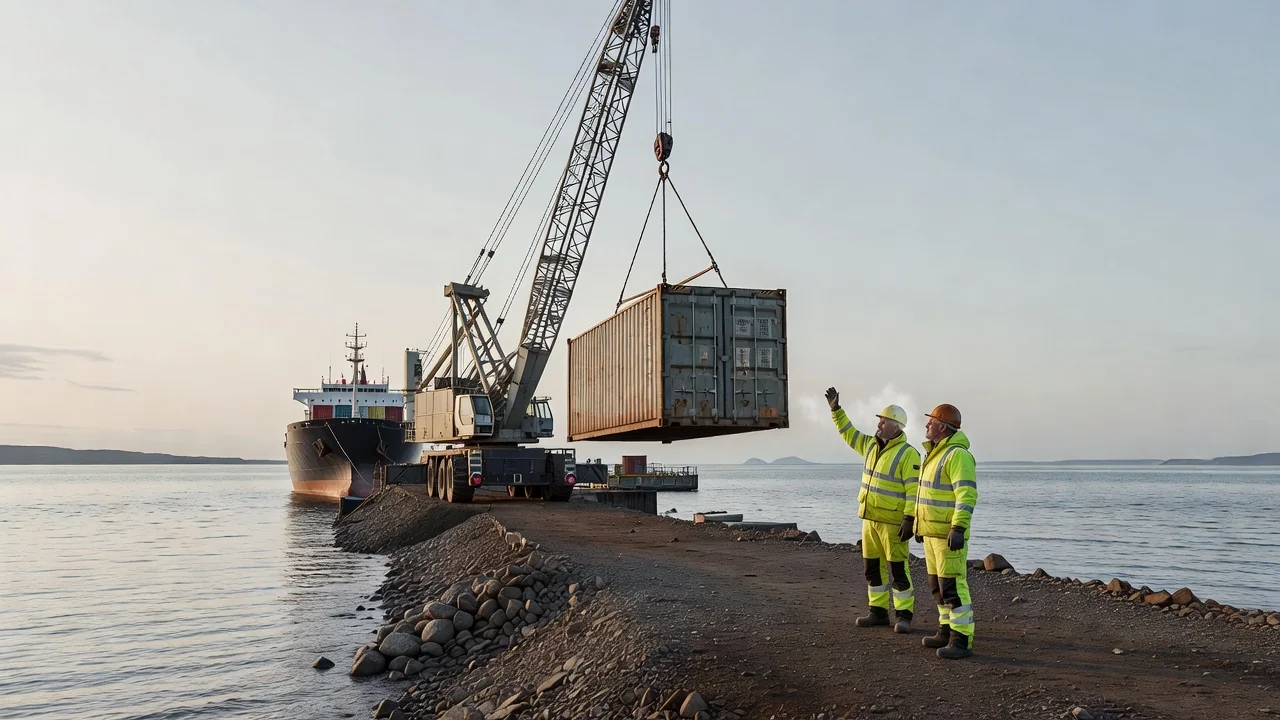
What the ship carries, what the plane carries
Shipping by boat is used to deliver bulky goods and non-perishable food at a lower cost than air transport. Cargo aircraft then serve the communities the rest of the year. To learn more about air links, see our dossier on regional air freight.
What distance does to food prices
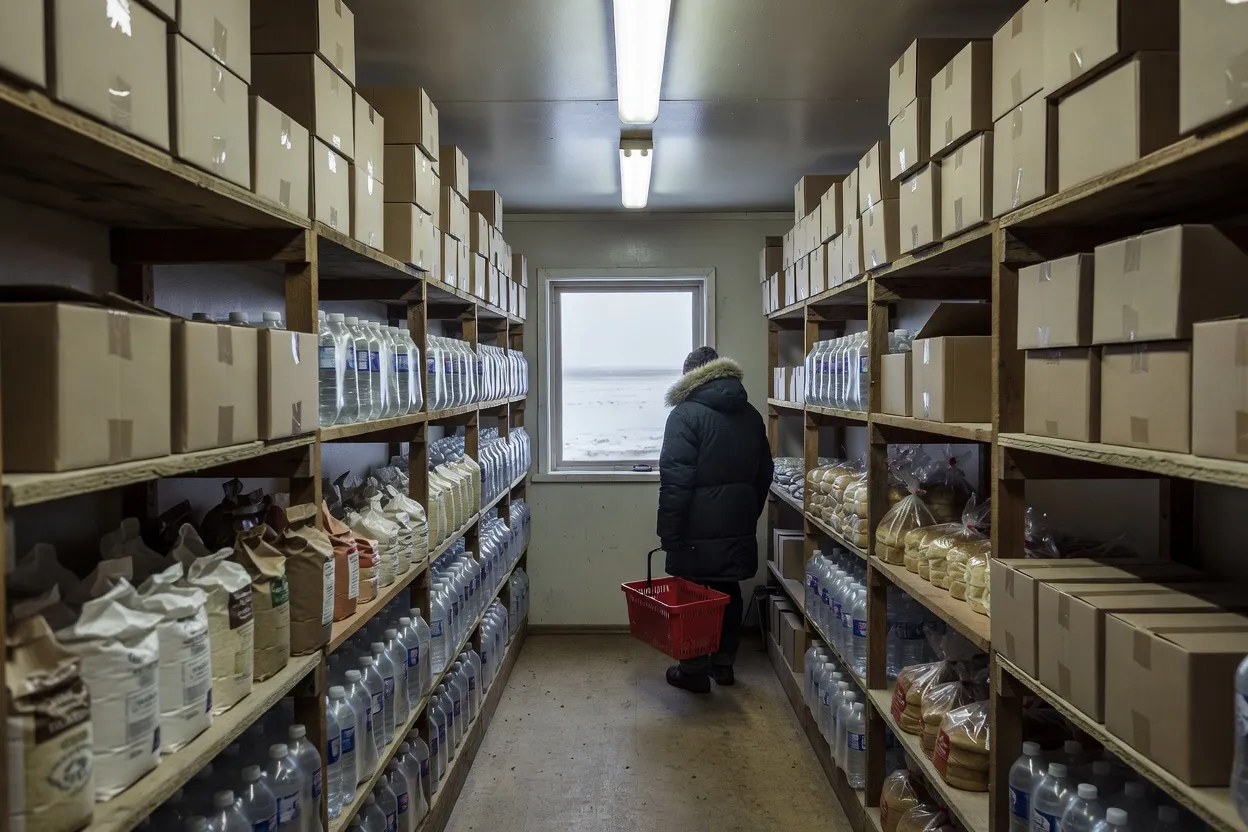
In 2023, grocery prices were around 33.6% higher in Nunavik than in southern Quebec, according to the report by Université Laval’s Louis-Edmond-Hamelin Chair published in 2024. The report also indicates that differences vary considerably by product sub-category.
The Kativik Regional Government notes that transporting food and goods significantly increases the cost of living in the region. To place this issue in daily life, see the cost of living in Nunavik.
To place this constraint within a broader trip, it remains possible to plan the budget for a journey in Canada’s northern regions.
In conclusion
- No road connects the 14 villages to each other or to southern Quebec: aircraft serve the region year-round and ships deliver food and supplies in summer.
- The ice-free marine season runs from mid-June to October, according to Radio-Canada.
- In 2023, the grocery price gap with southern Quebec was around 33.6%.
Who ships? Two big names in sealift
Nunavik’s marine supply rests on chartered carriers, two of which stand out: NEAS (Nunavut Eastern Arctic Shipping), whose fleet includes the MV Avataq and which announced in 2024 the addition of a ship to strengthen its summer service, and NSSI / Desgagnés Transarctik, the other major eastern Arctic provider, which publishes schedules and rates for Nunavik and Nunavut.
The rhythm of a season
The shipping window follows the ice: reservations open in spring, the first sailings leave in June-July, the second — often the main restocking before winter — takes place in August-September, and the last departures occur in September-October. NEAS’s preliminary 2026 schedule plans two Nunavik service series, with loading ports such as Bécancour, Trois-Rivières and, for some cargo, Deception Bay.
Sources
- Kativik Regional Government, brief to the House of Commons Standing Committee on Indigenous and Northern Affairs
- Government of Quebec, Nunavik: municipal regime
- Makivik Corporation, marine infrastructure
- Radio-Canada, marine resupply in the Far North
- Nunatsiaq News, Breaking the ice: delivering the goods to the Arctic in a pandemic
- Université Laval (Louis-Edmond-Hamelin Chair), Price Dynamics and the Impact of the Food and Other Essentials Program, 2024
Frequently asked questions
Is there a road between Nunavik and southern Quebec?
No. According to the Kativik Regional Government, no road or rail network connects Nunavik's 14 communities to each other or to southern Quebec. Air service must therefore be maintained year-round, and in summer marine transport delivers food and supplies.
When is the marine supply season?
Radio-Canada reports that the supply season runs from mid-June to October, when waters are free of ice. Some communities are ice-bound for most of the year, so ships can reach them only in summer.
What does the ship carry rather than the plane?
According to Radio-Canada, shipping by boat is used to deliver bulky goods and non-perishable food at a lower cost than air transport. Cargo aircraft serve the communities the rest of the year.
Are food prices higher in Nunavik?
Yes. In 2023, grocery prices there were around 33.6% higher than in southern Quebec, according to a 2024 report by Université Laval's Louis-Edmond-Hamelin Chair. The Kativik Regional Government adds that transporting food and goods significantly increases the cost of living in the region.
Which carriers run Nunavik's sealift?
The two big names are NEAS (whose fleet includes the MV Avataq) and NSSI / Desgagnés Transarctik, which charter the ships of the summer season, generally from June to October.