
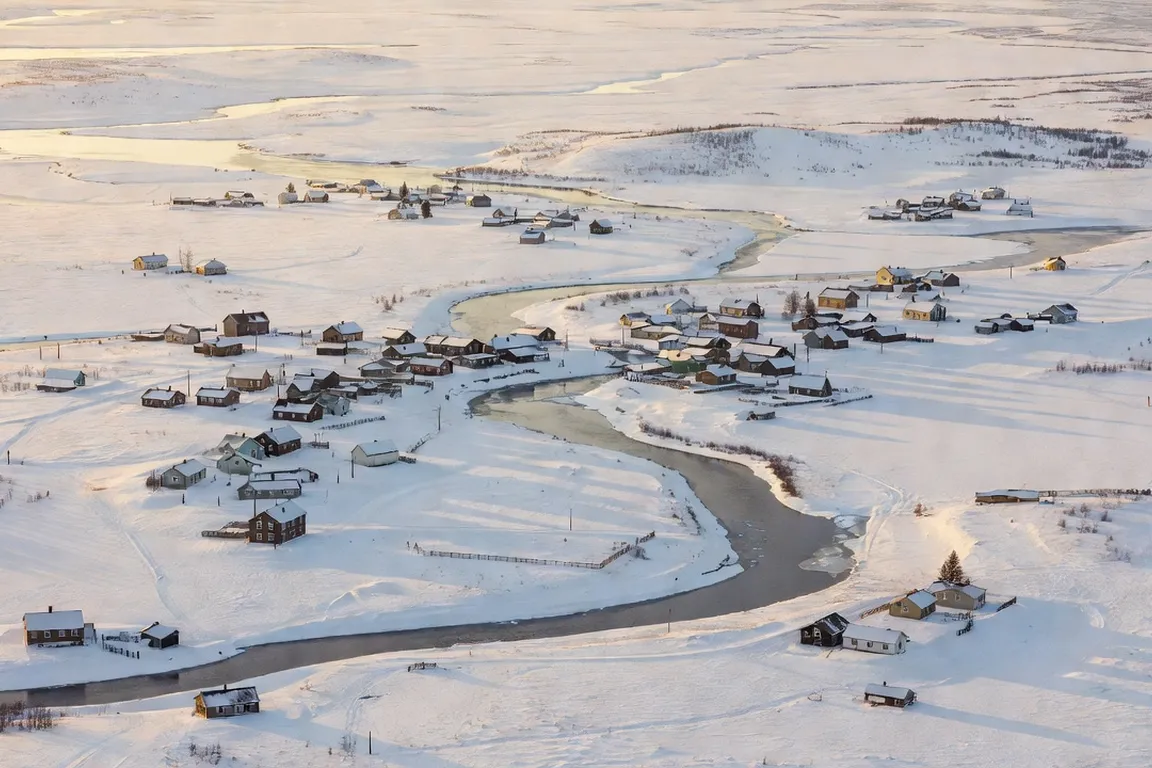
Kuujjuaq, Administrative Capital of Nunavik: Introduction
Kuujjuaq has approximately 2500 residents according to the latest data from Statistics Canada and the Kativik Regional Government. The locality serves as the main administrative, economic, and logistical hub of Nunavik, an Inuit territory located in northern Quebec. It hosts the central offices of several regional organizations and acts as a relay point for services intended for the fourteen other villages of Nunavik. Geographically, Kuujjuaq is located on the west bank of the Koksoak River, about thirty kilometers from its mouth in Ungava Bay. The site benefits from relatively favorable access to navigation and aviation compared to more isolated localities. The flag of Inuit Nunangat, adopted by Inuit Tapiriit Kanatami, is commonly seen on public buildings and during community events. The languages used daily are Inuktitut, English, and French. Inuktitut remains the majority mother tongue and is used for family and community interactions, while English prevails in regional administration and commerce. French appears mainly in federal services and certain communications with the Government of Quebec.
Access and Transport: Air Inuit, FCNQ, Route 109
The main access to Kuujjuaq is by air. Air Inuit provides regular direct flights between Montreal Trudeau Airport (YUL) and Kuujjuaq Airport (YVP), with a flight duration of about three hours. The company also operates connections to other villages in Nunavik using Twin Otter or Dash 8 aircraft. Round-trip fares observed in 2025 generally range from 1500 to 2500 Canadian dollars depending on the period and booking lead time. The Fédération des coopératives du Nouveau-Québec (FCNQ) coordinates part of the freight transport and supports local supply networks. No road connects Kuujjuaq to the southern Quebec road network. Route 109 ends at Radisson, in the territory of Eeyou Istchee, leaving a gap of several hundred kilometers. A seasonal maritime service allows the arrival of containers during the open water period, typically from July to October, but this mode remains limited to heavy goods and does not concern passengers.
Accommodation in Kuujjuaq 2026: Hotels, Inns, Prices
Accommodation options in Kuujjuaq remain limited and must be booked several months in advance. The Hôtel Auberge Kuujjuaq offers rooms with rates ranging between 180 and 280 Canadian dollars per night, often including breakfast and airport shuttle. The Hôtel Co-op Kuujjuaq offers a similar package with comparable rates and a clientele partly composed of workers and institutional visitors. Airbnb-type listings are rare and generally occupied by long-term stays. Establishments have internet connections and basic dining services. Visitors are encouraged to confirm availability at least eight to twelve weeks before departure, particularly during the periods from February to March and from July to August. Airport shuttles operate according to the schedules of major flights and are usually included in the room price.
Quick accommodation comparison in Kuujjuaq
| Establishment | Indicative rate / night | Common inclusions |
|---|---|---|
| Hôtel Auberge Kuujjuaq | 180-280 CAD | Breakfast, airport shuttle |
| Hôtel Co-op Kuujjuaq | Comparable rates | Clientele of workers and institutional visitors |
| Private rental (Airbnb-type) | Variable | Rare, often occupied by long-term stays |
Tip: book at least eight to twelve weeks in advance, especially for a stay in February-March or July-August, the two periods of high demand.
For complementary chalet accommodation in remote Quebec, see Soleica Chalets four seasons.
For a 2026 comparison of properties, see our Top 10 Nunavik accommodations (published this week).
For trip planning, see our Nunavik village-by-village accommodation guide for 2026, which compares options and rates.
Institutional Services: KRG, Niskamoon, Health
The headquarters of the Kativik Regional Government (KRG) is established in Kuujjuaq. This regional administration manages transportation, environment, public safety, and land and resource management services for the entire Nunavik. The KRG also coordinates training and employment programs in partnership with the villages. The Niskamoon Corporation, for its part, operates exclusively in the territory of Eeyou Istchee and has no jurisdiction in Nunavik. Health services are provided by the Inuulitsivik Health Centre, which manages local emergencies and organizes air evacuations to southern hospitals. Social services fall under the jurisdiction of the Youth Protection Directorate and the programs of the Quebec Ministry of Health and Social Services adapted to the northern context. Several mental health and prevention programs are coordinated from Kuujjuaq to other localities.
Kuujjuaq’s main institutional services
| Organisation | Role | Coverage |
|---|---|---|
| Kativik Regional Government (KRG) | Transportation, environment, public safety, land and resources | All of Nunavik |
| Inuulitsivik Health Centre | Basic care, emergencies, air evacuations | Kuujjuaq and neighbouring villages |
| Nunavimmi Pigiursavik | Continuing education | Nunavik |
| Service Canada (federal offices) | Federal administrative services | Nunavik |
| Niskamoon Corporation | Paix des Braves compensatory funds | Eeyou Istchee only (no jurisdiction in Nunavik) |
Important: the Niskamoon Corporation does not operate in Nunavik. It is specific to Eeyou Istchee — a frequent point of confusion between the two neighbouring territories.
Daily Life and Shopping: Northern, FCNQ
Retail trade in Kuujjuaq relies mainly on Northern Stores and FCNQ sales points. These establishments offer a range of food, clothing, and household equipment, although prices are higher than those observed in southern Quebec. For example, a liter of milk often exceeds 4 dollars, and a loaf of bread sells for around 6 dollars. The federal Nutrition North Canada program subsidizes part of the transportation costs of perishable foods to reduce the price gap. The caribou and foraged products market, called country food, complements commercial supply through exchanges between families and community distributions. These practices remain essential for food security and the transmission of traditional knowledge.
Connectivity and Internet in Kuujjuaq
The Tamaani Internet network is the main provider of residential and institutional connections in Kuujjuaq. The speeds offered vary between 5 and 25 megabits per second depending on the chosen subscription. A fiber optic project named Eastern Connect aims to improve microwave and fiber links to Ungava Bay, with work planned until 2027. Monthly rates range between 100 and 180 Canadian dollars. Starlink is accessible under certain conditions, particularly for residential users, but capacity remains limited during peak hours. Institutions and businesses often have more stable dedicated connections than private subscribers.
For technical details on providers and actual speeds, consult our Nunavik digital infrastructure 2026 report.
Attractions and Activities: Daniel-Weetaluktuk Museum, Pingualuit
The Daniel-Weetaluktuk Museum presents collections on the Inuit heritage of Nunavik, including archaeological artifacts and contemporary testimonies. The exhibitions are developed in collaboration with the elders of the region’s villages. The Pingualuit National Park, whose main access is from Kangiqsujuaq, attracts visitors who sometimes use Kuujjuaq as a logistical base. The meteorite crater houses a lake known for its exceptional purity. Sport fishing for Arctic char is practiced on the surrounding rivers during the summer. The observation of the northern lights is possible from September to March, depending on light and cloud cover conditions. Tundra hiking is concentrated in July and August when the ground is clear. Snowmobiling is practiced from December to April on marked trails and traditional routes.
Climate, Weather, and Recommended Visiting Period
The climate of Kuujjuaq is subarctic, with average winter temperatures ranging between -25 and -45 degrees Celsius from December to March. The summer is short, and daily averages range between 10 and 18 degrees Celsius from June to August. Polynya areas persist in winter on Ungava Bay and influence travel and fishing activities. The northern lights are optimally observable between September and March. The wind chill factor can lower the perceived temperature to -60 degrees Celsius during strong wind episodes. Visitors should plan appropriate equipment and consult weather bulletins issued by Environment and Climate Change Canada.
Practical Tips and Cultural Etiquette
Before taking photographs of people, it is advisable to ask for their explicit consent. Family hunting territories are governed by local rules that must be respected. Common greetings in Inuktitut are “ai” for hello and “nakurmiik” for thank you. Public consumption of alcohol is prohibited, and game rules, particularly for caribou, must be observed. A simple and factual territorial acknowledgment is appreciated during exchanges with residents. It is recommended to avoid statements that present the environment as exceptional or immutable, in favor of a factual approach to contemporary realities.
FAQ: Frequently Asked Questions about Kuujjuaq
How long does it take to get to Kuujjuaq from Montreal?
The direct flight operated by Air Inuit between Montreal Trudeau and Kuujjuaq takes about three hours. Connections are sometimes necessary in Kuujjuaq itself to reach other villages in Nunavik. The frequency of flights varies according to the days of the week and the seasons, with an increase during peak periods. Observed fares range between 1500 and 2500 Canadian dollars for a round trip, depending on the booking lead time and date flexibility.
What is the cost of accommodation in Kuujjuaq in 2026?
Hotel and inn rates generally range between 180 and 300 Canadian dollars per night. These prices usually include breakfast and the shuttle between the airport and the establishment. By comparison, equivalent rates in southern Quebec for similar services are often 30 to 50 percent lower. Reservations must be made several weeks in advance due to the limited number of rooms.
What language is spoken in Kuujjuaq?
Inuktitut remains the majority language in homes and community interactions. English is the main working language in regional administration and commerce. French is used in federal services and certain communications with the Government of Quebec. Trilingual signage is common on public buildings and in shops.
What administrative services are available in Kuujjuaq?
The KRG maintains its headquarters there and coordinates regional services. Air Inuit manages part of its operations and maintenance there. The Inuulitsivik Health Centre provides basic care and evacuations. Nunavimmi Pigiursavik offers continuing education programs. Federal offices, including Service Canada, are also present on site.
What is the best season to visit Kuujjuaq?
The period from February to March attracts visitors interested in the northern lights and winter festivals. July and August are suitable for hiking and fishing activities due to higher temperatures and the absence of snow. September offers a very short season marked by fall colors and a rapid reduction in daylight. The choice therefore depends on preferred activities and transport conditions.
Frequently asked questions
How long does it take to get to Kuujjuaq from Montreal?
The direct flight operated by Air Inuit between Montreal Trudeau and Kuujjuaq takes about three hours. Connections are sometimes necessary in Kuujjuaq itself to reach other villages in Nunavik. The frequency of flights varies according to the days of the week and the seasons, with an increase during peak periods. Observed fares range between 1500 and 2500 Canadian dollars for a round trip, depending on the booking lead time and date flexibility.
What is the cost of accommodation in Kuujjuaq in 2026?
Hotel and inn rates generally range between 180 and 300 Canadian dollars per night. These prices usually include breakfast and the shuttle between the airport and the establishment. By comparison, equivalent rates in southern Quebec for similar services are often 30 to 50 percent lower. Reservations must be made several weeks in advance due to the limited number of rooms.
What language is spoken in Kuujjuaq?
Inuktitut remains the majority language in homes and community interactions. English is the main working language in regional administration and commerce. French is used in federal services and certain communications with the Government of Quebec. Trilingual signage is common on public buildings and in shops.
What administrative services are available in Kuujjuaq?
The KRG maintains its headquarters there and coordinates regional services. Air Inuit manages part of its operations and maintenance there. The Inuulitsivik Health Centre provides basic care and evacuations. Nunavimmi Pigiursavik offers continuing education programs. Federal offices, including Service Canada, are also present on site.
What is the best season to visit Kuujjuaq?
The period from February to March attracts visitors interested in the northern lights and winter festivals. July and August are suitable for hiking and fishing activities due to higher temperatures and the absence of snow. September offers a very short season marked by fall colors and a rapid reduction in daylight. The choice therefore depends on preferred activities and transport conditions.