
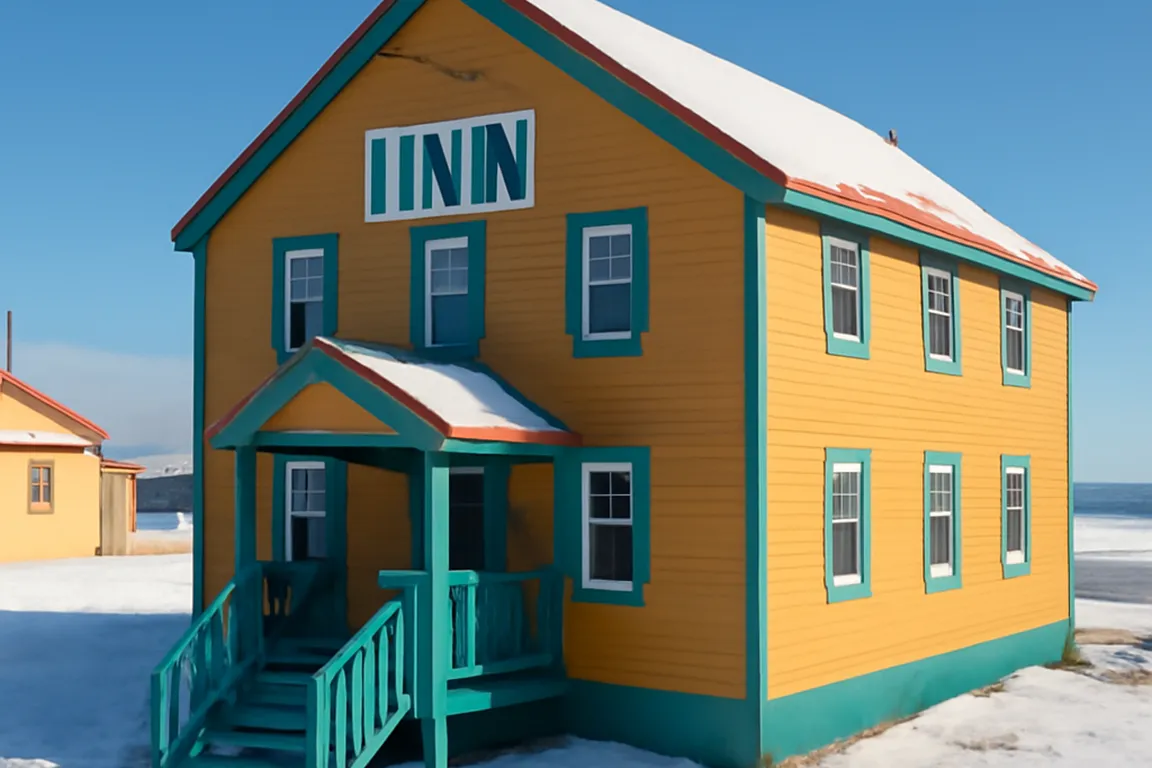
Visiting Nunavik means entering a world radically different from conventional tourism. There are no large hotel complexes, no well-indexed online booking platforms, no price comparison sites. Accommodation in Nunavik is a complex logistical reality, shaped by geographic isolation, the extreme costs of northern transport and the nature of these communities: villages of a few hundred to a few thousand inhabitants, accessible only by air, where the rare available rooms are primarily intended for travelling professionals.
This guide covers what exists in 2026, village by village, with practical advice for organising a stay.
What to know before booking
Before reviewing village-by-village options, a few fundamental principles.
Accommodation is scarce and must be booked well in advance. In small villages, there may be only a dozen rooms available in total. During periods of intense activity — construction season (summer), government conference periods, Goose Break, Puvirnituq Snow Festival — rooms are often booked by itinerant workers months in advance.
Costs are high. A room costs between $200 and $400 per night in most establishments, sometimes with meals included. Everything that arrives in Nunavik must be transported by air or by boat during the short navigation season (July-October). The cost of northern logistics is directly reflected in rates.
Prior communication is essential. Showing up in a village without having previously contacted a local operator or welcoming organisation is strongly inadvisable. Nunavik communities are open to respectful visitors, but appreciate having their arrival announced and organised through appropriate intermediaries.
Accommodation comparison by village
| Village | Population | Main establishment(s) | Distinctive feature |
|---|---|---|---|
| Kuujjuaq | ~3,000 | Kuujjuaq Inn | Administrative capital, widest range of options |
| Puvirnituq | ~2,000 | Puvirnituq Co-op, Aventure Arctique | Organised tourism packages, Snow Festival |
| Inukjuak | ~1,800 | Cooperative-run establishment + community lodge | Renowned Inuit craftsmanship |
| Salluit | ~1,700 | Cooperative-managed establishment | Nunavik’s northernmost village, spectacular setting |
| Kangiqsujuaq | — | Pingualuit National Park visitor centre (Sépaq) | Proximity to the Pingualuit crater |
| Villages under 600 inhabitants (Ivujivik, Akulivik, Quaqtaq, Tasiujaq, Aupaluk, Kangirsuk) | < 600 each | One or two community rooms, sometimes no commercial option | Prior contact essential |
Tip: always contact the establishment directly by phone or email — not through Booking or Airbnb — and allow several weeks to several months of lead time depending on the season and the village.
Kuujjuaq — Nunavik’s capital
Kuujjuaq (approximately 3,000 inhabitants) is Nunavik’s administrative centre, the region’s gateway and main air hub. It has the most accommodation options.
The Kuujjuaq Inn is the main accommodation establishment. Managed by the local cooperative, it offers simple and comfortable rooms, with meals included or available at the inn, and a service oriented toward travelling professionals. Booking is done directly by telephone or email — not through major platforms.
There are also some rooms in private homes rented short-term, primarily by recommendation. The Kativik Regional Government and Nunavik health services sometimes have institutional housing for their own personnel on assignment.
Puvirnituq — accommodation and Snow Festival
Puvirnituq (approximately 2,000 inhabitants) is known for its winter festival — the Puvirnituq Snow Festival — which attracts visitors from across Nunavik each year. It is one of the most developed villages for cultural tourism.
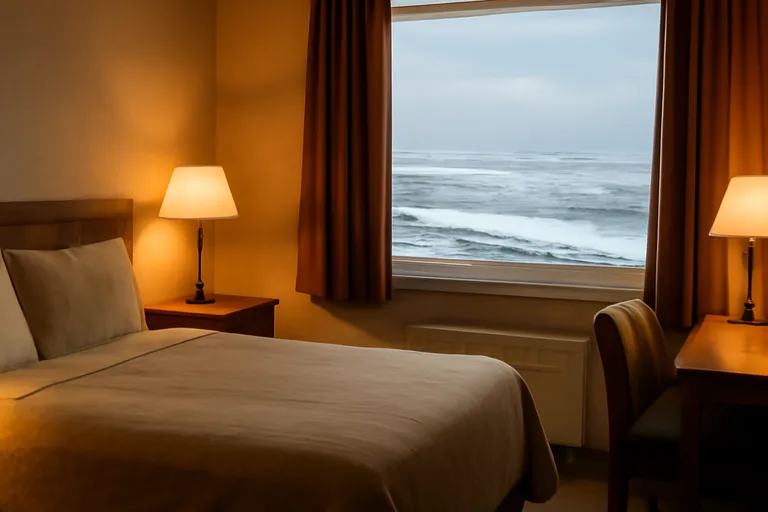
The Puvirnituq Co-op manages an accommodation establishment that is the main welcome point for visitors. The organisation Aventure Arctique, based in Puvirnituq, offers tourism packages that include accommodation, meals, activities and a local guide. This is one of the few truly organised tourism options in Nunavik that is genuinely accessible to non-professional visitors.
During the Snow Festival (generally in March), available rooms are snapped up months in advance. If you want to attend the festival, book your accommodation at least four to six months before the date.
Inukjuak — available options
Inukjuak (approximately 1,800 inhabitants) is Nunavik’s second-largest village. It has an accommodation establishment managed by the local cooperative and a community lodge.
Soleica regularly works in Inukjuak on IT infrastructure missions. Accommodation options in Inukjuak for professional visitors are documented in our log book for this village, with useful booking contacts.
The Inukjuak community is known for its quality Inuit art (soapstone carvings, traditional crafts). If you are staying in the village, a visit to the local Arctic Co-op allows you to acquire authentic works directly from artists.
Salluit and Kangiqsujuaq — accommodation for visitors
Salluit (approximately 1,700 inhabitants), one of Nunavik’s northernmost villages, has an accommodation establishment managed by the cooperative. The village’s geographic setting — perched on a cliff overlooking the Hudson Strait — makes it one of the most spectacular sites in the region.
For visitors wishing to stay in Salluit, practical information on accommodation options in Salluit is available in our village log book.
Kangiqsujuaq is known for its proximity to the Pingualuit tidal tunnels and the New Quebec Crater (Pingualuit Crater). Pingualuit National Park has its own visitor centre with limited accommodation capacity — contact the Société des établissements de plein air du Québec (Sépaq) directly for park reservations.
Smaller villages — Ivujivik, Akulivik, Quaqtaq
In villages of fewer than 600 inhabitants — Ivujivik, Akulivik, Quaqtaq, Tasiujaq, Aupaluk, Kangirsuk — accommodation options are very limited.
Most of these villages have one or two rooms in a community building, sometimes managed by the cooperative, sometimes by the municipality. In some cases, there is literally no commercial accommodation option: visitors must be invited by a family or local organisation.
For these villages, it is essential to contact the Kativik Regional Administration or the village mayor’s office before considering a trip. It is not possible to arrive and find lodging on the spot.
Arctic cooperatives — their role in accommodation
Arctic Co-operatives Limited (ACL) is a cooperative federation operating in Nunavik and Nunavut communities. It manages food stores, craft workshops and, in several villages, the most accessible accommodation establishments.
The cooperative model is important for visitors to understand: money spent at a cooperative stays in the community, benefiting its members. This is one reason why choosing cooperative establishments is both good responsible tourism practice and the most direct way to contribute to the local economy.
Booking a stay — practical steps
To book accommodation in Nunavik, the process is different from what travellers are used to in cities:
- Identify your destination village and the length of your stay
- Contact the establishment directly (cooperative, inn, tourism organisation) — not through Booking or Airbnb
- Allow several weeks to several months depending on the season
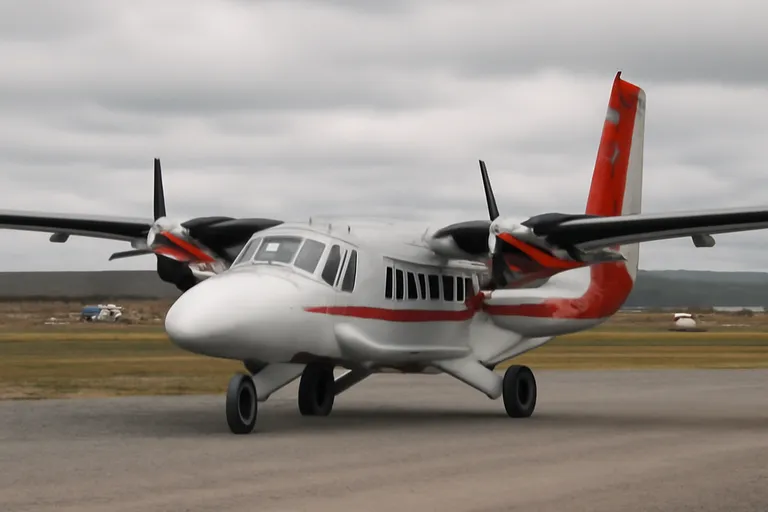
- Confirm air access before finalising accommodation (Air Inuit, Canadian North)
- Identify a local contact or Indigenous guide if you plan activities outside the village
For a nature or cultural tourism stay, contact Aventure Arctique (Puvirnituq) or the Inuulitsivik Health Centre, which can sometimes refer you to local welcoming resources.
Camping and staying with families
Camping in Nunavik is possible but requires rigorous preparation. Weather conditions are unpredictable, polar bears are present in some coastal areas and medical access is limited. Experienced local guides are essential for any camping outside village perimeters.
Staying with local families exists primarily within the framework of organised cultural stays. Some Inuit families accept visitors as part of community tourism programs — these arrangements are made through accredited tourism organisations, not generic platforms.
For a complete perspective on tourism in Nunavik, read our guide to responsible travel in Nunavik and our interview with an Indigenous guide from Eeyou Istchee. For general resources on northern Canada, voyage-canada.com offers a guide to accommodation in Canada’s northern regions.
For a 2026 detailed comparison with summary table, see our Top 10 Nunavik accommodations in 2026.
Frequently asked questions
Are there hotels in Nunavik?
Yes, but in a different sense than the urban meaning of 'hotel.' Each major Nunavik village has at least one accommodation facility — often called an 'inn' — generally managed by the local cooperative (Arctic Co-operatives Limited) or a community organisation. These facilities offer basic rooms, often with meals included, and are primarily intended for travelling professionals (healthcare workers, government representatives, engineers). Reservations can be difficult to obtain outside off-peak periods.
How much does a night of accommodation in Nunavik cost?
The cost of a night in Nunavik ranges from $200 to $400 per night for a standard room, sometimes with meals included. This is significantly higher than in Montreal, due to extreme logistical costs: everything is imported by air or by boat during the short navigation season. Some establishments in Kuujjuaq offer slightly lower rates (from $150/night), but budget options essentially don't exist in the region.
Do you need permission or an invitation to visit a Nunavik village?
Technically, no — Nunavik is part of Quebec's territory and no entry permit is required for Canadian residents or international tourists under normal Canadian entry conditions. In practice, however, it is strongly advised to go through a local tourism operator or have a contact in the community. The villages are small, close-knit communities where the arrival of unannounced visitors can be perceived as intrusive. Organisations like Aventure Arctique (Puvirnituq) or certified local guides facilitate proper welcoming.
How do you get to Nunavik — what are the transport options?
Air access is the only practical way to reach Nunavik's 14 coastal villages. Air Inuit is the main regional carrier, with connections from Montreal (YUL) or Val-d'Or to the major villages. Canadian North also operates links from Montreal. Return ticket prices generally range from $1,200 to $3,000 depending on the destination and season. There is no road connecting Nunavik's coastal villages to each other or to Quebec's road network.
Are there guesthouses or community lodges in Nunavik?
Some communities have accommodation alternatives to cooperative-run hotels. Puvirnituq, notably, has developed a community tourism offering over the years with possibilities for stays with families or in small Inuit-managed accommodation structures. Kuujjuaq has a few additional options given its status as the regional capital. For smaller villages, options are often reduced to a room in a community building or a private invitation. It is strongly recommended to contact the Kativik Regional Administration or a tourism operator before planning a stay.