
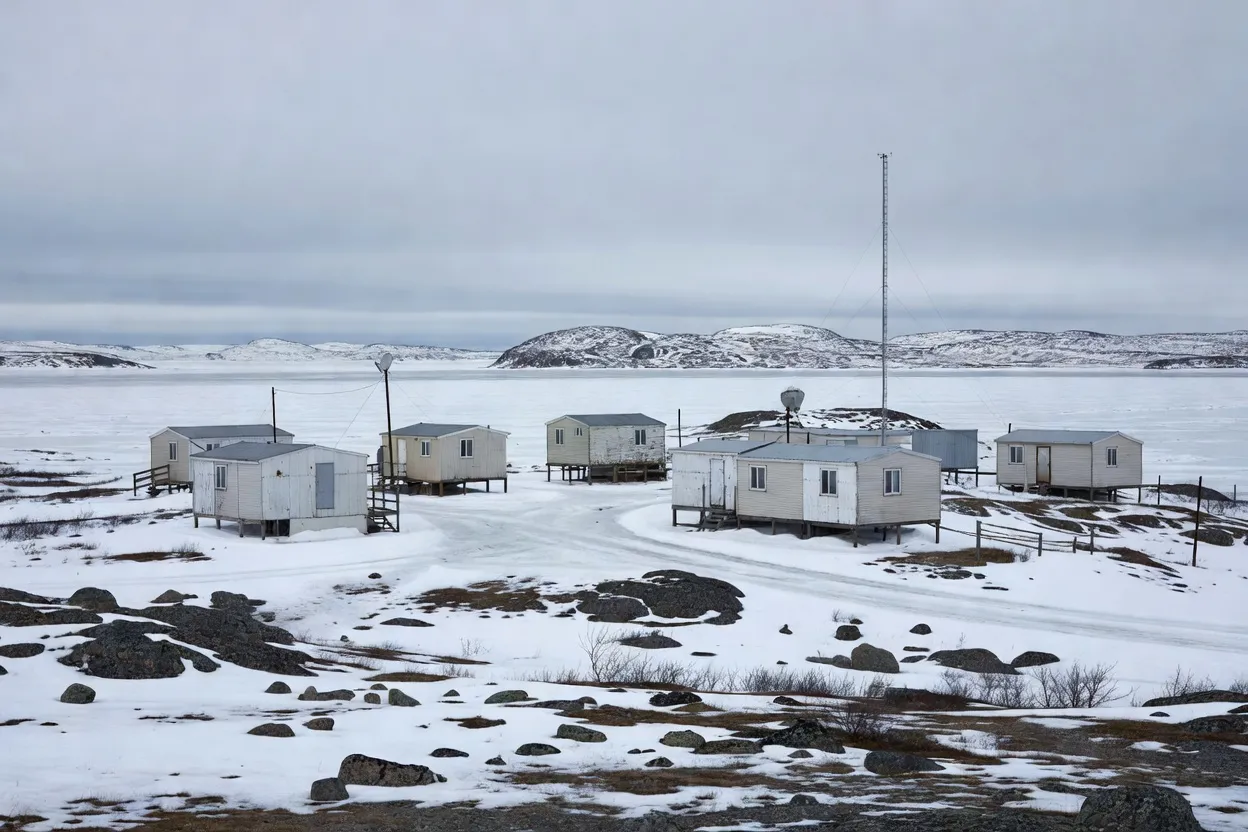
Nunavik has 14 northern villages, served by the Kativik Regional Government (KRG). Internet access there has long relied on satellite, and fibre optic cable is now meant to raise network capacity for the long term.
Tamaani Internet, the regional provider
Tamaani Internet is operated by the Kativik Regional Government. The service launched in 2004 and relies on satellite capacity: according to Nunatsiaq News (November 2015), SES’s $15.7 million bid was selected to take over from the Telesat contract.
Fibre optic: Connect to Innovate
The federal Connect to Innovate program (Innovation, Science and Economic Development Canada) awarded $74,753,938 to the KRG, operating as Tamaani Internet. The project builds a backbone network using terrestrial and marine fibre optic technology for five communities, plus a last-mile network reaching 2,388 underserved households in Nunavik. The agreement ran from April 1, 2018 to June 30, 2025.
On the Hudson Bay coast, fibre first connected Kuujjuarapik, Umiujaq, Inukjuak and Puvirnituq. According to Nunatsiaq News (August 2025), most of phase 2, which served Akulivik, Ivujivik, Salluit and Deception Bay, was completed in February. Fibre for the seven Ungava Bay villages, from Kangiqsujuaq to Kangiqsualujjuaq, is to be laid in a third phase: according to a KRG document, work is expected to start in August 2027 and be completed by 2028, after vessel availability delays pushed the schedule back. Covering the whole region requires additional funding from higher levels of government.
For the KRG, fibre remains the best path: according to its administration director, Daryl Combden, speaking in February 2023, it is the only technology that will allow telehealth, tele-education and telejustice to develop in the region.
Starlink, a short-term solution
In December 2024, the KRG announced it would use SpaceX Starlink terminals to add capacity in communities waiting for the fibre optic project to be completed. Kuujjuaq was to receive gateway terminals; Kangiqsujuaq, Quaqtaq, Kangirsuk, Aupaluk, Tasiujaq and Kangiqsualujjuaq, high-speed terminals. According to the KRG announcement, capacity was to rise from 300 megabits to 5 gigabits.
The KRG describes the measure as temporary and says fibre remains the ultimate goal. Some KRG council members also questioned why the KRG was partnering with Starlink, a company in competition with the regional government.
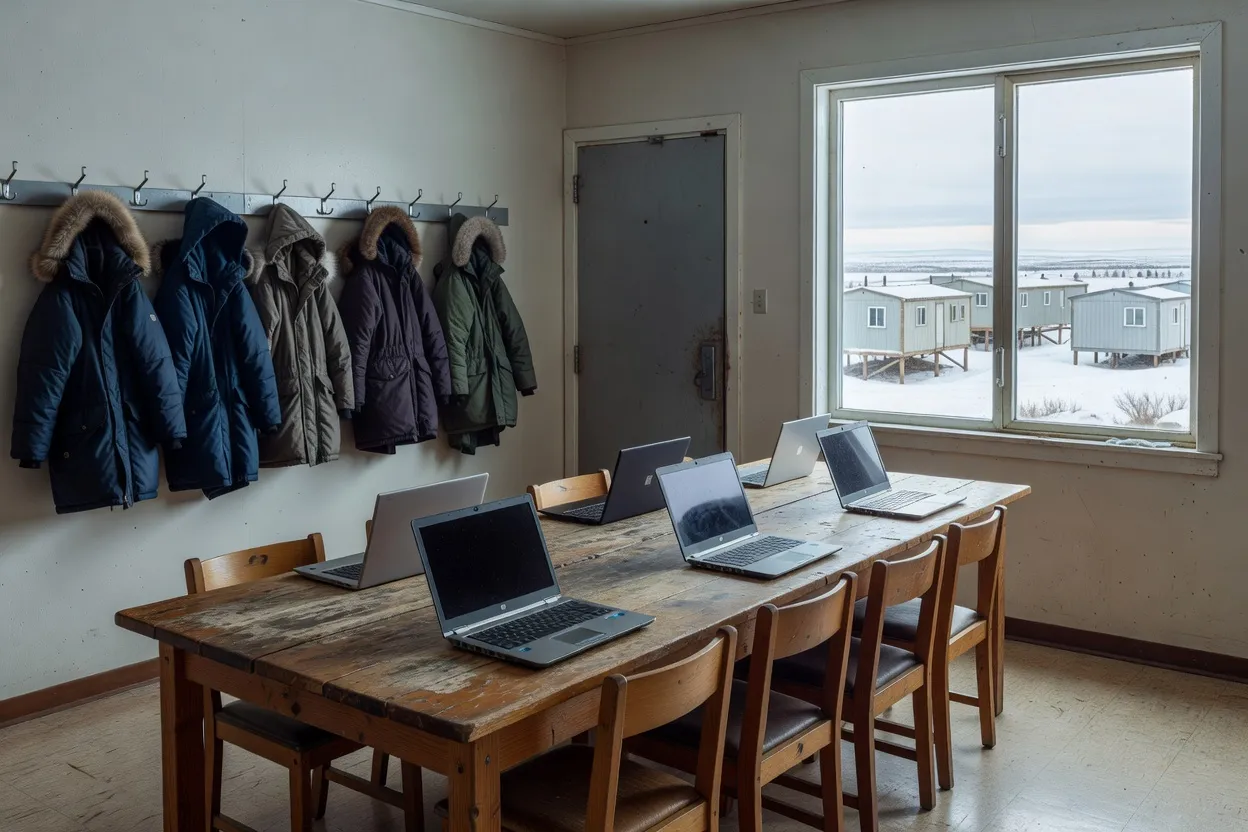
Health: telemedicine
The Nunavik Regional Board of Health and Social Services describes telemedicine as the use of information and communications technologies to enable or facilitate certain medical acts, including remote consultations and data transfers. It aims to bring specialized and ultraspecialized care as close as possible to where people live, to reduce travel, costs and stress for patients and families, and to speed up clinical decisions, especially in emergency and trauma cases.
Specialties listed, on a non-exhaustive basis, include dermatology, obstetric and pelvic ultrasound, genetics (Hudson coast only), mammography, nephrology, neurology, child psychiatry, respirology and psychiatry.
Education: distance learning
Kativik Ilisarniliriniq, Nunavik’s school board, created in 1975 under the James Bay and Northern Quebec Agreement, teaches in Inuktitut, French and English from Kindergarten to Secondary 5 in the 14 communities. It also offers secondary-level distance courses: Inuktitut, French, English, mathematics, science, history and computer science, with teacher support by phone or Microsoft Teams. Registration is open at any time with no deadlines, for people who are at least 16 years old on July 1 of the current school year and who are Nunavik residents, beneficiaries, or have a permanent address in Nunavik.

For more on concrete IT deployments in Nunavik, see our case study on deploying a Hyper-V server with satellite fibre and our services for northern organisations.
For practical information on Canada’s remote northern regions, voyage-canada.com offers resources on geography, transport and the specificities of northern territories.
Sources
- Nunatsiaq News: Nunavik moves forward with bandwidth and 4G upgrade (SES contract)
- Tamaani Internet: news (launched in 2004)
- Nunatsiaq News: Tamaani fibre optic rollout to continue in Nunavik this year
- Nunatsiaq News: Nunavik fibre optic project entering final stage (phase 2, Ungava Bay schedule, August 2025)
- Nunatsiaq News: KRG partners with SpaceX for short-term high-speed internet solution
- Government of Canada: Connect to Innovate grant to the KRG (Tamaani Internet)
- Nunavik Regional Board of Health and Social Services: physical health services and telemedicine
- Kativik Ilisarniliriniq: general education, distance and classroom
- Kativik Ilisarniliriniq: Nunavik School Board
Frequently asked questions
Who operates Tamaani Internet?
Tamaani Internet is operated by the Kativik Regional Government (KRG). The service launched in 2004.
How does the KRG use Starlink in Nunavik?
In December 2024, the KRG announced it would use Starlink terminals to add capacity in communities waiting for the fibre optic project to be completed. It is a short-term measure: the KRG describes fibre as the ultimate goal.
Which services in Nunavik depend on internet connectivity?
Telemedicine, which allows remote consultations and data transfers to bring specialized care closer to where people live, and Kativik Ilisarniliriniq's distance education, which offers secondary-level courses to people aged 16 and over, with teacher support by phone or Microsoft Teams.
How is Nunavik's fibre optic network funded?
The federal Connect to Innovate program awarded $74,753,938 to the KRG, operating as Tamaani Internet, for a terrestrial and marine fibre optic backbone serving five communities and a last-mile network for 2,388 underserved households.