
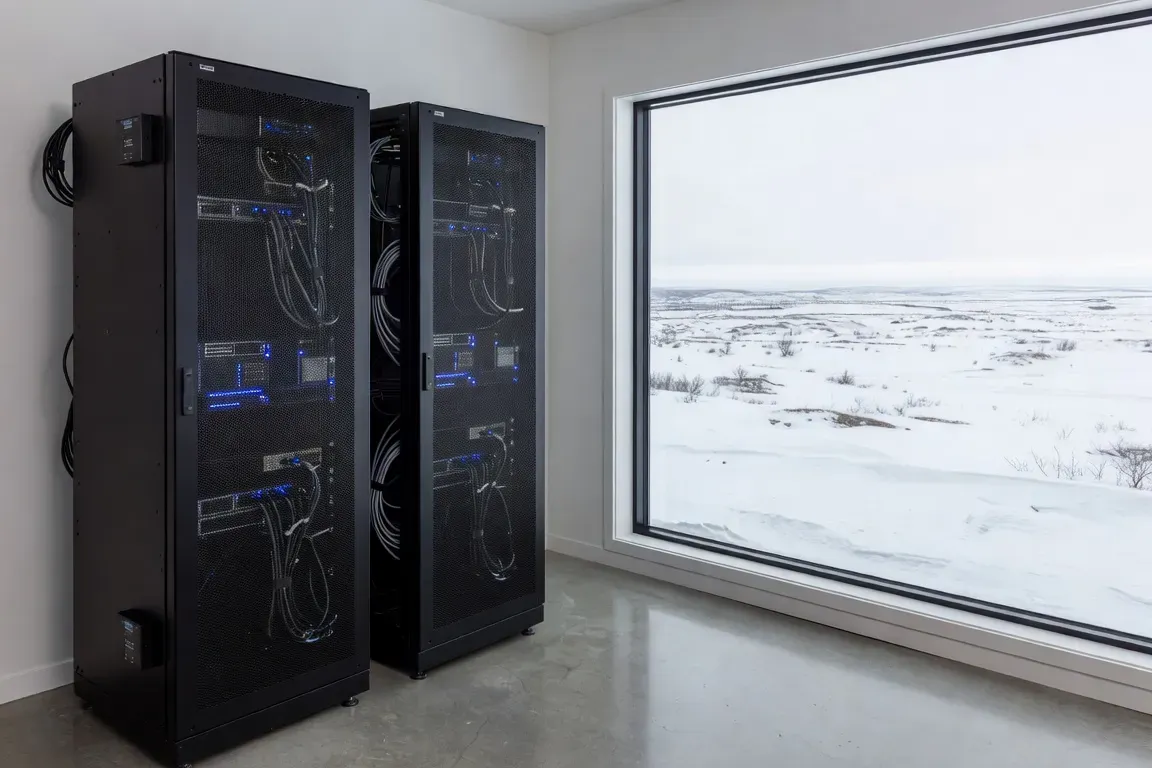
This case study reproduces, in anonymised form to respect contractual confidentiality, the unfolding of an IT infrastructure deployment carried out by Soleica in a Nunavik municipality. The objective is to share technical choices, difficulties encountered and lessons learned, for the use of any Northern Quebec organisation considering a similar project.
The context is representative of what several villages experience: an aging IT fleet, satellite connectivity recently improved by the arrival of LEO, digital service needs that have exploded in five years, and a municipality wanting to secure its operations without depending exclusively on infrastructures located in southern Quebec.
Initial context
The municipality concerned has approximately 1,200 inhabitants and employs about thirty people across the municipal administration, the technical service, the recreational service and the local cooperative. The inherited IT infrastructure dated from 2014-2016: two end-of-support Dell PowerEdge servers, about fifty Windows 7 and Windows 10 workstations in heterogeneous condition, a central switch with intermittent failures, and a geostationary satellite Internet connection at 25 Mbps with 600 ms latency.
The needs expressed by the municipality were clear: sustain the infrastructure for at least seven to eight years, secure sensitive data locally, improve performance of office services and enable new business applications (web accounting, centralised payroll, occasional teleconsultations). The budget constraint was strict: the project had to fit within an envelope globally comparable to what would have been spent on maintenance of the existing infrastructure over the next five years.
Architecture choices
Hyperconverged Hyper-V: the structuring decision
After comparative evaluation between VMware vSphere, Proxmox VE and Hyper-V, the choice fell on a two-node hyperconverged Hyper-V architecture. Several reasons weighed.
First the consistency with the existing Windows ecosystem. The municipality had been using Active Directory, Windows Server file shares, and a classic Office suite for years. Migrating to VMware or Proxmox would have imposed an additional administrative tool chain and increased the training burden for the local team.
Then the licence cost. Provincial framework agreements already covered part of Microsoft Server and Datacenter licences, making Hyper-V essentially free in the project context. Conversely, VMware vSphere Standard licences would have added a significant annual expense.
Finally local maintenance. Finding a technician capable of intervening by videoconference on a Hyper-V environment is simpler than on Proxmox, simply because the user and trainer base is larger in the French-speaking Canadian ecosystem. For a Northern deployment where corrective maintenance must be possible remotely with minimal on-site support, this dimension counts.
The selected architecture provides for two Dell PowerEdge R760 servers each equipped with:
- 2 recent generation Intel Xeon Silver processors;
- 256 GB of ECC RAM;
- Hyperconverged Storage Spaces Direct on 8 NVMe disks per node, totalling about 30 TB usable in resilient mode;
- Redundant 25 GbE network card for inter-node traffic and 10 GbE for user traffic.
Satellite connection: professional LEO
For the external link, the choice fell on Starlink Business with high availability professional subscription. The decision was weighed with Telesat Lightspeed, but Lightspeed’s commercial availability in the village concerned remained limited at deployment time.
The Starlink Business antenna is installed on the main building’s roof, with full sky clearance and a built-in heating system to evacuate snow and frost. The contract includes a guaranteed service threshold of 50 Mbps stable downstream, corresponding to identified needs.
A second redundancy antenna to an alternative cell was considered but postponed — the additional cost was not justified in the initial phase. Service continuity in case of link failure therefore relies on the local infrastructure’s ability to operate autonomously during an outage.
Local continuity: critical architecture
This is probably the most structuring dimension of the project. The infrastructure was designed so that all critical business services operate even in case of prolonged Internet link outage.
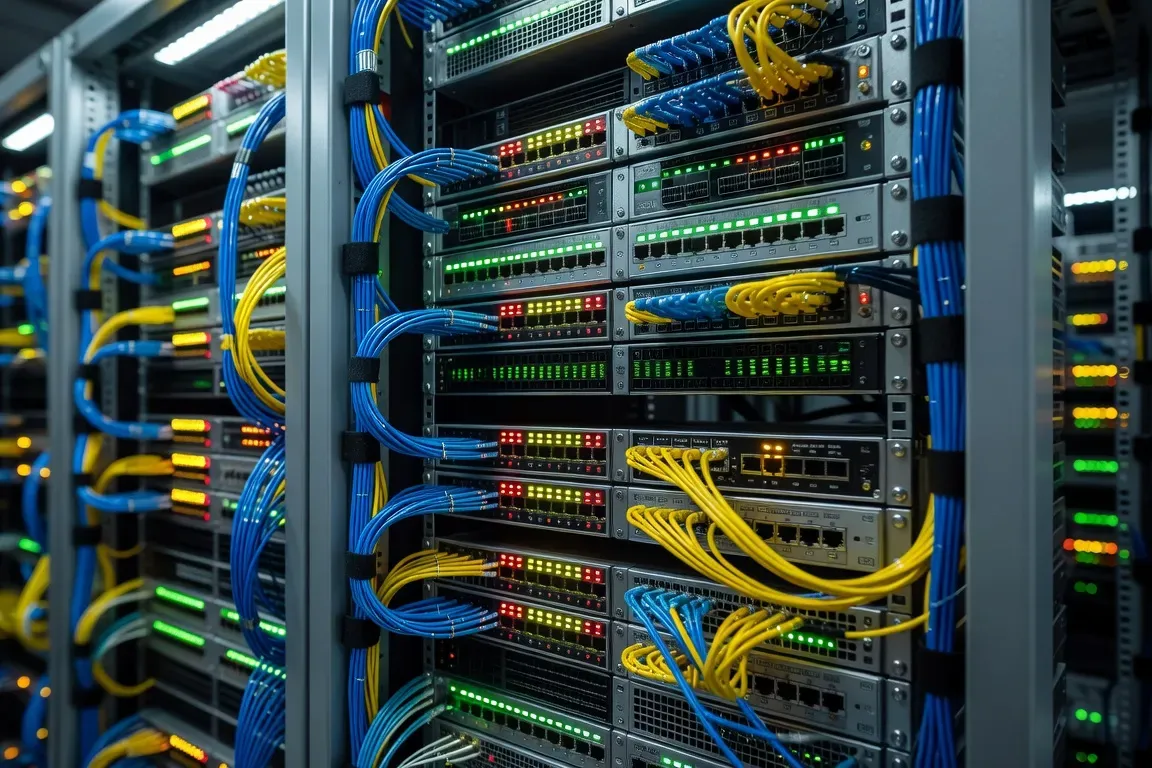
Concretely, hosted locally on Hyper-V servers are:
- Active Directory and directory services;
- Central file sharing with versioned backups;
- Communal management software (accounting, payroll, permit registry);
- Community room reservation system;
- Local cache of Microsoft 365 tools (synchronised OneDrive for main users);
- Print and scan server;
- Municipal building video surveillance system.
Dependent on the external link are:
- Medical teleconsultations (including imaging exchange);
- Exchanges with provincial and federal ministries;
- Software updates;
- External communications (email, videoconference) beyond simple cache.
In case of satellite outage, the municipality can therefore continue to operate for several days without perceptible degradation of routine services. This resilience is a fundamental gain that old systems did not allow.
Service distribution: local vs dependent on the external link
| Service | Hosting | Available during satellite outage |
|---|---|---|
| Active Directory and directory services | Local (Hyper-V) | Yes |
| File sharing and backups | Local (Hyper-V) | Yes |
| Communal management software | Local (Hyper-V) | Yes |
| Community room reservation | Local (Hyper-V) | Yes |
| Microsoft 365 cache (OneDrive) | Local (partial cache) | Partially |
| Medical teleconsultations | Dependent on link | No |
| Exchanges with ministries | Dependent on link | No |
| Software updates | Dependent on link | No |
Key takeaway: infrastructure resilience does not depend on how robust the satellite link is, but on the deliberate choice to host all critical business services locally. It is this architecture, more than connection quality, that guarantees operational continuity.
Installation phase
First mission: preparation and material
The first on-site mission took place in late August, just after equipment arrival by boat. The Soleica team was composed of three people: an infrastructure engineer responsible for architecture, a Hyper-V specialist systems technician, and an experienced cable technician for physical work.
Technical room preparation occupied the first days: replacement of the server room cooling system, installation of a 10 kVA lithium UPS sized for four hours of autonomy, electrical panel upgrade to absorb the additional new server load, and complete review of the cable path between the server room and floor distributors.
Physical server deployment took a day and a half: rack mounting, electrical and network connections, first boots. Configuration of the hyperconverged Hyper-V cluster and Storage Spaces Direct required two additional technical preparation days.
The mission ended with parallel commissioning of the old and new infrastructure: no production migration in this first phase, simply validation that the new architecture worked.
Second mission: migration
The second mission, six weeks later, was devoted to progressive service migration from the old infrastructure. Migration order followed:
- Active Directory and directory services (week 1) — critical operation conducted at night to minimise impact, with prepared rollback.
- File shares (weeks 1-2) — initial copy, then progressive switchover service by service.
- Business software (week 2) — installation of new versions on target virtual machines, database migration, validation tests by key users.
- Workstations (weeks 3-4) — connection to the new directory, user profile migration, resource access verification.
The migration went generally well, with some minor incidents: two Windows 10 workstations requiring complete reinstallation, a too-old version business software requiring an emergency patch, and printing parameters to manually reconfigure on the majority of workstations. No incident resulted in data loss, nor significant unavailability of critical services.
Third mission: finalisation and training
The last mission, two months after the second, was devoted to final parameter finalisation, backup optimisation and intensive training of the local team.
Two municipality people were intensively trained on routine system administration: user addition, folder access rights management, event log reading, backup triggering and verification, first diagnostics in case of incident. Training relied on a custom manual written in French and adapted to local context.
An escalation procedure was put in place with Soleica: level 1 (local team, simple problems), level 2 (videoconference with a Soleica engineer, complex problems), level 3 (on-site mission, major failure). This structuring is essential for device sustainability. Securing access rights and backups is a core part of this training: our cybersecurity guide for Nunavik and Eeyou Istchee organizations outlines the best practices to pass on to local teams.
Difficulties encountered
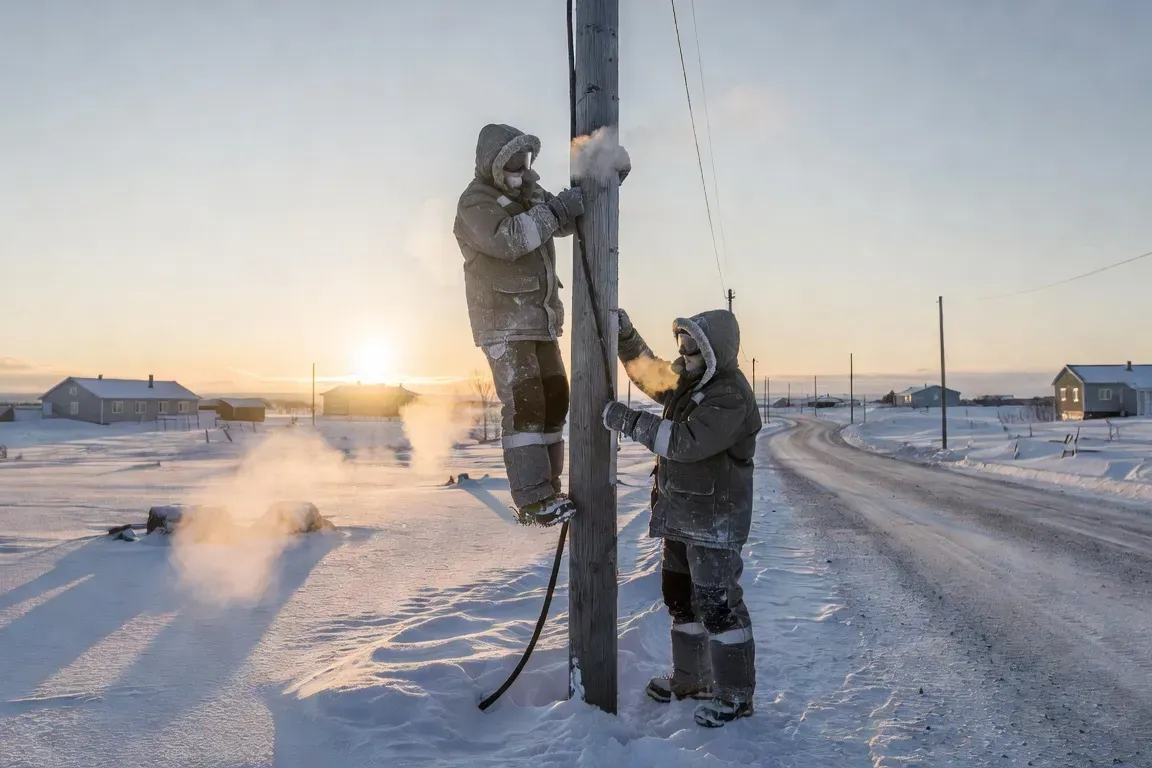
No deployment is without hitches. Here are the main difficulties encountered and how they were managed.
First subject: initial electrical supply quality. During the first mission, several micro-outages were detected, posing no problem for the old servers but triggering erratic behaviour on the new equipment. An electrical audit revealed that the building panel was at the end of its life and generated transients on some branches. The electrical panel upgrade, initially planned later, was advanced and integrated into the first mission, which solved the problem.
Second subject: a proprietary business software used by the cooperative did not support migration to Windows Server 2022 without a patch the publisher took several weeks to provide. A temporary Windows Server 2019 virtual machine was created to host this software while waiting for the patch, then migrated to the Windows Server 2022 target later.
Third subject: the Starlink Business antenna showed more marked performance degradation than expected during two days of intense blizzard. The built-in heating system was insufficient to fully clear the frost. A complementary heating kit was installed for the following season, financed by a contract review with the operator. See our feature on Nunavik connectivity challenges for the general technological context.
Fourth subject: user adoption took longer than expected. Several work habits anchored in the old environment (folder organisation, shortcuts, personal scripts) required individual support over two to three months. This cost item had not been fully integrated into the initial quote and was the subject of an extension negotiated with the municipality.
Common mistake: under-budgeting the human side of change management, assuming a successful technical deployment is enough on its own. On this project, the cost of user adoption support — not anticipated in the initial quote — required a negotiated extension after the fact.
Project timeline summary
| Phase | Duration | Main objective |
|---|---|---|
| Specifications and purchase | 2-3 months | March order for July-August maritime delivery |
| Mission 1: preparation and hardware | ~1 week on site | Technical room, server mounting, architecture validation |
| Mission 2: migration | ~4 weeks spread out | Progressive service switchover, basic training |
| Mission 3: finalisation and training | ~1 week on site | Fine-tuning, intensive local team training |
| Stabilisation | 3-4 months | Change management support, adjustments |
Lessons for future deployments
Several principles emerge from this project and orient subsequent deployments Soleica conducts in the region.
First lesson: the preliminary electrical audit is non-negotiable. On 1990s-2000s Nunavik buildings, supply quality is a major risk factor that must be addressed before installing new equipment, not after.
Second lesson: proprietary business software migration is rarely simpler than expected. Publishers do not systematically test their products on recent Windows Server versions, and upgrade may require specific patches with unpredictable delays. Plan a safety margin in the schedule.
Third lesson: user training and adoption support represent a significant cost and time item to integrate from the initial quote. Successful technical deployments not humanly accompanied generate as much dissatisfaction as failed technical deployments.
Fourth lesson: local resilience through hyperconverged virtualisation is an investment that pays off from the first prolonged satellite outage. For organisations whose activity cannot stop, this architecture has become the reference standard.
For human experience reports behind these deployments, see our interview with a Northern telecom engineer. For the territory respect dimension and relationship with communities, see our interview with a community tourism specialist, who shares the same long-term work approach in respect of local partnerships embodied also by Soleica Chalets.
Conclusion
The deployment described here has nothing exceptional technically. It is a classic IT infrastructure project, comparable to what would be done for a similar-sized municipality in any Quebec region. What makes it particular is the environment in which it fits: Northern logistics, extreme climate, relative isolation, and necessity of local autonomy stronger than in the south.
Our interview with a web developer specialized in Indigenous projects complements this IT case study with the software co-construction dimension.
For Northern Quebec organisations considering a similar project, the experience accumulated by Soleica over the dozen deployments of this type we have conducted now allows us to propose proven architectures, realistic planning and sincere budgets. Technical work remains demanding, but the territory no longer forgives improvisation. See our IT services for Northern communities for an initial framing of your project.
Frequently asked questions
Why choose Hyper-V over VMware or Proxmox for a Northern deployment?
Three main reasons. Hyper-V is integrated into Windows Server, simplifying the administrative tool chain and reducing specific skills required for local maintenance. The cost of Microsoft licences is often already covered by provincial or municipal frameworks, avoiding additional spending. And the availability of local French-language support on the Microsoft ecosystem is largely superior to that of more specialised solutions. For specific contexts (more complex infrastructures, high density needs), Proxmox or VMware may remain relevant, but it is not the most common case in Northern Quebec.
What satellite bandwidth should be planned to make this type of infrastructure work?
For a typical municipal deployment — say 30 to 50 regular users, two or three hybrid cloud business services, regular backups and occasional teleconsultations — aim for a minimum of 50 Mbps stable downstream and 25 Mbps upstream. This is what LEO links (Starlink or Telesat Lightspeed) typically provide today in Nunavik villages. Latency under 60 ms is also critical for real-time uses.
How do you manage satellite link outages?
The architecture is designed to operate during a prolonged external link outage. All critical business services (directory, file sharing, communal management applications, cooperative accounting) run on local servers. Services that really depend on the Internet (medical teleconsultations, external administrative requests, software updates) are unavailable during the outage but resume as soon as the link is restored. Encrypted local backups are kept in a second municipality building to prevent a disaster from destroying both live data and backups.
How long does a complete deployment take?
From initial order to production go-live, count nine to twelve months for a project of this size. The specifications and equipment purchase phase takes two to three months (March order for July-August maritime delivery). The on-site installation phase takes four to six weeks spread over two or three missions. The progressive migration from the old environment and stabilisation phase takes three to four additional months. Local user training is conducted throughout the process.
What is the approximate budget for such a deployment?
For a deployment of this size (two hyperconverged servers, complete network infrastructure, professional LEO connection, integration and training), the all-inclusive budget is between 180,000 and 280,000 Canadian dollars, highly variable depending on the quality of existing infrastructure to take over, the desired redundancy level and the complexity of business integrations. For Nunavik municipalities, this type of project is generally co-financed by provincial and federal remote-region digital infrastructure programs.
What happens to the old equipment being replaced?
Important question often neglected. Functional equipment is either donated to local associations (school, cultural centre), or sent to second-hand resale via specialised refurbished hardware channels. End-of-life equipment is repatriated south by boat in conditions compliant with environmental requirements — Nunavik has no electronic recycling infrastructure and it is strictly forbidden to abandon equipment on site. This return logistics is integral to the quote.