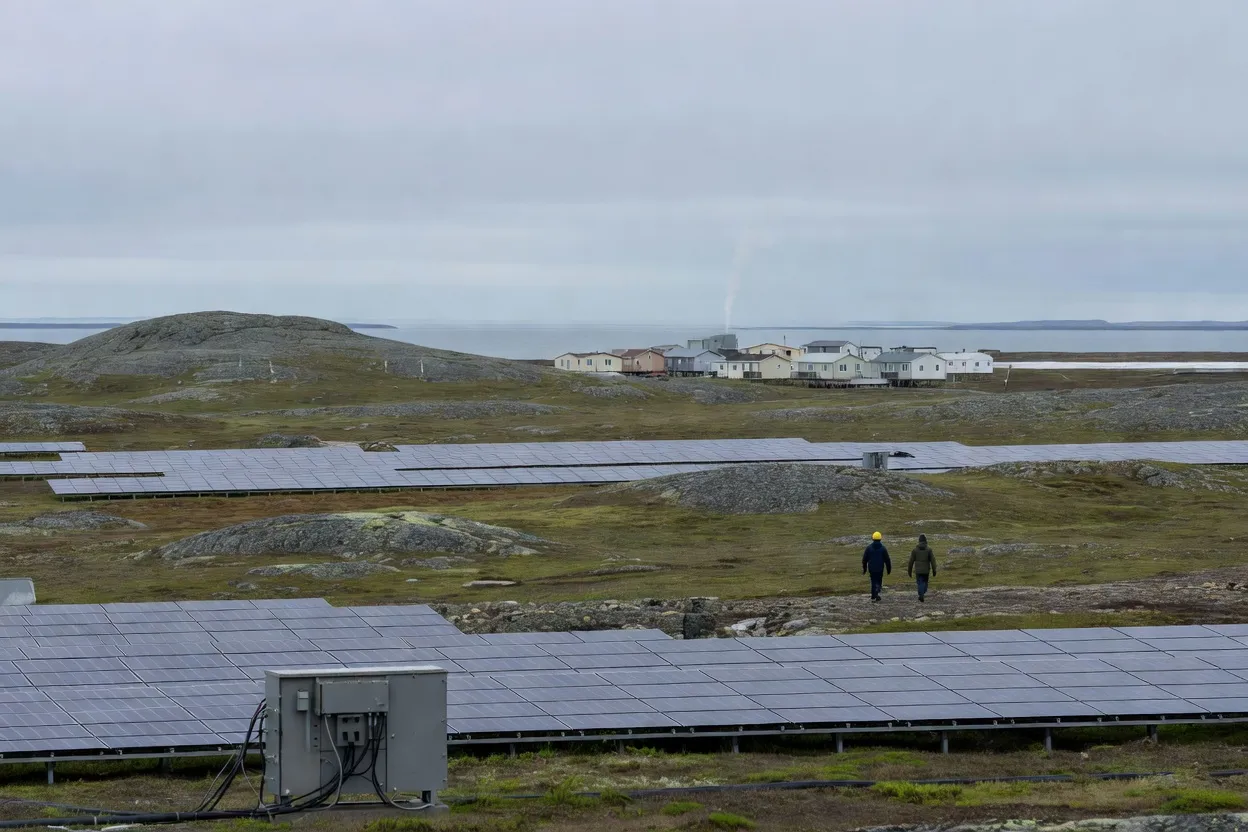
In Nunavik, electricity does not come from Quebec’s large hydroelectric grid. Each village produces its own, and the shift to renewable sources happens project by project. This article reviews the current situation, the Quaqtaq solar microgrid and the wind farms now under way.
To place these projects within the territory’s full energy picture, our report on energy in Nunavik reviews the diesel, solar, wind and hydro situation across the 14 villages.
Isolated grids powered by diesel
All of Nunavik’s villages are served by isolated grids that are not connected to Hydro-Québec’s main network. Each of the fourteen communities has a diesel thermal plant on its territory. Hydro-Québec’s Distribution division is responsible not only for distributing energy but also for generating it on these grids.
Fuel is distributed by the Fédération des coopératives du Nouveau-Québec (FCNQ), which now holds a near-monopoly on petroleum product distribution in Nunavik. Quaqtaq, Kuujjuaq and Kangiqsualujjuaq are the exception: these three communities bought Shell’s petroleum infrastructure and still own it; Nunavik Petro inc., created in 2009, connected them to the FCNQ distribution system.
In its supply plan for autonomous grids 2027-2041, Hydro-Québec states that Nunavik once again shows the strongest growth in energy needs of all the territories served by this type of grid. It attributes this in particular to the region’s strong population growth.
How a hybrid microgrid works
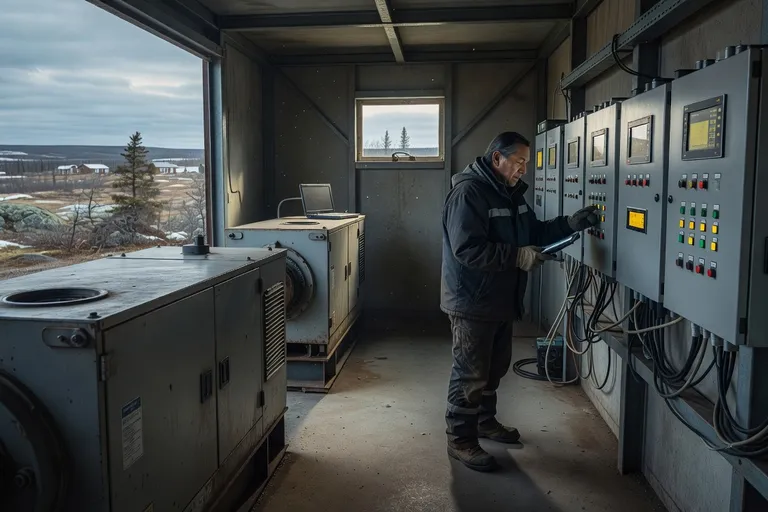
A hybrid microgrid combines the existing diesel plant with solar panels and a battery storage system. Diesel stays in place; solar and batteries reduce the amount of fuel burned when sunlight allows.
The Quaqtaq pilot project
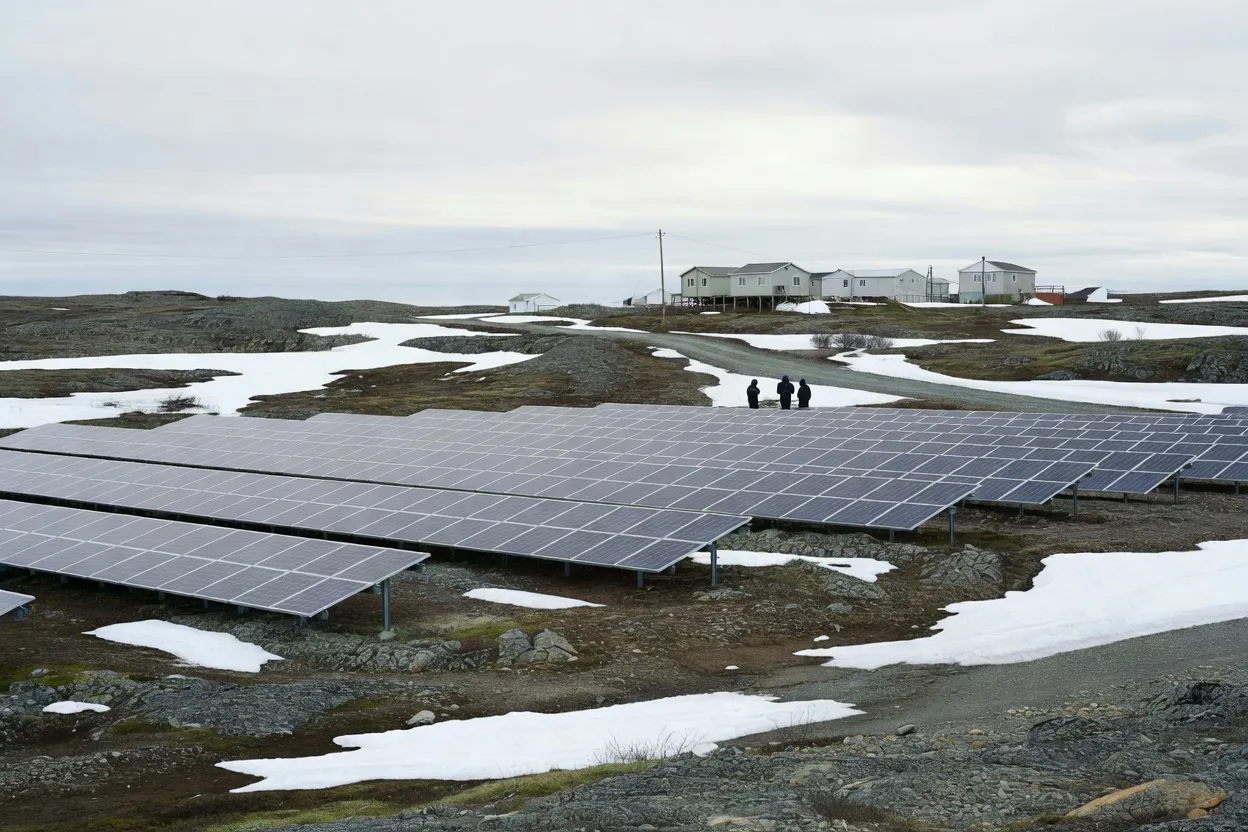
In Quaqtaq, Hydro-Québec built a microgrid with photovoltaic panels and battery storage, added to existing diesel generation. The project, partly funded through Green Infrastructure funding (contribution of $1,375,301 on a total cost of $3,594,149), is now complete.
According to Natural Resources Canada, it made it possible to:
- test Nunavik’s first centralized energy storage system;
- upgrade the plant’s automation to allow greater integration of renewable energy;
- better understand the challenges of installing and operating solar panels in a northern village, with the data collected already serving as a basis for analyzing new business models.
The panels sit on modular aluminum structures that are easy to assemble, and the batteries are housed on the power plant site.
Wind power and the partnership with Tarquti
Hydro-Québec has begun developing renewable energy projects in partnership with regional Inuit organizations. In the model being rolled out, Inuit organizations own and operate the generation facilities, and Hydro-Québec purchases the electricity produced. Its partner is Les Énergies Tarquti, an Inuit-owned renewable energy company held by Makivvik and Ilagiisaq-FCNQ.
Two wind power purchase contracts were authorized by the Régie de l’énergie in November 2025:
| Village | Capacity | Work | Planned commissioning |
|---|---|---|---|
| Puvirnituq | 9 MW | Starts in 2027 | End of 2028 |
| Quaqtaq | 3 MW | Began in summer 2026 | End of 2027 (per Hydro-Québec) |
Tarquti announced the start of construction of the Tingirrautaq wind project in Quaqtaq on June 18, 2026, at a gathering of community leaders and shareholders. According to Tarquti, turbine delivery and assembly are planned for summer 2027; the end-of-2027 date comes from Hydro-Québec’s plan, and Tarquti does not confirm it in its announcement.
The Kuujjuarapik-Whapmagoostui wind project, led by the Kuujjuarapik Whapmagoostui Renewable Energy Corporation, was suspended in February 2026: the developer informed Hydro-Québec and requested termination of the supply contract; according to Hydro-Québec’s filing with the Régie de l’énergie (October 2026), discussions on the termination terms are ongoing.
Building in the North: permafrost and sea transport
Construction in Nunavik faces particular constraints. North of the 55th parallel, buildings must allow air to circulate between the structure and the ground to limit permafrost warming. Materials arrive by boat between late June and early October, which requires careful work planning. The Government of Quebec describes construction in the North as particularly difficult because of the climate, scarce labour and materials, and high transport costs.
Further reading
To understand how this energy infrastructure connects with the digital connectivity of the same villages, our report on internet in Nunavik’s most remote villages and our case study on a Northern server deployment offer complementary insight into the logistical challenges of the region.
For a comparison of connectivity costs with the rest of Quebec, also see our analysis of internet costs in Nunavik in 2026.
Sources
- Hydro-Québec, Supply plan for autonomous grids 2027-2041 (PDF, in French)
- Natural Resources Canada, Diesel, solar and battery microgrid, Hydro-Québec remote communities (Quaqtaq)
- Tarquti Energy
- Tarquti, start of construction of the Tingirrautaq wind project in Quaqtaq (in French)
- VRM, Energy shapes villages: the energy system in Nunavik (in French)
- Government of Quebec, Housing in Northern Quebec (in French)
- Régie de l’énergie, file R-4359-2026, exhibit HQD-3 document 1 (PDF, in French)
Frequently asked questions
What is a hybrid solar-diesel microgrid?
It is an autonomous electrical network that adds solar panels and batteries to an existing diesel plant. In Quaqtaq, Hydro-Québec installed photovoltaic panels and a battery storage system alongside diesel generation, in order to integrate more renewable energy and reduce greenhouse gas emissions.
Are Nunavik's villages connected to Hydro-Québec's main grid?
No. Nunavik's fourteen communities are served by isolated grids that are not connected to Hydro-Québec's main network. Each village has a diesel thermal plant on its territory, and Hydro-Québec both generates and distributes the electricity there.
Who is Tarquti?
Tarquti describes itself as the first and only regionally owned renewable energy developer operating in Nunavik. In the model described by Hydro-Québec, Inuit organizations own and operate the renewable generation facilities, and Hydro-Québec purchases the electricity produced under supply contracts.
Where do wind projects in Nunavik stand?
According to Hydro-Québec's supply plan for autonomous grids, a contract for a 9 MW wind farm in Puvirnituq was authorized by the Régie de l'énergie in November 2025, with work planned to start in 2027 and commissioning scheduled for the end of 2028. In Quaqtaq, a 3 MW wind farm was also authorized in November 2025; work began in summer 2026 and commissioning is scheduled for the end of 2027 according to Hydro-Québec.