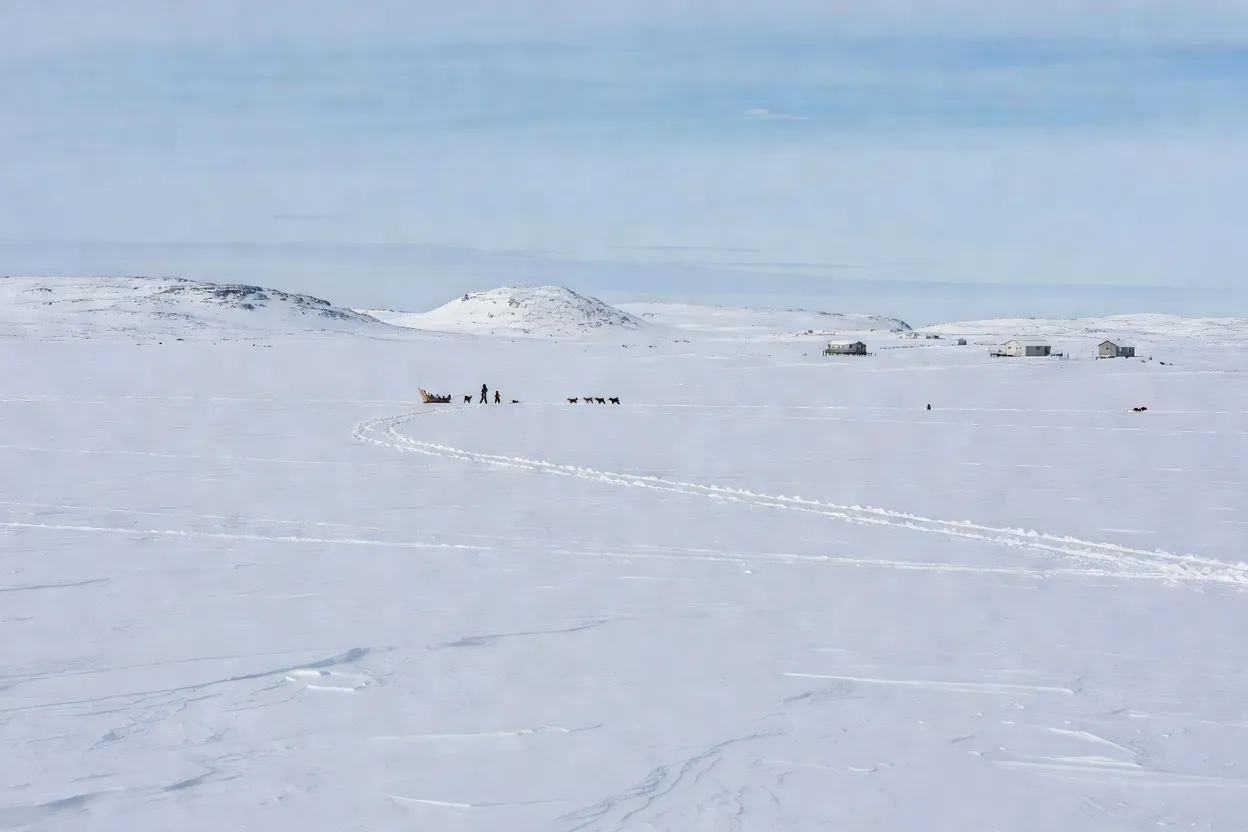
In Nunavik, the sled dog is part of the history of Inuit communities. It nearly disappeared in the 20th century, in particular after killings carried out by government authorities; then, on the initiative of Makivik Corporation, an annual race, Ivakkak, helped revive dog teams. This article looks at the word qimmiq, the breed’s decline and the rules of the race. It also places the practice within the continuity of land-based traditions, rather than reducing it to a winter activity.
The qimmiq: a word, a breed
In Inuktitut, qimmiq means “dog” and the plural is qimmiit: “one qimmiq”, “two qimmiit”. The word is used for dogs in general; it is also used to name the Inuit sled dog breed, known in English as the Canadian Inuit Dog.
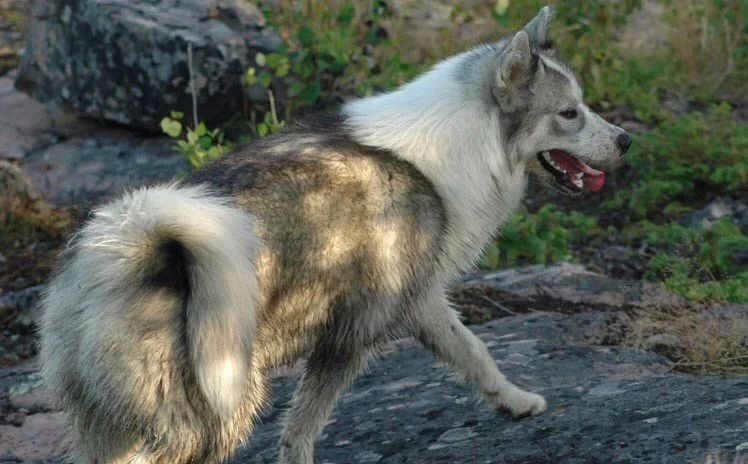
Canadian Inuit Dog. Photo: Exhaustfumes (public domain, Wikimedia Commons).
In the context of Ivakkak the distinction matters: only purebred Inuit dogs are admitted to the race.
A sharp decline in the 20th century
According to Nunatsiaq News, there were about 20,000 qimmiit in Canada in the 1920s. The breed then declined sharply. In Nunavik, purebred dogs were nearly wiped out by culling, snowmobiles and disease: a 2005 Nunatsiaq News article summarizes that Nunavik’s original dogs had disappeared by the 1970s. Makivik Corporation launched the race to bring dogs back to Nunavik, after the killings of Inuit sled dogs carried out in the 1950s and 1960s by government authorities, including the RCMP.
Snowmobiles replaced dog teams for travel, which contributed to the decline of the practice without being its only cause. According to Nunatsiaq News (article of January 2020), the president of the Canadian Eskimo Dog Club, the breed’s official name with the Canadian Kennel Club, estimated that about 300 remained.
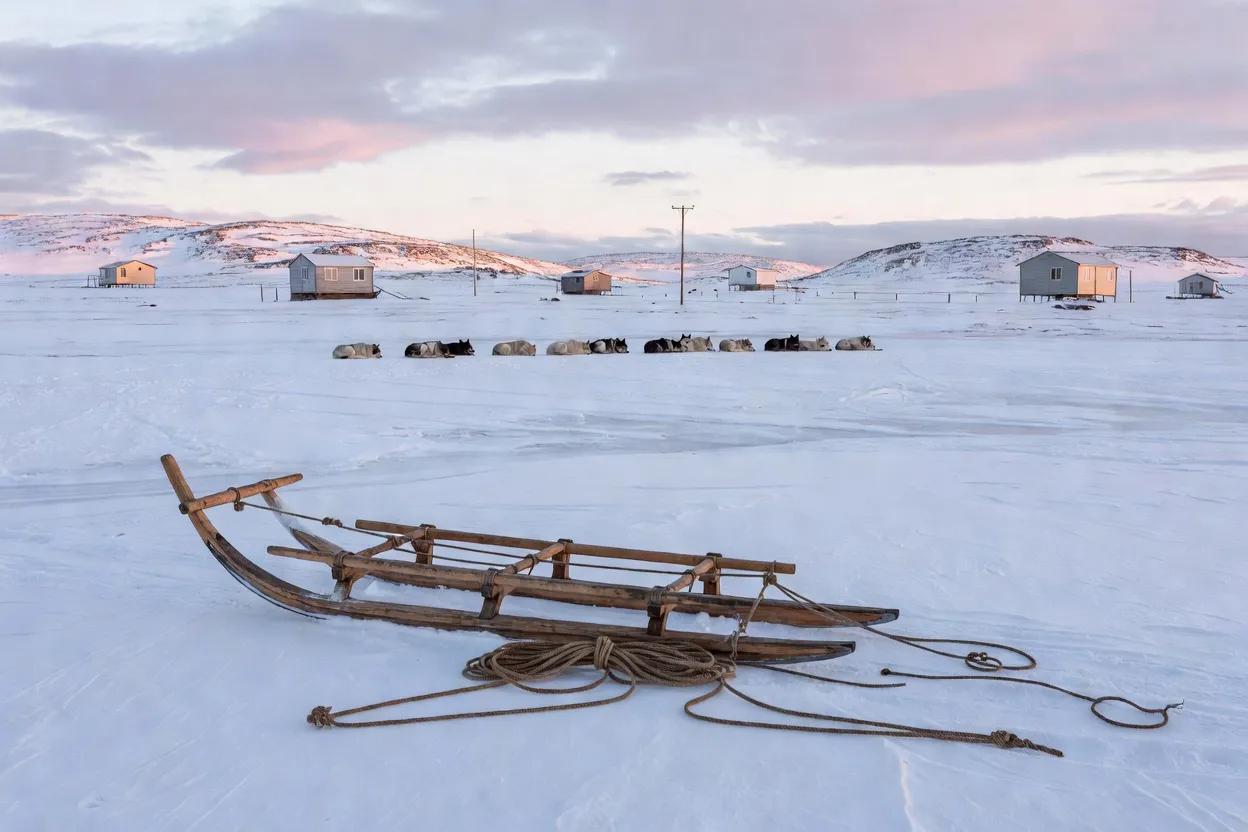
Ivakkak: a race to bring dog teams back
Ivakkak is organized by Makivik Corporation (Société Makivik). The first race was held in 2001. Its aim is to keep dog sledding alive, bring dogs back to Nunavik and support the revival of the Inuit dog.
Who can take part?
Participants are Nunavik Inuit who are beneficiaries of the James Bay and Northern Quebec Agreement, and only purebred Inuit dogs may compete.
How long is the route?
The route changes from one edition to the next:
- 2001: from Umiujaq to Puvirnituq, about 443 km;
- 2005: announced route from Kangiqsualujjuaq to Aupaluk along the Ungava Bay coast, through Kuujjuaq and Tasiujaq, about 400 km;
- 2023: from Kangiqsujuaq to Aupaluk, more than 427 km.
The race name and the first edition
The race was named by Johnny Watt — then Governor of Nunavik and a recognized dog team master, who delivered measles vaccines to Nunavik communities by dog sled in the 1950s: Ivakkak means “when the dogs are at their best pace” in Inuktitut. Makivik decided in 2000 to organize a regional race to bring the sled dog back to Nunavik; in 2001, nine teams and 82 dogs lined up on the ice. That first route followed a trail once used by Inuit dog team masters hired by the Hudson’s Bay Company to carry mail between the North and the South.
Recent editions: routes and winners
Ivakkak is held every year — 23 editions since 2001, the 2022 race having been cancelled due to the pandemic — and the route changes each time. The teams, made up of two mushers, link different villages from one year to the next:
| Edition | Year | Route | Winners | Time |
|---|---|---|---|---|
| 15th | 2016 | Quaqtaq to Kuujjuaq, Ungava coast | Willie Cain Jr and Daniel Cain Annahatak (Tasiujaq) | 30 h 55 min 37 s |
| 16th | 2017 | finish in Ivujivik | Aisa Surusilak (Puvirnituq) | 60 h 19 min, 3 minutes ahead |
| 20th | 2021 | Salluit to Puvirnituq, hit by violent winter storms | Aisa Surusilak and Paulusi Amarualik (Puvirnituq) | 39 h 30 min 03 s |
| 21st | 2023 | Kangiqsujuaq to Aupaluk, 427 km | Willie Cain and Itsaja Arnatuk (Tasiujaq) | 38 h 38 min 20 s |
| 22nd | 2024 | Umiujaq to Puvirnituq, about 410 km (modified for snow conditions) | Aisa Surusila (Puvirnituq), leading all 6 days | — |
| 23rd | 2025 | Kangiqsualujjuaq to Tasiujaq, 328 km | Charlie Angnatuk and Zachariah Saunders (Tasiujaq) | 26 h 23 min |
A few facts stand out. In 2016, the winners received $8,000 in cash, $12,000 in co-op shopping certificates and plane tickets, from a prize pool of more than $40,000. In 2021, the race lasted more than two weeks amid winter storms, and Puvirnituq’s three teams swept the podium. In 2024, Aisa Surusila led the race from start to finish despite severe weather. In 2025, the start was delayed two days by bad weather; teams faced about −30°C and whiteout conditions, and eleven teams started (sixteen had registered).
The mushers and the villages represented
Some names appear regularly on the winners’ list. Aisa Surusilak of Puvirnituq won the 2017 and 2024 editions — leading from start to finish — as well as the 2021 edition with Paulusi Amarualik. Willie Cain Jr of Tasiujaq won in 2016 with Daniel Cain Annahatak before finishing second in 2025. Charlie Angnatuk, also of Tasiujaq, won in 2025 with Zachariah Saunders, arriving in their home village. Peter Ittukallak finished on the podium in 2016 and 2017, and Tamusi Sivuaraapik, then 60 years old, was the emblematic figure of the first 2001 edition.
As for villages, Puvirnituq and Tasiujaq dominate recent results, but the route showcases the whole of Nunavik: Umiujaq, Inukjuak, Quaqtaq, Kuujjuaq, Ivujivik, Kangiqsujuaq, Aupaluk, Kangiqsualujjuaq, Salluit and Akulivik have hosted starts, finishes or stages. Every community along the trail welcomes the teams with a feast — the 2025 edition notably included a two-day stop in Kuujjuaq so the dogs could rest.
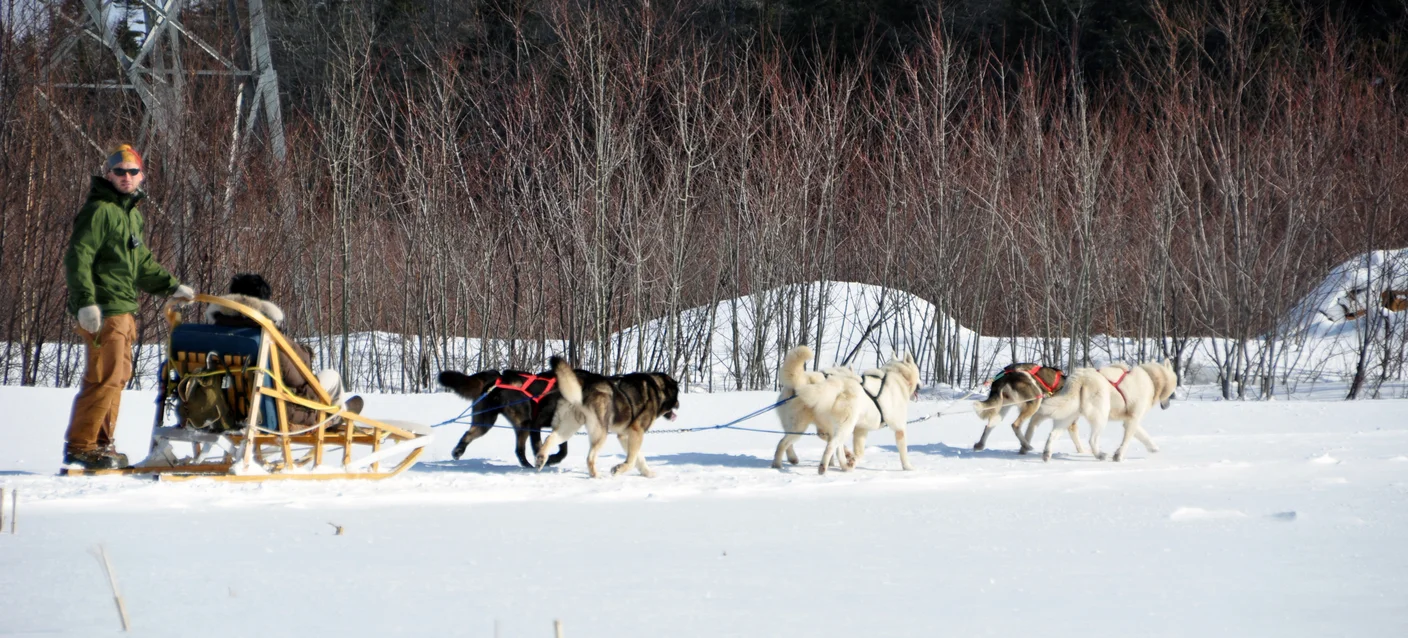
A dog sled team in Quebec. Photo: chensiyuan (CC BY-SA 4.0, Wikimedia Commons).
Kuujjuaq and dog teams
In a 2005 article, Nunatsiaq News notes that dog teams were once common in Kuujjuaq and that keeping one had become expensive. Kuujjuaq then had more than six teams.
Preparing for and guiding an outing
A few basic precautions apply around working dogs:
- Follow the instructions of the musher, who knows the team and the day’s conditions.
- Ask before touching a dog and avoid standing in front of a team or near the lines without guidance.
- Dress for cold and wind, as the guide advises.
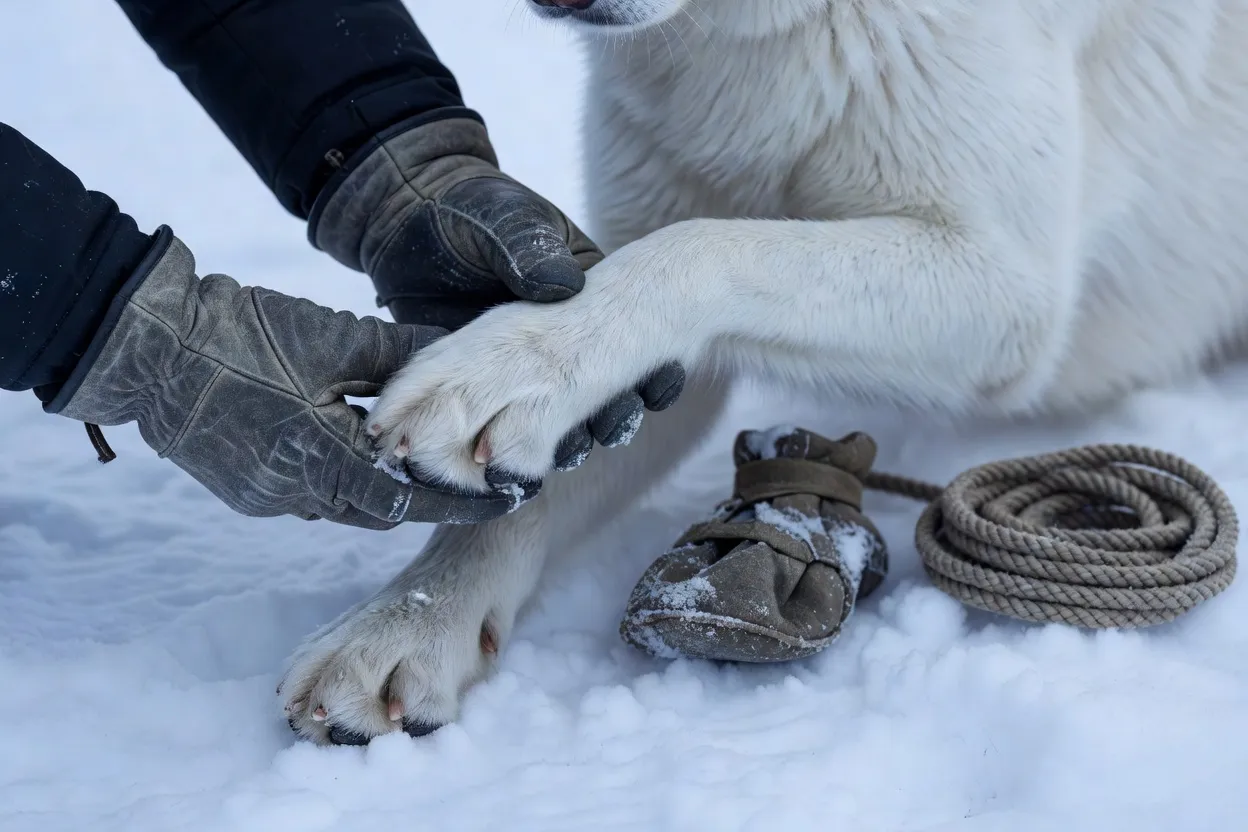
Nunavik Tourism presents dog sledding among the experiences to try on the land and points to Inuit adventures for operator details. A respectful visit to communities begins with preparation, listening and respect for the local pace. To widen the picture, you can also read an article on a guided Indigenous experience in Canada, on voyage-canada.com, then learn about winter tourism in Nunavik.
Key facts about Ivakkak and the qimmiq
| Item | Fact | Source |
|---|---|---|
| First Ivakkak race | 2001 | Makivik Corporation |
| Organizer | Makivik Corporation | Makivvik, Nunatsiaq News |
| Eligible dogs | Purebred Inuit dogs | Wikipedia (Ivakkak) |
| 2023 edition | More than 427 km, from Kangiqsujuaq to Aupaluk | Makivvik |
| Plural of qimmiq | Qimmiit | Nunatsiaq News |
| Qimmiit in Canada (January 2020 estimate) | About 300 | Nunatsiaq News |
Sources
- Makivvik, Ivakkak 2023
- Ivakkak 10th anniversary (Makivik press release, Newswire)
- Nunatsiaq News, Dog sledding not just a thing of the past (2005)
- Nunatsiaq News, Push underway to rename Canadian Eskimo Dog as Inuit qimmiq
- Makivvik, federal apology for the Nunavik dog slaughter
- Ivakkak, the tradition
- Wikipedia, Ivakkak
- Wikipedia, Canadian Inuit Dog
- Nunavik Tourism
Frequently asked questions
How much does a dog-sledding excursion cost in Nunavik?
Rates depend on the local operator, the length of the activity, the village involved, accommodation and air travel. It is best to request a detailed estimate directly from the organizer, particularly to find out what is included in supervision and equipment.
What time of year should I choose for a dog-sledding experience in Nunavik?
Outings take place in winter, when snow conditions and routes allow travel by sled. The exact period depends on the village, the weather and safety decisions made by local guides. Check availability with a local operator.
How do I get to northern villages to take part in an activity?
Access depends on the village and on the organizer of the activity, who can specify the departure point, arrival arrangements and seasonal guidelines. Allow time for the unexpected, since weather and travel can change plans.
What equipment should I bring for a dog-sledding outing?
Equipment depends on the length of the outing, the temperature and the guide's instructions. You need clothing suited to cold, wind and sitting still during the trip. Operators may provide or recommend certain items: follow their instructions.
What rules should I follow around dogs and mushers?
Listen to the musher's instructions, ask before touching a dog and avoid sudden movements near dog teams. Respect the places you visit, safety decisions and the daily life of the host community.
Who organizes the Ivakkak?
The Ivakkak is organized by Makivik Corporation, which launched the race in 2001 to revitalize the Inuit sled dog (qimmiq). Only Nunavik Inuit who are beneficiaries of the James Bay and Northern Quebec Agreement may take part, with purebred Inuit dogs.
Who won the latest Ivakkak?
The 2025 edition (23rd) was won by Charlie Angnatuk and Zachariah Saunders of Tasiujaq, in 26 hours 23 minutes over a 328-kilometre route between Kangiqsualujjuaq and Tasiujaq.