Québec’s winter is not limited to southern resorts or weekends spent reaching a cottage by road. Farther north, the season changes in character: daylight becomes scarce and travel is done by air. To appreciate this difference, one can first consult (winter activity ideas in Québec’s great outdoors (snowmobiling, snowshoeing)), which describe a winter still connected to the road network. Nunavik begins where that continuity ends.
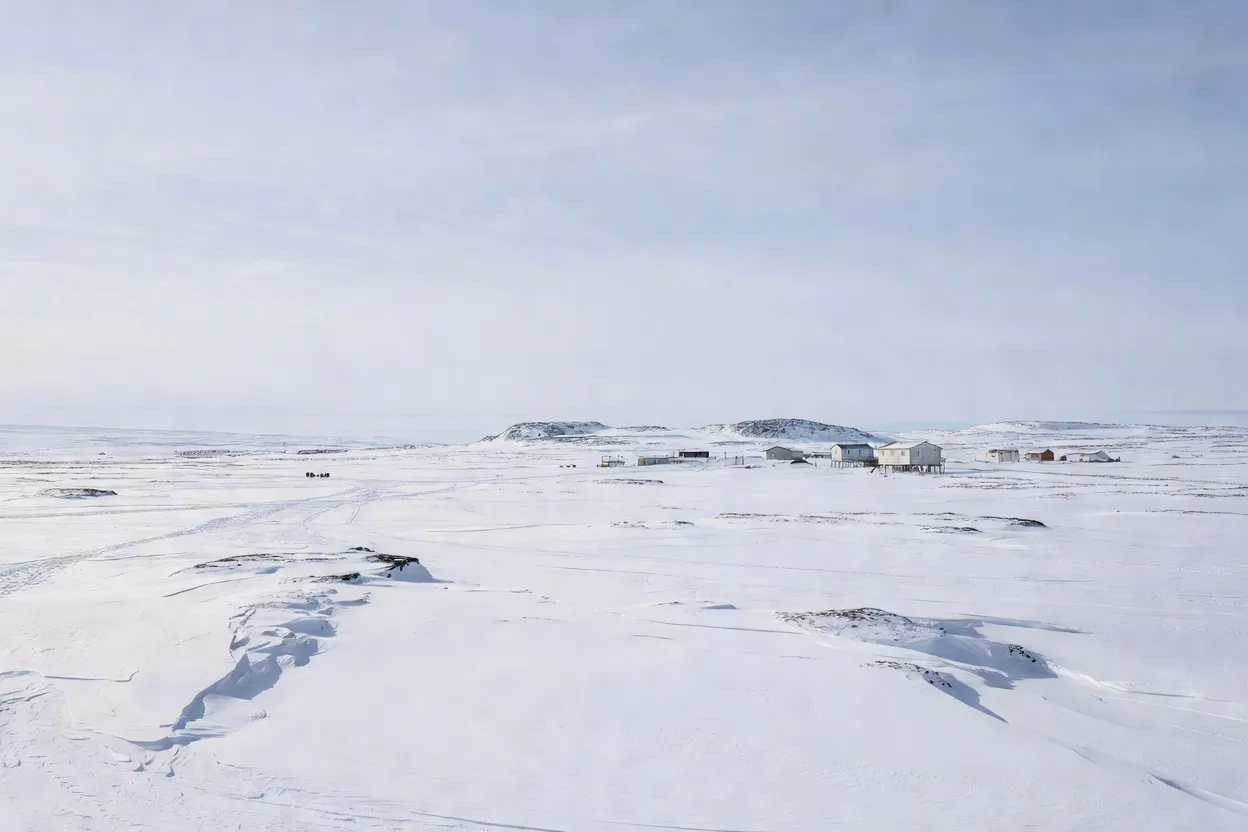
Northern Québec is not a single block. Eeyou Istchee is the territory of the Cree, Nunavik that of the Inuit. No road links Nunavik to southern Québec, and winter temperatures drop below -30 degrees, according to Nunavik Tourism.
What winter makes possible in Nunavik
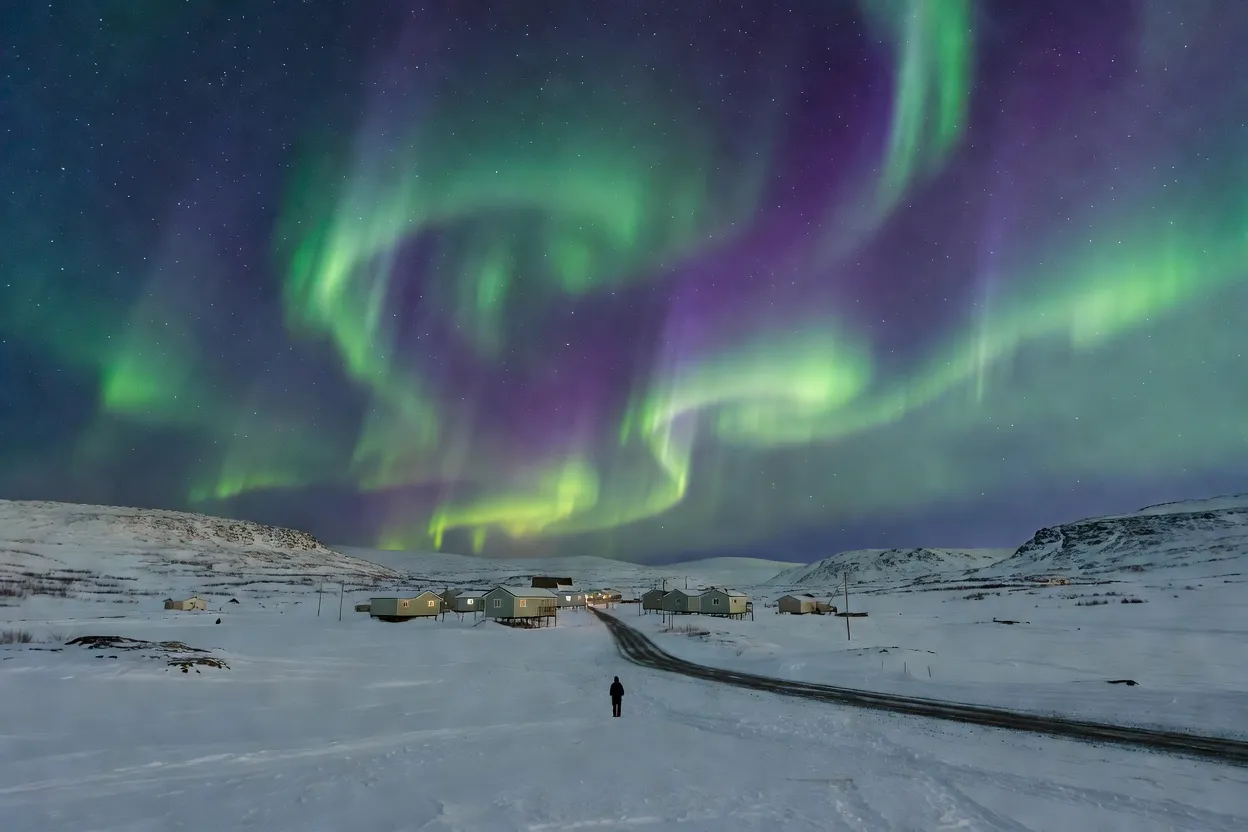
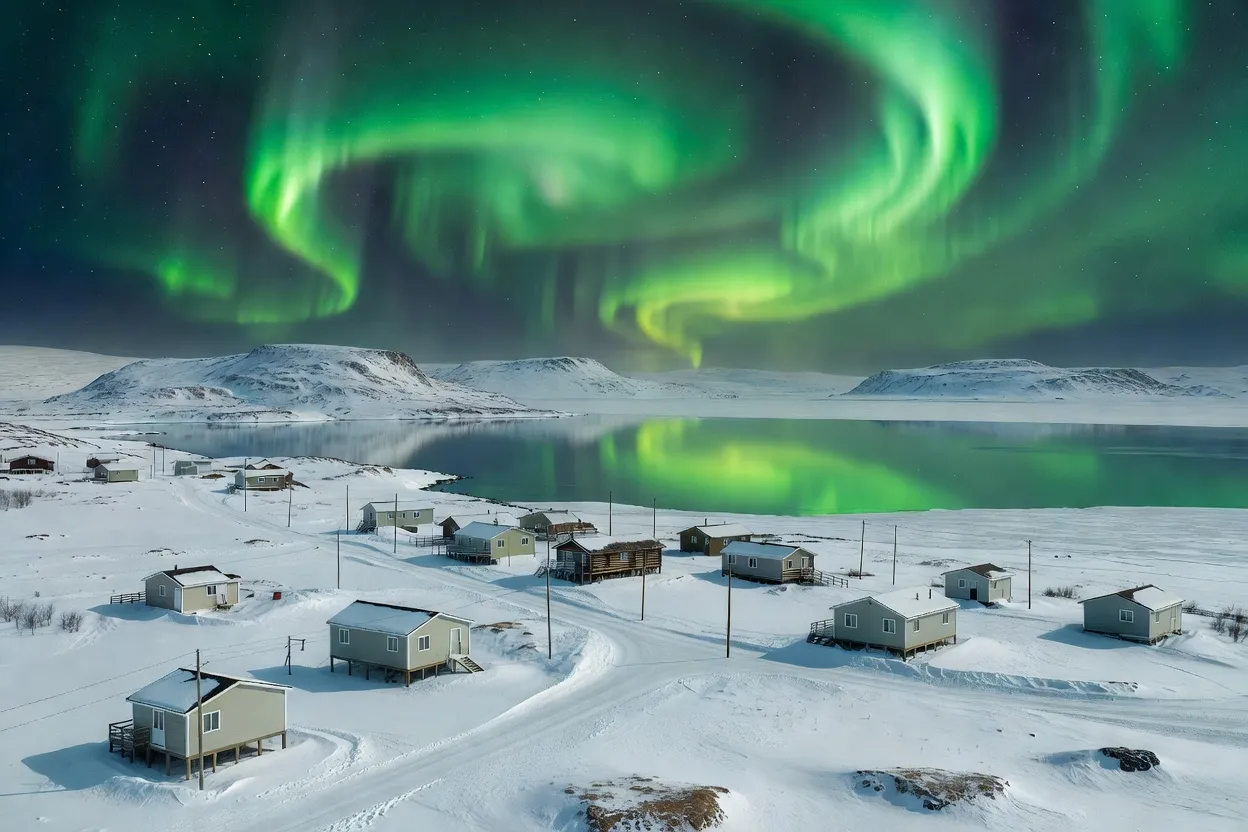
Nunavik Tourism describes the northern lights, called “arsaniit” by the Inuit, as a spectacle that lights up the night sky from September to March, and sometimes beyond. Anywhere in Nunavik, a little luck, a clear sky and solar activity are enough to see them.
Regional tourism material also presents, for winter, dog sledding, snowmobiling, nordic skiing, snowshoeing, ice fishing, igloo building and nights in an igloo under the northern lights. These activities are carried out with local operators, including Nunavik’s national parks, outfitters and Inuit tourism businesses such as Inuit Adventures. Nunavik Tourism advises contacting these operators to plan the trip.
For the 2026 season, Inuit Adventures offers a four-day northern-lights package in Kuujjuaq, Friday to Monday, with three nights at the Coop hotel.
The villages are reached first by air: see the feature on flights to Nunavik.
Choosing the window: light and northern lights
Leaving “in winter” remains too vague. The northern-lights season runs from September to March, sometimes beyond. Several nights of observation improve the chances, without guaranteeing anything.
At the winter solstice, on December 21, Kuujjuaq has about 6 hours 26 minutes of daylight: the sun rises around 8:18 a.m. and sets around 2:44 p.m. It is therefore not continuous polar night, as north of the Arctic Circle. Daylight remains short: outings in natural light are concentrated in a few hours, and the return must be planned before nightfall.
In March, two events mark the Inuit calendar. The Ivakkak dog sled race brings together teams from several communities: in 2026 it ran from Akulivik to Quaqtaq, where the first teams arrived on March 28. Every second year, the Puvirnituq Snow Festival offers competitions of ancestral skills such as igloo building, a snow and ice sculpture competition, as well as music and dance.
| Reference point | Fact | Practical implication |
|---|---|---|
| Northern-lights season | September to March, sometimes beyond | Plan several nights, without guarantee of clear skies |
| Solstice in Kuujjuaq | About 6 h 26 of daylight (December 21) | Concentrate daytime outings in a few hours |
| March 2026 | Ivakkak race (arrival in Quaqtaq on March 28), Puvirnituq Snow Festival every second year | Cultural gatherings to plan early |
| Territory | No road to southern Québec | Dates also follow flight schedules |
Winter outings
Nunavik Tourism material presents these winter activities:
- dog sledding;
- snowmobiling;
- nordic skiing;
- snowshoeing;
- nights in an igloo under the northern lights;
- ice fishing;
- igloo building.
Dog sledding is an ancestral mode of travel that the Inuit still practise for the sheer fun of travelling in harmony with nature, according to Nunavik Tourism. Travel between communities, sometimes more than 150 km apart, was done by dog sled, thanks to a remarkable mastery of the land that the Inuit still hold. To learn more about this practice, read the feature on qimmiq sled dogs and the Ivakkak race.
In Nunavik’s national parks, winter packages combine backcountry skiing, snowshoeing on the tundra, snowmobiling as a faster means of transport and dog sledding.
Reaching the villages by air
Nunavik lies about 1,500 km north of Montréal. Roads and railways do not lead there: people fly in, and it is also by plane that they travel from one community to another. A Montréal–Kuujjuaq flight takes about two hours, whereas reaching Puvirnituq from Montréal takes four to six hours.
Air Inuit has extended until January 15, 2027 its trial period of additional Monday and Friday flights on the Montréal–Québec City–Kuujjuaq route. These flights supplement the existing service, and a daily nonstop Montréal–Kuujjuaq flight remains available. Transport costs are significant given the distance, and trips must be prepared well in advance, whatever the season.
Preparing for the cold
With temperatures dropping below -30 degrees, wind on the tundra and the absence of shelter make city clothing insufficient as soon as the group stops. A few simple principles:
- several layers that can be opened as soon as movement begins;
- spare gloves;
- boots intended for standing still;
- a headlamp for the dark hours;
- face protection against wind.
Ask the operator what each outing requires: snowmobiling, ice fishing and a night in an igloo do not expose participants to the cold in the same way.
Sleeping in a village
According to Nunavik Tourism, one can live rustic adventures, such as spending a night in an igloo, without giving up comfort: hotels welcome visitors in the various communities. In a village far from major centres, booking is made well before departure. To compare establishments, see the feature on accommodation in Nunavik.
Kuujjuaq is the main village and administrative centre of the region, on the Koksoak River, about 48 km upstream from Ungava Bay. Makivik Corporation, which represents the Inuit of Northern Québec in their relations with the governments of Québec and Canada, is based there.
Visiting with respect for communities
Inuktitut is spoken daily by the vast majority of Inuit in Nunavik. It can be read everywhere in the region, on signs as well as in place names. A few simple actions: go through guides and Nunavik Tourism, do not rename places already named in Inuktitut, ask a person’s permission before photographing them, and accept that village life, school or a meeting takes precedence over an excursion.
In conclusion
- The northern lights can be seen from September to March under clear skies; in Kuujjuaq, daylight lasts about 6 h 26 at the winter solstice.
- Access is by air only; Air Inuit offers additional Montréal–Québec City–Kuujjuaq flights until January 15, 2027.
- Dog sledding, ice and the northern lights are best experienced with local operators, equipped for the cold, as a visit to hosts.
Aurora season: September to April
The winter offering revolves around a long window: the northern lights are generally observable from late August or September until spring, with good chances during the polar winter. The practical season runs from September to April; in December and January the nights are very long, but cold and travel conditions demand more preparation. Two conditions remain essential: a clear sky and sufficient geomagnetic activity — an aurora is never guaranteed, and cloud cover and solar activity forecasts should be checked shortly before each outing.
Dogs, snowmobiles, ice fishing: the winter trio
The three flagship activities complement each other: dog sledding, often combined with a cultural outing or an overnight camp; snowmobiling on snow roads and frozen lakes, with routes depending on snow and ice conditions; and ice fishing on frozen lakes, usually guided by a local. Nunavik Tourism remains the gateway for identifying communities and officially listed businesses; dates, availability and conditions should be confirmed with each organizer.
Sources
- Nunavik Tourism, Nunavik brochure (northern lights, winter activities, access, Inuktitut)
- Nunavik Tourism, official website
- Air Inuit, additional Montréal–Québec City–Kuujjuaq frequencies extended through January 15, 2027
- timeanddate, sunrise and sunset in Kuujjuaq
- Wikipedia, Nunavik (roads, Kuujjuaq, Makivik Corporation)
- Wikipedia, Kuujjuaq (Koksoak River, Ungava Bay)
- Wikipedia, Eeyou Istchee (Cree territory)
- Makivik Corporation
Frequently asked questions
Can the northern lights be seen anywhere other than Kuujjuaq?
Yes. Nunavik Tourism states that anywhere in Nunavik, a little luck and a clear sky are all it takes to see the northern lights, depending on solar activity at the time. The phenomenon lights up the night sky from September to March, and sometimes beyond. Kuujjuaq is the village where the operator Inuit Adventures offers a northern-lights package. Guided outings are not the same from one village to another, so it is best to check what is available for the chosen dates.
Can Nunavik and Eeyou Istchee be visited on the same winter circuit?
They are two distinct territories of Northern Québec: Nunavik is the territory of the Inuit, Eeyou Istchee that of the Cree. No road links Nunavik to southern Québec, and it is reached by air. Combining the two territories therefore means checking access, accommodation and guides separately for each. For a first visit, a single base, for example Kuujjuaq, simplifies planning.
Is it necessary to speak Inuktitut to stay in an Inuit community?
Inuktitut, spoken daily by the vast majority of Inuit in Nunavik, can be read everywhere in the region, for example on road signs, alongside an English or French translation. Learning a few greetings and asking how a place is named rather than giving it a nickname are simple signs of respect.
What if the sky stays overcast for the entire stay?
An aurora cannot be guaranteed: it takes a clear sky and solar activity. Daytime outings remain possible: dog sledding, snowmobiling, snowshoeing, nordic skiing, ice fishing, igloo building. Planning several nights of observation and a fallback day with local guides avoids resting the whole stay on a single clear night.
Is a winter stay suitable for a first visit to an isolated region?
Yes, provided it is planned well in advance and local operators are contacted, as Nunavik Tourism recommends. Nunavik can only be reached by air: a delayed flight or a storm cannot be worked around by road. A simple stay based in Kuujjuaq, with guided activities and buffer time, suits a first visit.
When is the best time to see the northern lights in Nunavik?
The window runs from September to April, with very long nights in December and January. You need a clear sky and sufficient geomagnetic activity: an aurora is never guaranteed.