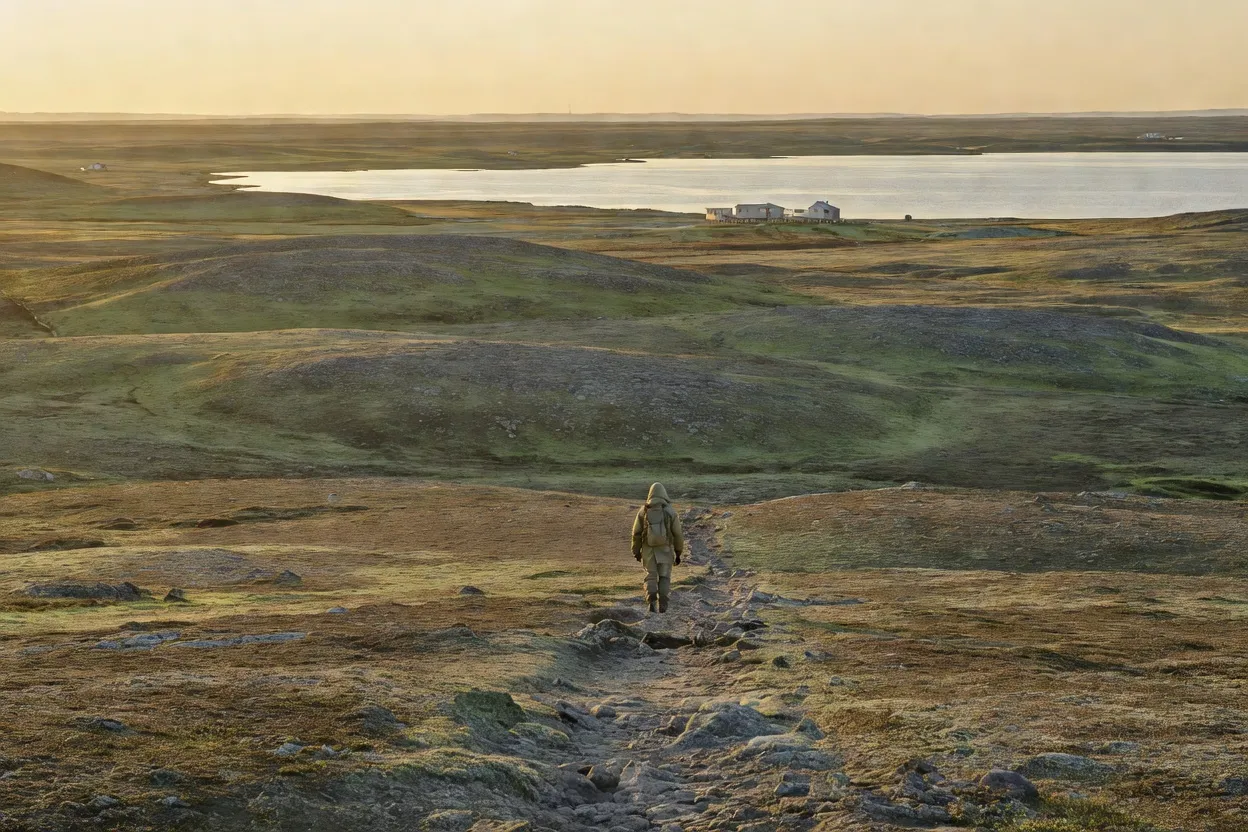
Nunavik, the northernmost region of Quebec, covers 507,000 km² beyond the 55th parallel. It is bounded by Hudson Bay to the west, Hudson Strait to the north, and Ungava Bay and Labrador to the east. A trip here needs to be prepared well in advance, whatever the season.
A territory reached only by air
No road or railway leads to Nunavik, which lies about 1,500 km north of Montreal. The only way to get there is by plane. According to Air Inuit’s schedule, the Montreal-Kuujjuaq flight takes about 2 h 20 and the Montreal-Puvirnituq flight about 2 h 40 (some flights make stops). Travel from one village to another is also by air.
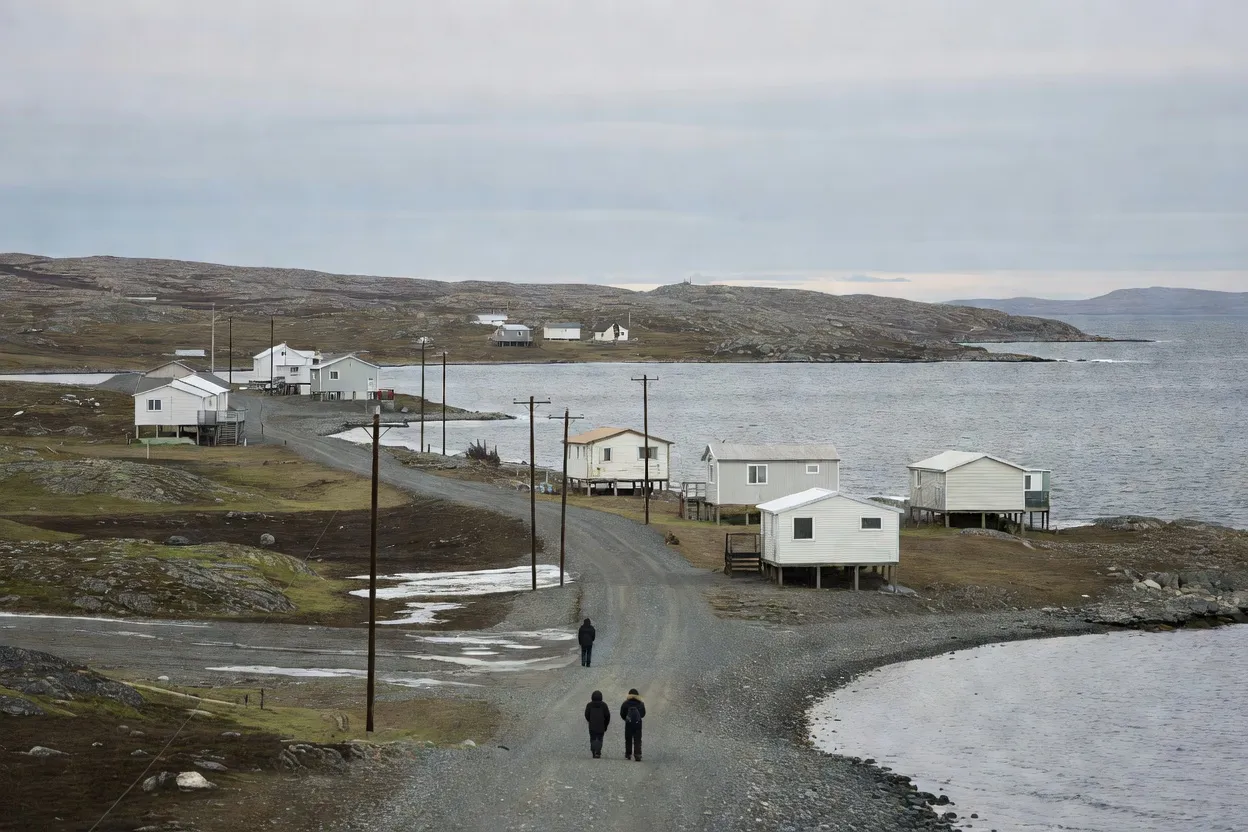
Fourteen Inuit villages, set widely apart, dot the territory. They are set along the coast of Hudson Bay, Hudson Strait and Ungava Bay. Kuujjuaq, the largest of them, is the seat of the Kativik Regional Government.
Relying on local operators
Nunavik Tourism advises contacting local operators to plan a trip: Nunavik Parks, outfitters and Inuit adventure operators such as Inuit Adventures. Their knowledge of the terrain helps build a successful stay in a territory where distances and weather call for early organisation.
Packages from Nunavik Parks and Inuit operators include exchanges with residents. Inuit Adventures, for example, offers stays in the communities of Kuujjuaq and Puvirnituq, among others: meeting locals, sharing their everyday life and, in its winter packages, dogsledding with Inuit sled dogs in Kuujjuaq.
A language: Inuktitut
Nunavik Inuit speak Inuktitut, a language closely tied to their environment and culture. Most hosts also speak English, and some speak French. A few words of Inuktitut are always welcome: “nakurmiik” means thank you.
Throat singing, called katatjaq in Inuktitut, is performed by Inuit women. It imitates the sounds of nature, birds and animals through a remarkable vocal technique, and it was originally a game between two women.
Nunavik wildlife
The region is home to caribou and the polar bear, which the Inuit call nanuq. Marine mammals observed there include whales, seals, walruses and belugas. The migratory tundra caribou has always been at the heart of life for the peoples of the North: it forms two herds, the George River and Leaf River herds, both in steep decline: about 8,600 animals in 2024 for the George River herd (over 823,000 in 1993) and about 155,000 for the Leaf River herd (about 650,000 in 2001). The musk-ox, umimmaq in Inuktitut, was introduced to Quebec in 1967; releases between 1973 and 1983 established it in Nunavik.
For wildlife photography, Nunavik Tourism highlights the expertise of experienced Inuit guides, who make it possible to take pictures in complete safety, on their own territory.
Fishing: June to September
Nunavik has countless lakes, rivers and coastal waters. From June to September, experienced anglers target Arctic char (iqaluppik in Inuktitut), Atlantic salmon (sama) and brook trout (aanak), whose anadromous populations are known as sea-run trout. Lake trout (isiuralittaak) can reach impressive sizes; the Inuit traditionally catch it through the ice in winter and spring. Packages are offered by outfitters, listed by Nunavik Tourism.
The national parks
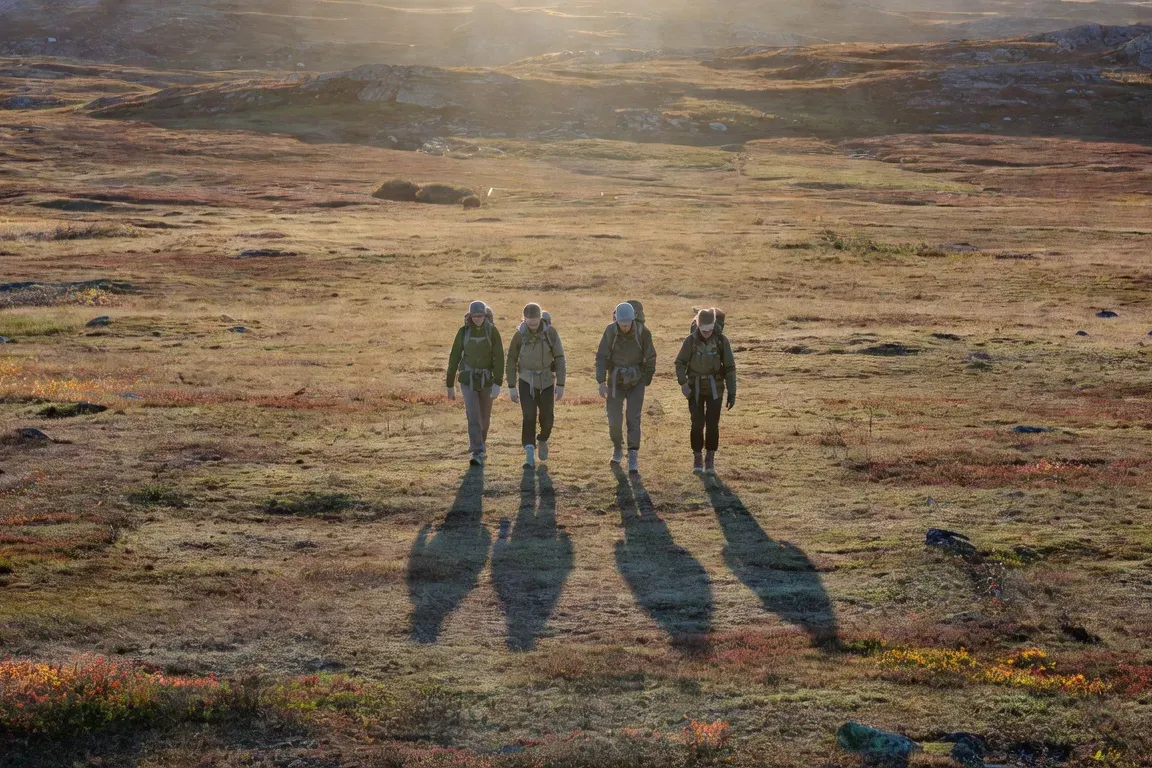
Nunavik Parks offers packages in several national parks, in summer and in winter:
- Pingualuit National Park, known for its meteorite crater and Pingualuit Lake, with exceptionally clear water; a nine-day summer hiking package to the crater is offered;
- Kuururjuaq National Park, capped by the Torngat Mountains and home to Mount D’Iberville (1,646 m), the highest peak in Quebec; several six- or nine-day summer packages are offered there;
- Tursujuq National Park, the largest in Quebec at 26,107 km², on the east coast of Hudson Bay near Umiujaq.
Going further
Our responsible travel guide to Nunavik details the criteria for choosing an operator. To stay elsewhere in Quebec, see Soleica Chalets.
Our Northern Quebec glossary 2026 covers 30 essential terms in Inuktitut, Cree-Eeyou, Northern geography and institutions.
To go further on the technical dimension of modern reception in remote regions, see our feature on Nunavik’s digital connectivity in 2026.
Sources
- Nunavik Tourism, official brochure (PDF)
- Nunavik Tourism, bilingual leaflet (PDF)
- Nunavik Tourism, official website
- Nunavik Parks, official website
- Nunavik Parks, summer packages (in French)
- Government of Quebec, musk-ox (in French)
- Government of Quebec, migratory caribou (in French)
- Air Inuit, schedule
- Inuit Adventures, packages
- Nunavik Parks, the parks
- Government of Quebec, Nunavik municipal regime (in French)
Frequently asked questions
How do you get to Nunavik?
No road or railway serves Nunavik, which lies about 1,500 km north of Montreal. Travel is by plane: the Montreal-Kuujjuaq flight takes about 2 h 20, and the villages are linked to each other by air.
How many villages are there in Nunavik?
Fourteen villages, set along the coast of Hudson Bay, Hudson Strait and Ungava Bay. Kuujjuaq, the largest village in the region, is the seat of the Kativik Regional Government.
What language is spoken in Nunavik?
Nunavik Inuit speak Inuktitut. Most hosts also speak English, and some speak French. Learning a few words such as "nakurmiik" (thank you) is appreciated.
When can you fish Arctic char in Nunavik?
From June to September, according to the Nunavik Tourism brochure, which lists Arctic char, Atlantic salmon, brook trout and sea-run trout among the sought-after species. Packages are offered by outfitters.
Should you go through a local operator?
Nunavik Tourism recommends contacting local operators to plan a trip: Nunavik Parks, outfitters and Inuit adventure operators. They know the terrain and organise the packages.