Oujé-Bougoumou is a Cree community located on the shore of Lake Opémisca, west of Chibougamau, Quebec. Its name, ᐆᒉᐳᑯᒨ, is pronounced ûchepukumû and means “the place where people gather.” This meaning aptly evokes a community shaped by family gatherings, collective mobilization and the creation of a village designed according to the choices of its residents.
The meaning of the name
The name Oujé-Bougoumou is written ᐆᒉᐳᑯᒨ in Cree and pronounced ûchepukumû. It means “the place where people gather.” This name expresses a central idea in the community’s history: meeting, the return of families and the collective will to build a shared place to live.
A government source also proposes the meaning “crossed by a river.” Both interpretations refer to the territory and the movements that have marked the lives of Cree families in the Chibougamau-Opémisca region.
- Name: Oujé-Bougoumou
- Cree form: ᐆᒉᐳᑯᒨ
- Pronunciation: ûchepukumû
- Main meaning: “the place where people gather”
The name takes on a particular resonance in the journey of the Cree Nation of Oujé-Bougoumou. After decades of displacement, the community pursued a project of return and reunification around a village envisioned for its families, its culture and its future.
The territory before the village
The territory of Oujé-Bougoumou is located in the Chibougamau-Opémisca region, on the shore of Lake Opémisca. Long before the present village was built, Cree families travelled through this territory and organized their lives there according to the seasons, travel and family ties.
At the beginning of the XXth century, a Hudson’s Bay Company trading post was established in the Chibougamau-Opémisca region. At the end of summer, Cree families went there to obtain supplies. These gatherings were part of a continuous presence on the territory, where families maintained their activities and relationships.
Lake Opémisca remains at the heart of the community’s geographic identity. The village is located approximately 60 kilometres west of Chibougamau. A paved access road of approximately 25 kilometres connects it to Route 113, and the Chibougamau/Chapais regional airport is located approximately 42 kilometres away.
- The village is established on the shore of Lake Opémisca.
- The Chibougamau-Opémisca region had a trading post at the beginning of the XXth century.
- Cree families obtained supplies there at the end of summer.
- The territory remains associated with the lake, fishing, Cree culture and traditional territory.
The creation of the village
The history of the present village is inseparable from the determination of the Oujé-Bougoumou. Between approximately 1920 and 1970, families were forcibly displaced seven times. These displacements are linked to mining, forestry and the expansion of Chibougamau, a town incorporated on 1 September 1954.
In 1975, the community was not covered by the James Bay and Northern Quebec Agreement because it was not recognized. This exclusion fuelled a long struggle for recognition and for the establishment of a permanent village. Community mobilization was notably marked by the major role of Sam Bosum, deputy chief from 1986 to 1999.
An agreement between Oujé-Bougoumou and Quebec was concluded in 1989. It provided for a Quebec contribution as well as recognition. In May 1992, an agreement between Oujé-Bougoumou and Canada provided a federal contribution and a mechanism for integration into the James Bay and Northern Quebec Agreement.
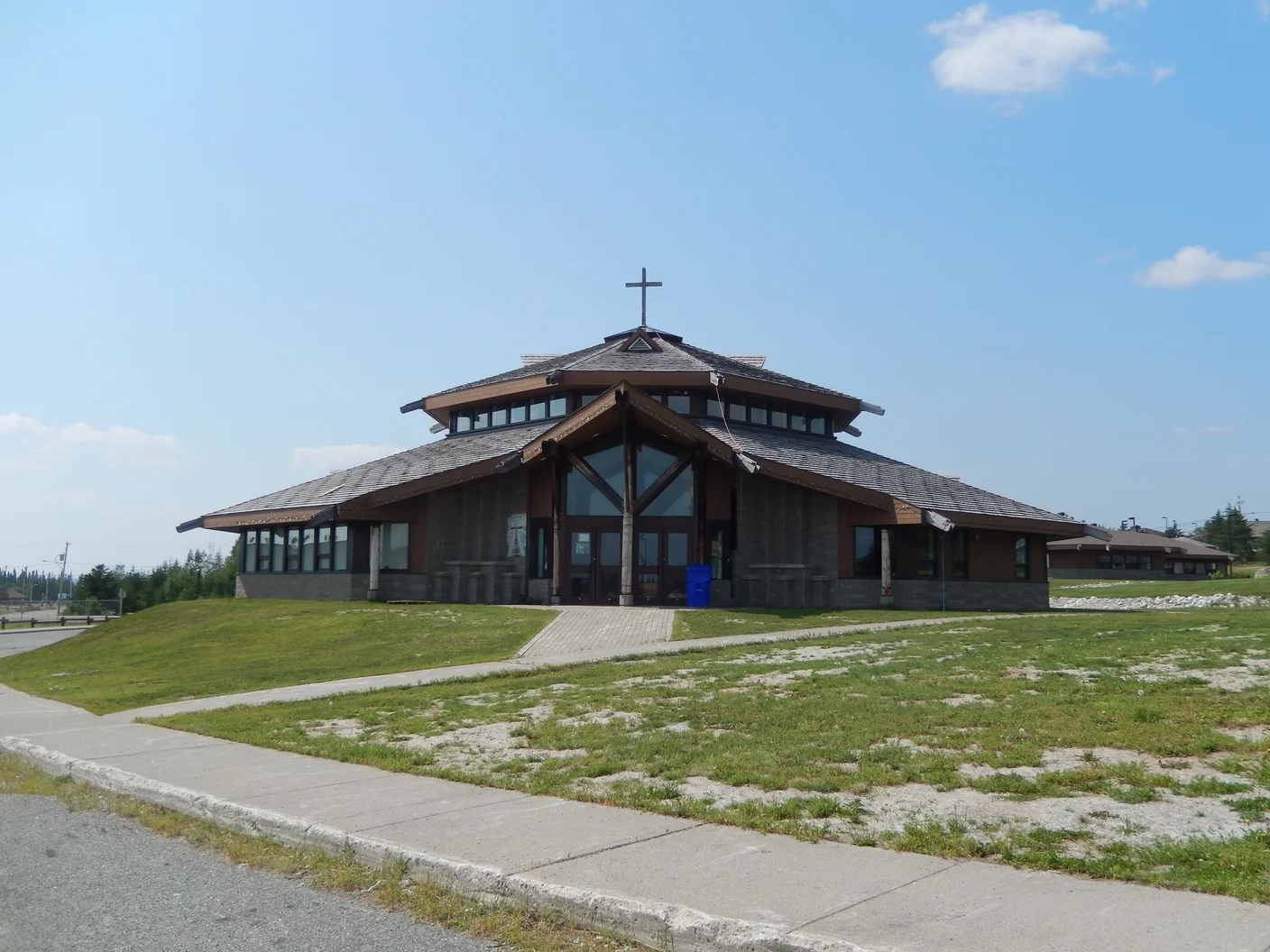
The village was built at the beginning of the 1990s, in 1992. Its design was developed with architect Douglas Cardinal. The project is recognized as an international example of Indigenous architecture and community planning. The Government of Quebec notes that the village has received several international distinctions, including recognition from the United Nations.
Timeline of the village
| Year or period | Event |
|---|---|
| Beginning of the XXth century | A Hudson’s Bay Company trading post is present in the Chibougamau-Opémisca region. |
| Approximately 1920 to 1970 | The Oujé-Bougoumou are forcibly displaced seven times in a context of mining, forestry and the expansion of Chibougamau. |
| 1975 | The community is not covered by the James Bay and Northern Quebec Agreement because it is not recognized. |
| 1986 to 1999 | Sam Bosum serves as deputy chief and plays a major role in community mobilization. |
| 1989 | An agreement between Oujé-Bougoumou and Quebec provides for a Quebec contribution and recognition. |
| May 1992 | An agreement between Oujé-Bougoumou and Canada provides for a federal contribution and a mechanism for integration into the James Bay and Northern Quebec Agreement. |
| 1992 | The village is built at the beginning of the 1990s with architect Douglas Cardinal. |
| 1993 | Oujé-Bougoumou becomes a Cree village municipality; some sources indicate 1995 instead. |
| 2011 | The Cree Nation of Oujé-Bougoumou becomes the last First Nation recognized by the federal Department of Indigenous Affairs. |
| 2021 | The population of the Cree reserved land is 797 residents. |
This timeline bears witness to a collective journey in which recognition, return to the territory and the creation of a village were carried forward by the Oujé-Bougoumou themselves. The present village represents a lasting community choice, built around family life, Cree identity and the territory of Opémisca.
The village today
Oujé-Bougoumou is now a community of 797 residents on a Cree reserved land, according to the 2021 population. This population represents an increase of 6.7 % compared with 2016. The community is also known by the administrative name Cree Village Municipality of Oujé-Bougoumou.
The village provides important services to its residents, including Ouje-Bougoumou School, associated with the CSB, as well as the Oujé-Bougoumou Miyupimaatisiiun Community Centre, associated with the CBHSSJB. These institutions contribute to the community’s daily life and the continuity of its services.
Its architecture is one of its defining features. Designed with Douglas Cardinal, the village is presented as an international example of Indigenous architecture and community planning. Its international recognition, including recognition from the United Nations mentioned by the Government of Quebec, underscores the significance of this collective project.
- Population in 2021: 797 residents
- Location: shore of Lake Opémisca, approximately 60 kilometres west of Chibougamau
- Road access: paved road of approximately 25 kilometres to Route 113
- Air transportation: Chibougamau/Chapais regional airport approximately 42 kilometres away
- Attractions: Lake Opémisca, village architecture, Cree culture, fishing and traditional territory
Oujé-Bougoumou embodies a gathering chosen and built by its community. On the shores of Lake Opémisca, the village carries a history of perseverance, mobilization and collective achievement, while affirming the living presence of the Cree Nation on its territory.
Notable Facts and People
Oujé-Bougoumou lives up to its name — ᐆᒉᐳᑯᒨ (ûchepukumû), “the place where people gather.” Its recent history is marked by remarkable perseverance: between roughly 1920 and 1970, families were forcibly relocated seven times, notably because of mining, forestry and the expansion of Chibougamau. Excluded from the initial James Bay Agreement regime, the community waged a long fight for recognition.
The efforts paid off: an agreement with Quebec in 1989, then an agreement with Canada in May 1992 funded the village’s construction, built in the early 1990s with architect Douglas Cardinal. The village has become an international example of Indigenous architecture, honoured with several distinctions. Sam Bosum, deputy chief from 1986 to 1999, played a major role in this mobilization; in 2011, the Oujé-Bougoumou Cree Nation became the last First Nation recognized by the federal Department of Indigenous Affairs.
Local Services and Institutions
Nation office and municipality. The community is governed by the Oujé-Bougoumou Cree Nation The Cree Village Municipality of Oujé-Bougoumou has its office at 207 Opemiska Meskino, P.O. Box 217, Oujé-Bougoumou QC G0W 3C0; tel.: 418-745-2519.
School. Elementary and secondary education is provided by the Cree School Board: Ouje-Bougoumou School.
Health. Health services are operated by the Cree Board of Health and Social Services of James Bay (CBHSSJB): Oujé-Bougoumou Miyupimaatisiiun Community Centre.
Access and Transportation
Oujé-Bougoumou is accessible by road: a 25-kilometre paved road links it to Route 113 near Chapais. The Chibougamau/Chapais regional airport, about 42 kilometres away on Route 113, serves the community.
Tourism and Attractions
The village and its territory offer several attractions:
- the village’s architecture, designed with Douglas Cardinal — an internationally recognized example, with international distinctions including United Nations recognition (according to the Quebec government)
- Lake Opémisca: fishing and traditional travel
- living Cree culture and the community’s artists
- the traditional territory and outdoor activities
To go further
- Eeyou Istchee and James Bay: landmarks for visiting Cree territory
- Community tourism in Eeyou Istchee: Cree villages and etiquette
- All Cree villages of Eeyou Istchee
Frequently asked questions
What does Oujé-Bougoumou mean?
Oujé-Bougoumou is written ᐆᒉᐳᑯᒨ (ûchepukumû) and means “the place where people gather.”
Why is Oujé-Bougoumou’s history singular?
Families were forcibly relocated seven times between roughly 1920 and 1970. Excluded from the 1975 Agreement, the community obtained agreements with Quebec (1989) and Canada (May 1992) that funded the village’s construction.
Who designed the village of Oujé-Bougoumou?
The village was designed with Canadian architect Douglas Cardinal; it has become an international example of Indigenous architecture, recognized in particular by the United Nations (according to the Quebec government).
What is the population of Oujé-Bougoumou?
The 2021 census counted 797 residents in Oujé-Bougoumou.
How do you get to Oujé-Bougoumou?
By road: 25 kilometres of paved road to Route 113; the Chibougamau/Chapais regional airport is about 42 kilometres away.