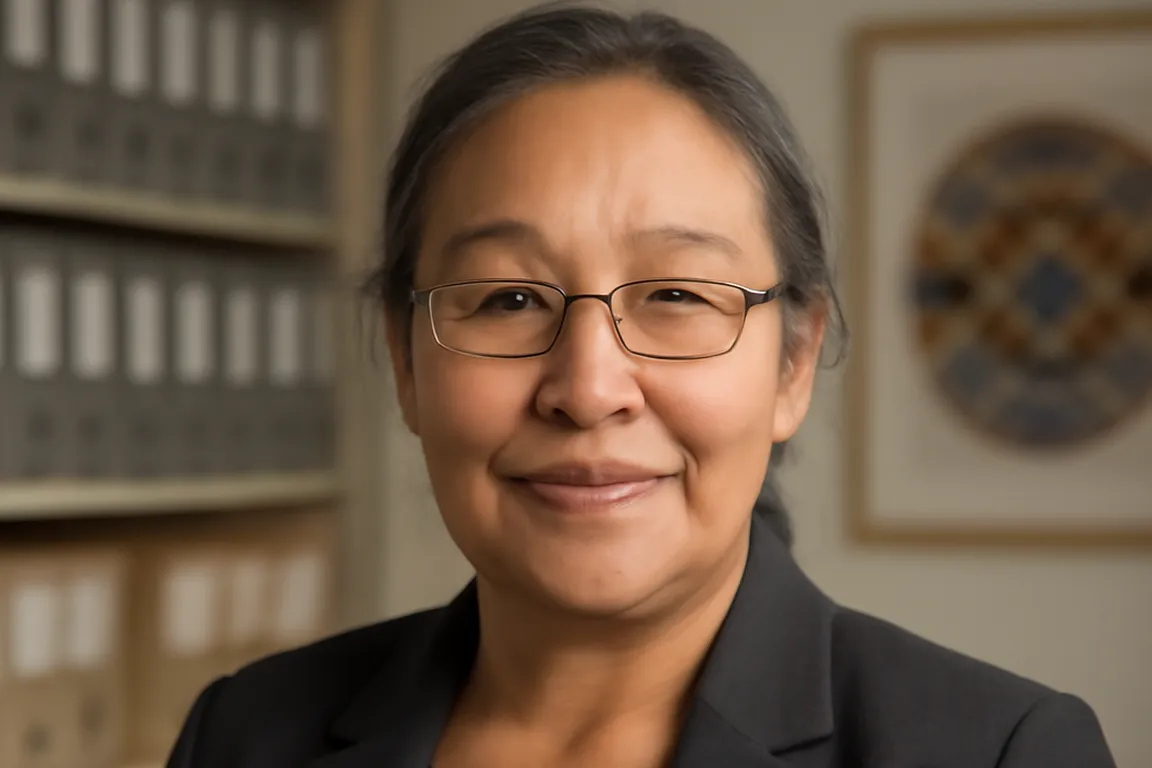
In this exclusive interview, journalist Antoine Monnier travels to Kuujjuaq, the administrative capital of Nunavik, to meet with Annie Papigatuk. With eight years of experience as a digital archivist and community program lead, Annie has become a pivotal figure in the race against time to preserve the cultural heritage of the Inuit and Cree peoples. As the harsh Arctic wind rattles the windows of the regional archive center, they discuss the complex intersection of cutting-edge technology and ancestral knowledge. This conversation explores how high-end digitization, despite the logistical nightmares of the Far North, is the only way to ensure that the voices of the elders remain audible for future generations.
Portrait of Annie Papigatuk and her path as an archivist
Antoine Monnier:Annie, thank you for welcoming me. To start, could you tell us about your journey? What led a young woman from Nunavik to specialize in the highly technical field of digital archiving?
Annie Papigatuk:It is a pleasure to have you here in Kuujjuaq. My path was born out of a realization of loss. I grew up listening to my grandmother’s stories, but when she passed away, I realized that those specific words, the specific way she described the tundra in the 1950s, were gone forever. I decided to study information science in Montreal, focusing on archival preservation. However, what we learn in the south doesn't always apply here. In the south, you have climate-controlled vaults and fiber-optic internet. Here, we deal with permafrost shifts that affect building foundations and bandwidth that can disappear during a blizzard.
Concretely, my role is to bridge the gap between Western archival standards and Indigenous ways of knowing. Over the last eight years, I have moved from simple cataloging to managing complex digital repositories. What we see on the ground is a massive amount of physical media—tapes, slides, and parchment—that is literally rotting or demagnetizing. My specialization in digitization wasn’t just a career choice; it was an emergency response. I had to learn how to maintain servers in sub-zero temperatures and how to explain to an elder why we need to scan their family photos at 1200 DPI. It is a mix of being a technician, a historian, and a diplomat.
The urgency of preserving the Inuktitut and Cree languages
Antoine Monnier:We often hear that Indigenous languages are at a "tipping point." From your perspective as an archivist, why is the digital preservation of Inuktitut and Cree so critical right now, in 2026?
Annie Papigatuk:The urgency is absolute because we are losing our "living libraries"—our elders. Inuktitut and Cree are languages of the land; they contain specific environmental data, hunting techniques, and spiritual concepts that don't translate easily into English or French. When an elder passes, a specific dialect or a set of specialized vocabulary might vanish. For example, our [lexicon of 30 essential Nunavik and Eeyou Istchee terms](/en/blog/lexique-nunavik-eeyou-istchee-2026-30-termes-essentiels-comprendre-nord-quebec/) shows just how nuanced the language is regarding the landscape and social structures.
If we don’t digitize the audio recordings made in the 1970s and 80s now, the magnetic tape will be too brittle to play. We are in a race against chemical decay and biological mortality. Digitization allows us to create searchable databases where a student in a remote village can hear the correct pronunciation of a word that hasn’t been used in their community for twenty years. In other words, we are not just saving words; we are saving the cognitive framework of our culture. Without these archives, the languages risk becoming “museum pieces” rather than living, breathing modes of communication. We are currently focusing on “phonetic archiving,” ensuring that the subtle glottal stops of Inuktitut are captured in high-fidelity FLAC formats so they can be studied by linguists and taught in schools decades from now.
Priority archive types: oral histories, photos, documents
Antoine Monnier:With such a vast amount of material, how do you decide what to digitize first? Is there a hierarchy of importance between a recorded interview and a historical photograph?
Annie Papigatuk:Priority is determined by two factors: physical fragility and cultural uniqueness. Oral histories are always at the top of the list. A cassette tape from 1982 featuring a Cree elder discussing land rights is a "one-of-one" item. If that tape snaps or the oxide sheds, that history is gone. We also prioritize photographs, especially those from the early 20th century that depict traditional clothing and camp layouts. These are vital for cultural revitalization projects.
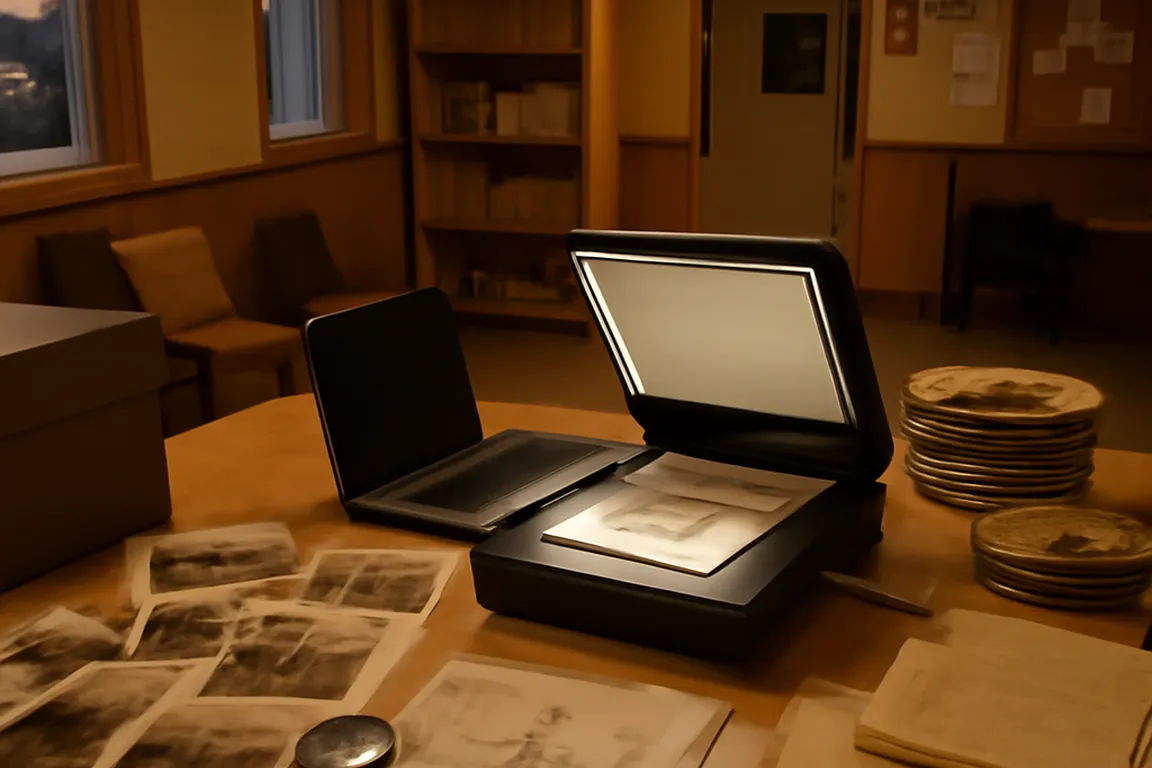
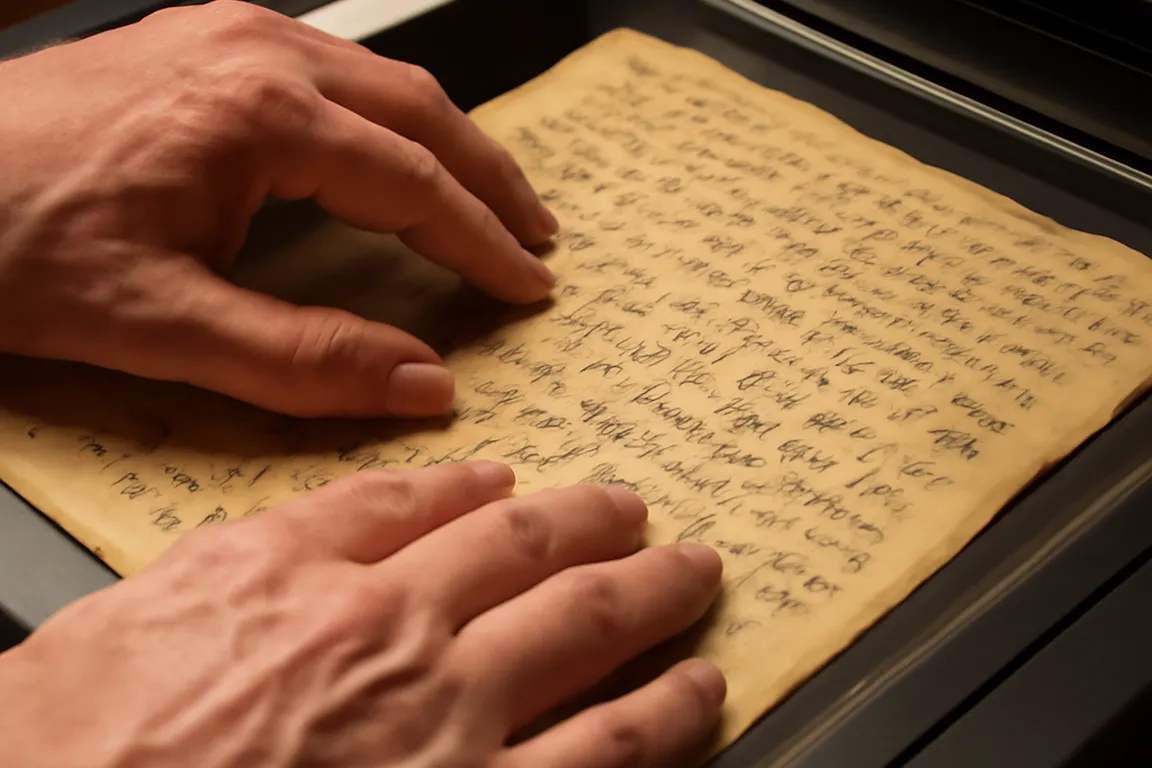
Concretely, we categorize our workflow into three tiers. Tier 1 is “Endangered Media,” which includes U-matic tapes, Betamax, and early floppy disks. Tier 2 is “High Cultural Value,” such as genealogies and maps of traditional trap lines. Tier 3 is “Administrative Records,” which are important but less fragile. What we see on the ground is that people often underestimate the value of everyday documents—letters written in syllabics, for instance. These provide a snapshot of how our ancestors adapted to the arrival of the Hudson’s Bay Company or the federal government. We use high-resolution planetary scanners for documents to avoid touching the fragile paper more than necessary.
| Media Type | Estimated Lifespan (Physical) | Digitization Priority | Storage Format |
|---|---|---|---|
| Magnetic Audio Tape | 10–30 years | Critical | 24-bit / 96kHz WAV |
| 35mm Color Slides | 30–50 years | High | 48-bit TIFF |
| Paper (Acidic) | 50–100 years | Medium | PDF/A or TIFF |
| Digital CD-R/DVD | 5–15 years | High (Data Migration) | ISO Image / Cloud |
Technical challenges: storage, durable formats and limited bandwidth
Antoine Monnier:You mentioned the difficulties of the Far North. How do you handle the technical side—specifically the massive file sizes of high-quality archives—when the internet connection is often slow and expensive?
Annie Papigatuk:This is our biggest headache. A single hour of uncompressed archival video can be 100 gigabytes. In Kuujjuaq, we might have decent speeds, but in smaller communities, the bandwidth is barely enough for an email. We cannot rely on the "Cloud" as a primary working space. Instead, we use a "hub and spoke" model. We do the heavy lifting—the actual scanning and encoding—locally on high-end workstations with redundant RAID storage. We then ship physical LTO (Linear Tape-Open) tapes or ruggedized hard drives to southern servers for long-term backup.
What we see on the ground is that local infrastructure is often the weak link. We have to be very careful with “durable formats.” We avoid proprietary software that might not exist in ten years. We use open standards like TIFF for images and BWF (Broadcast Wave Format) for audio. For community access, we create “proxy” files—smaller, compressed versions that can be streamed. For instance, when we work with the Puvirnituq FM community radio station, we help them digitize their old broadcasts, but we have to ensure the files are small enough for their local server to handle without crashing. It’s a constant balancing act between archival perfection and practical accessibility.
Elder and community participation in the process
Antoine Monnier:Archiving isn't just a technical task; it's a social one. How do you involve the community, especially the elders who might be skeptical of "digital" versions of their lives?
Annie Papigatuk:Trust is our most important tool. We don't just walk into a house and take photos. We spend weeks, sometimes months, talking to the families. We explain that the digital file isn't "stealing" the memory but "protecting" it. We involve the elders in the metadata process. A computer can tell you a photo was taken in 1964, but only an elder can tell you that the man in the background is the great-uncle of the current mayor and that they were hunting near a specific river that has since changed course.
Key takeaway: Metadata is as important as the image itself. Without the “who, where, and why” provided by the community, a digital archive is just a collection of nameless ghosts.
We also have to respect traditional protocols. Some stories are only meant to be told in winter, or some songs are private to a specific family. We build these “cultural firewalls” into our digital architecture. If an elder says a recording is “family only,” we encrypt it and restrict access. This participatory approach ensures that the community feels ownership over the archive. It’s not “the government’s data”; it’s “our ancestors’ voices.”
The role of local schools, libraries and cultural centers
Antoine Monnier:How do these archives make their way back to the younger generation? Is there a link between your work and the local education system?
Annie Papigatuk:Absolutely. An archive that sits on a hard drive in a basement is useless. We work closely with the Kativik Ilisarniliriniq (the school board) to integrate archival material into the curriculum. We want students to use primary sources. Instead of reading a textbook about Inuit history written by a southerner, they can listen to a recording of an elder from their own village. This significantly boosts [youth digital literacy in Nunavik](/en/blog/interview-coordonnateur-litteratie-numerique-jeunesse-nunavik-2026/) because students learn how to navigate databases and use digital tools while connecting with their heritage.
Local libraries and cultural centers act as the “access points.” We are installing “offline kiosks”—computers pre-loaded with the local archive—so that even if the internet goes down, the culture remains accessible. We’ve seen kids getting excited about identifying their grandparents in old film footage. It turns history from something abstract into something personal. We are also training local youth to become “mini-archivists,” teaching them how to use scanners and how to conduct respectful interviews. It’s about creating a sustainable cycle of knowledge.
Tools and software used for digitization in remote areas
Antoine Monnier:Let's get technical for a moment. What does your "archivist toolkit" look like? What specific hardware and software are you bringing into these remote areas?
Annie Papigatuk:Concretely, our mobile kits have to be rugged. We use Pelican cases for everything. For scanning, we rely on Epson Perfection V850s for film and slides because they are relatively portable and provide excellent dynamic range. For audio, we use Zoom H6 recorders for new interviews and high-end Tascam decks for digitizing old cassettes, often paired with a Focusrite interface.
In terms of software, we use:
- Adobe Bridge and Lightroom: For initial ingest and basic color correction of photos.
- Audacity and iZotope RX: For cleaning up “hiss” and “pop” on old field recordings without destroying the natural tone of the voice.
- Mukurtu CMS: This is a crucial open-source platform specifically designed for Indigenous communities. It allows us to manage “cultural protocols”—setting different access levels for different users.
- SilverFast: For professional-grade scanning control that allows us to extract the maximum amount of detail from faded negatives.
What we see on the ground is that “simple is better.” If a piece of equipment breaks in Salluit, it might take three weeks to get a replacement. We choose tools that are robust and have a proven track record in the field. We also use “checksum” software (like Teracopy) to ensure that when we move files from a laptop to a server, not a single bit of data is lost or corrupted during the transfer.
Public access: online platforms and remote consultation
Antoine Monnier:There is a tension between wanting to share this culture with the world and protecting it. How do you manage public access? Who gets to see these archives?
Annie Papigatuk:This is the "Sovereignty of Data" issue. We believe that the Inuit and Cree should have the first and final say on who accesses their heritage. We have developed a tiered access system. Some materials, like general historical photos of landscapes or public events, are available on our public web portal. This is great for researchers and the general public interested in the [news and heritage of Quebec's Indigenous communities](https://le-peuple-actu.fr/blog/).
However, more sensitive materials are restricted.
- Level 1 (Public): General interest, educational materials, public speeches.
- Level 2 (Community Only): Detailed oral histories, local genealogies, and community-specific traditions.
- Level 3 (Family/Clan Only): Private ceremonies, sensitive personal stories, and specific spiritual knowledge.
We use secure login systems to manage this. It’s not about being secretive; it’s about being respectful. In the past, researchers would come north, take photos and recordings, and then store them in southern universities where the families could never see them. Our goal is to reverse that. We want the “master copies” to stay in the North, and we decide what the South gets to see.
Funding and partners for these archiving projects
Antoine Monnier:Projects of this scale must be expensive. Who is paying for the equipment, the training, and the thousands of hours of labor required?
Annie Papigatuk:It’s a patchwork of funding. We receive support from the Makivvik Corporation and the Cree Nation Government, which understand the long-term value of this work. We also apply for federal grants through Library and Archives Canada and the Documentary Heritage Communities Program. Private foundations have also shown interest, especially those focused on linguistic diversity.
Concretely, we often tie archiving projects to cultural events to maximize funding. For example, during the Goose Break goose hunting traditions, we might receive a specific grant to document the traditional knowledge shared at the hunting camps. This allows us to buy new gear and pay elders for their time as consultants.
| Funding Source | Typical Use Case | Reliability |
|---|---|---|
| Federal Grants | Large-scale digitization hardware | High, but competitive |
| Regional Government | Salaries for local archivists | Stable |
| Private Foundations | Specific linguistic research | Variable |
| Community Crowdfunding | Small, village-level projects | Low, but high engagement |
We also partner with southern universities, but only on the condition of “knowledge repatriation.” They might provide the high-end server space, but we retain the legal ownership of the data. It’s a more equitable way of working than the old colonial models of “collecting” Indigenous culture.
Vision for the next decade of digital cultural preservation
Antoine Monnier:Looking forward to 2030 and beyond, what is your vision? How will technology like Artificial Intelligence or improved satellite internet change your work?
Annie Papigatuk:I am cautiously optimistic. AI holds incredible potential for transcription. Right now, transcribing an hour of Inuktitut audio takes about ten hours of human work. We are looking at training machine-learning models to recognize our dialects, which would speed up the process exponentially. Imagine a searchable archive where you can type a word in Inuktitut and immediately find every video where an elder mentions that specific concept.
Checklist for the future:
- Complete the digitization of all 1/4 inch audio reels by 2027.
- Implement a region-wide fiber-optic or high-speed satellite “cultural backbone.”
- Establish a permanent training center for Indigenous digital technicians in Kuujjuaq.
However, the technology must remain a tool, not the master. My vision is a Nunavik where every household has a “digital heirloom box”—a secure, private space on a regional server where their family’s history is preserved in high definition. We want to move from “preserving the past” to “powering the future.” By 2035, I hope we won’t be talking about “saving” our culture, but about how our digital archives are being used to create new Inuit films, new Cree music, and new ways of living on this land.
5 Quick Questions — True or False
1. Digital archiving is cheaper than physical archiving? False. While you save on physical space, the costs of servers, electricity for cooling, data migration every 5–10 years, and cybersecurity are significantly higher and more consistent.
2. Inuktitut syllabics are difficult for modern computers to read? False. Thanks to Unicode, syllabics are now fully integrated. The challenge is not the “reading” but the OCR (Optical Character Recognition) for handwritten documents, which still requires human intervention.
3. Cold climates are actually good for storing physical archives? True. If the humidity is controlled, cold is great. The problem in the North is the “freeze-thaw” cycle and basement flooding, which can destroy a collection in a single afternoon.
4. All digitized archives should be open to the public? False. Cultural privacy is paramount. Many Indigenous archives contain sacred or private family information that should never be made public without explicit, informed consent.
5. Satellite internet like Starlink has revolutionized your work? True. It has changed everything. Being able to sync 5GB of data overnight from a remote camp was impossible three years ago. It has made real-time collaboration with southern experts feasible.
Your final advice for those starting a community archive project?
- Start with the “At-Risk” Media: Don’t wait for the perfect scanner or the biggest grant. If you have old cassette tapes, get them into a digital format now, even if the quality isn’t perfect. You can’t digitize a tape that has turned to dust.
- Focus on Metadata, Not Just Files: A file named “IMG_001.jpg” is useless. A file named “1974_George_Tulugak_Fishing_Leaf_River.jpg” is a treasure. Spend the time to interview people about what is in the photos and recordings.
- Build Local Capacity: Don’t just hire southern consultants to do the work and leave. Train your youth. The people who live in the community are the ones who will care for the archive for the next fifty years.
For more information on the ongoing efforts to protect the history of the North, you can follow the latest news and heritage of Quebec’s Indigenous communities through our partner networks. Annie Papigatuk continues her work in Kuujjuaq, currently focusing on a massive project to digitize the 16mm film reels of the early 1960s.
Frequently asked questions
Why is digital archiving urgent for the Inuktitut and Cree languages?
Because the last elder speakers are aging, and every lost oral account represents an irreplaceable piece of linguistic and cultural memory. Digitization allows these testimonies to be captured before they vanish.
Which types of archives are prioritized: audio, photo, video or text?
Oral audio recordings are generally prioritized because they carry the living language, followed by photographs documenting community life and administrative or cultural documents threatened by physical deterioration.
How can digital archives be stored durably in a region with limited connectivity?
We combine redundant local storage (hard drives and community servers) with periodic backups to the south during available bandwidth windows, using open and durable formats rather than proprietary ones.
Do elders participate directly in archiving projects?
Yes, systematically. Their direct participation, as narrators and as validators of cultural content, is treated as a condition of success rather than a secondary option.
What role do local schools and libraries play in these projects?
They often serve as logistical and educational anchor points, integrating digitized archives into educational activities and ensuring local access to the collections.
Are there online platforms to consult these archives from outside the region?
Some collections are gradually being made accessible through community portals, but access is often prioritized for community members before wider distribution.