
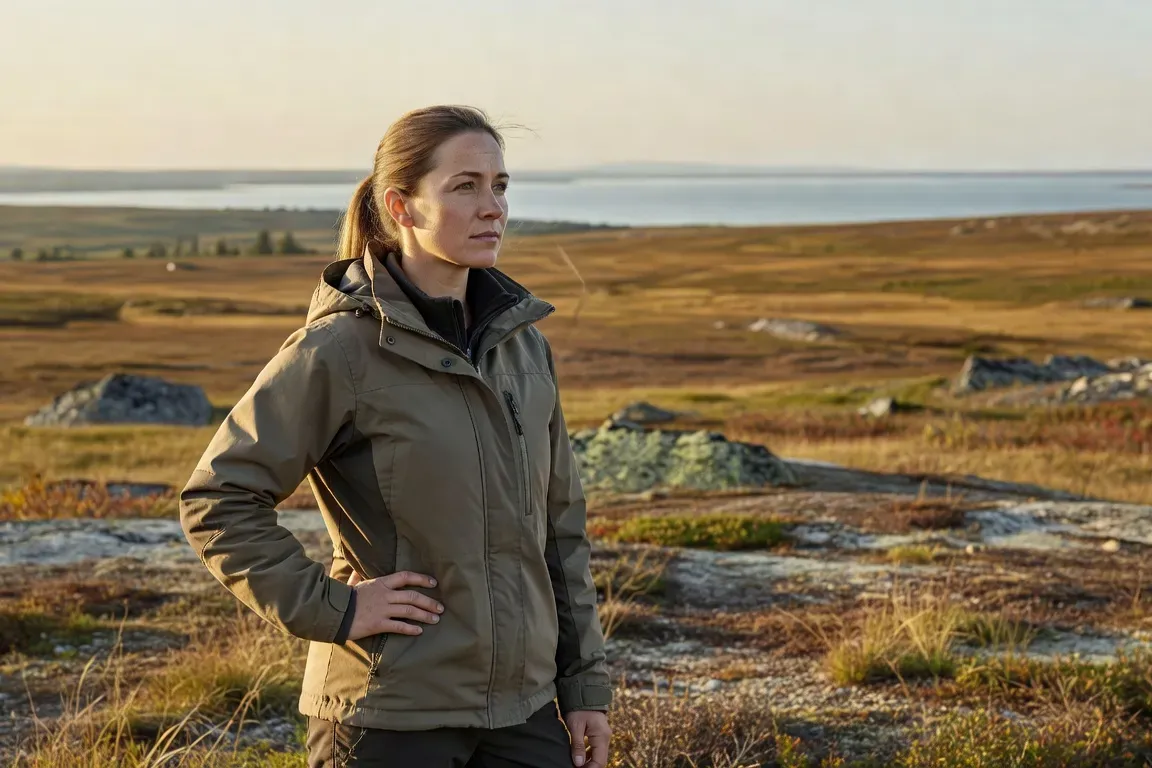
Sophie Beaulieu welcomes us by videoconference from her Kuujjuaq office, on a spring Tuesday morning. Behind her, a Nunavik map occupies an entire wall, annotated with dozens of small coloured papers: tested itineraries, contacts in villages, dates of upcoming seasons. She has lived in Kuujjuaq for eight years after training in sustainable tourism and several years of volunteering with Inuit community organisations. She accompanies about ten groups a year, all of four to six people, on seven to fourteen day stays.
For just over an hour, she talks to us about preparing a trip, the unwritten rules of community tourism, and what makes this practice radically different from other forms of nature tourism.
The trip starts before the trip
Claire Vasseur :Sophie, you often say a trip to Nunavik starts three months before departure. What do you mean concretely?
Sophie Beaulieu :That the quality of a trip to Nunavik depends 70% on traveller preparation. And this preparation takes time.
When someone contacts me for a trip in July, we start working together as early as April. First two-hour videoconference where I present the territory, communities, cultural codes, what to expect. I then give a thirty-page file — a mix of history, geography, practical protocols and recommended readings. Participants must read it, really read it, not skim it.
One month before departure, I make an individual phone call with each person. Not to verify they read the file — that is felt immediately — but to answer their questions, adjust the program to their specific interests, and calibrate expectations.
In total, that represents between fifteen and twenty hours of work for a ten-day trip. It is not an optional cost, it is integrated into the price and is not negotiable. A traveller who would arrive without this preparation would make the whole group's trip less good.
Key takeaway: the quality of a trip to Nunavik depends 70% on upstream preparation — fifteen to twenty hours of work spread over three months, non-negotiable, and built into the trip price.
Claire Vasseur :Have you ever refused to accompany someone because preparation was going badly?
Sophie Beaulieu :Yes, several times. Never aggressively. But when I sense a person approaching the trip with a tourist consumption logic — wanting to tick activities, constantly comparing with other destinations, refusing to take cultural codes into account — I often suggest we cancel upstream. I refund, and the person will discover Nunavik in another way, at their pace.
It is hard because we lose a client, and financially it is not neutral. But it is better than leading a trip where group dynamics will degrade, where visited communities will live an unpleasant experience, and where I will spend three months afterwards repairing the relationship with my local partners.
Building relationships with communities
Claire Vasseur :You have worked with the same cooperatives and organisations for several years. How is this type of partnership built?
Sophie Beaulieu :Over time and with much patience. The first years in Kuujjuaq, I mainly volunteered in local associations. I learned the basics of Inuktitut — not for show, but because it really changes the quality of exchanges. I listened a lot, spoke little. I accepted that my professional opinion mattered less than that of people who have lived here for decades, even generations.
After two years, some organisations started asking if I would be interested in accompanying small occasional groups. Always on their terms, never on mine. That is how one builds a long-lasting relationship.
Today, after eight years, I have written protocols with my partners: maximum number of groups per month, maximum people per group, what proportion of revenue goes back to the cooperative or local organisation, what presentation rituals at the beginning and thanks at the end of each visit. These protocols are revised every two or three years according to needs expressed by communities.
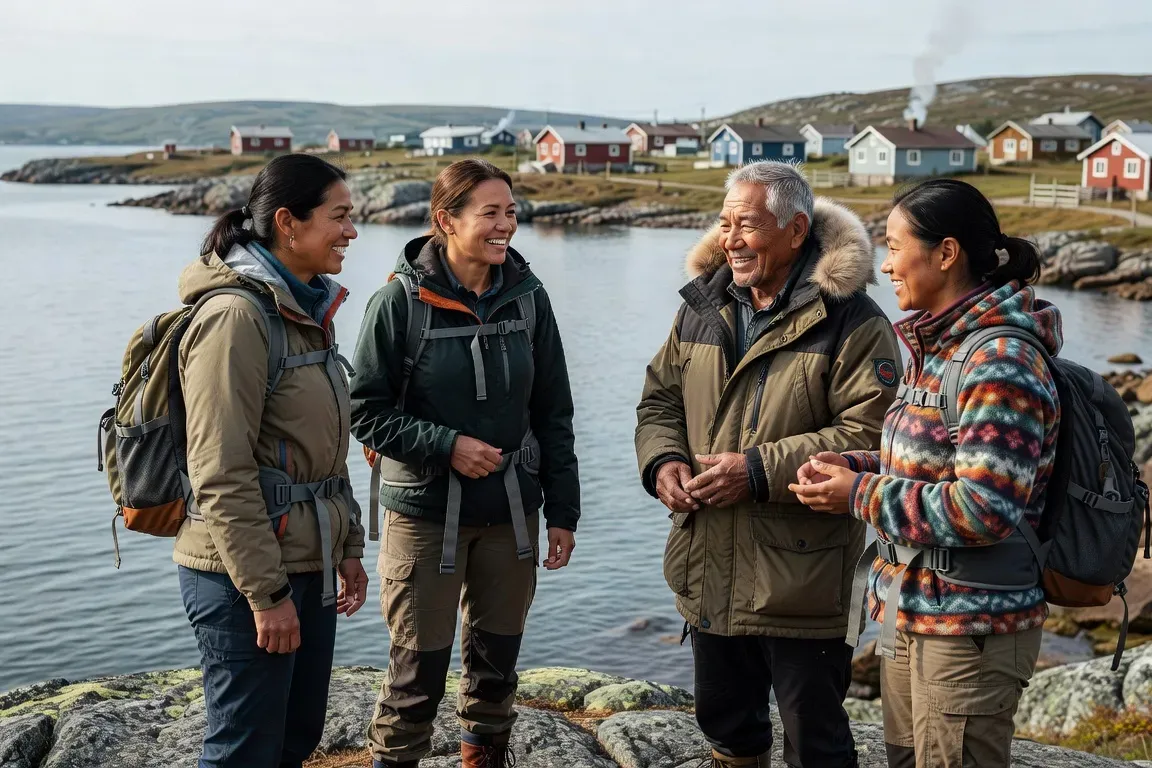
Claire Vasseur :How does a group's arrival in a village go?
Sophie Beaulieu :The first appointment is always the same: a coffee in the cooperative or partner organisation premises, with the person who will welcome us during the stay. No tourist program the first day. Just meeting, introducing ourselves, explaining where we come from, listening to what is happening locally.
Travellers are often surprised by this slowness. They have travelled for hours, waited for several flights, finally arrived and... we have a coffee. That is precisely the idea. We slow down. We put ourselves in guest posture, not in hurried visitor posture.
From the second day, we begin planned activities. But the tone is set: we are here to meet, not to collect.
Claire Vasseur :What types of activities do you propose?
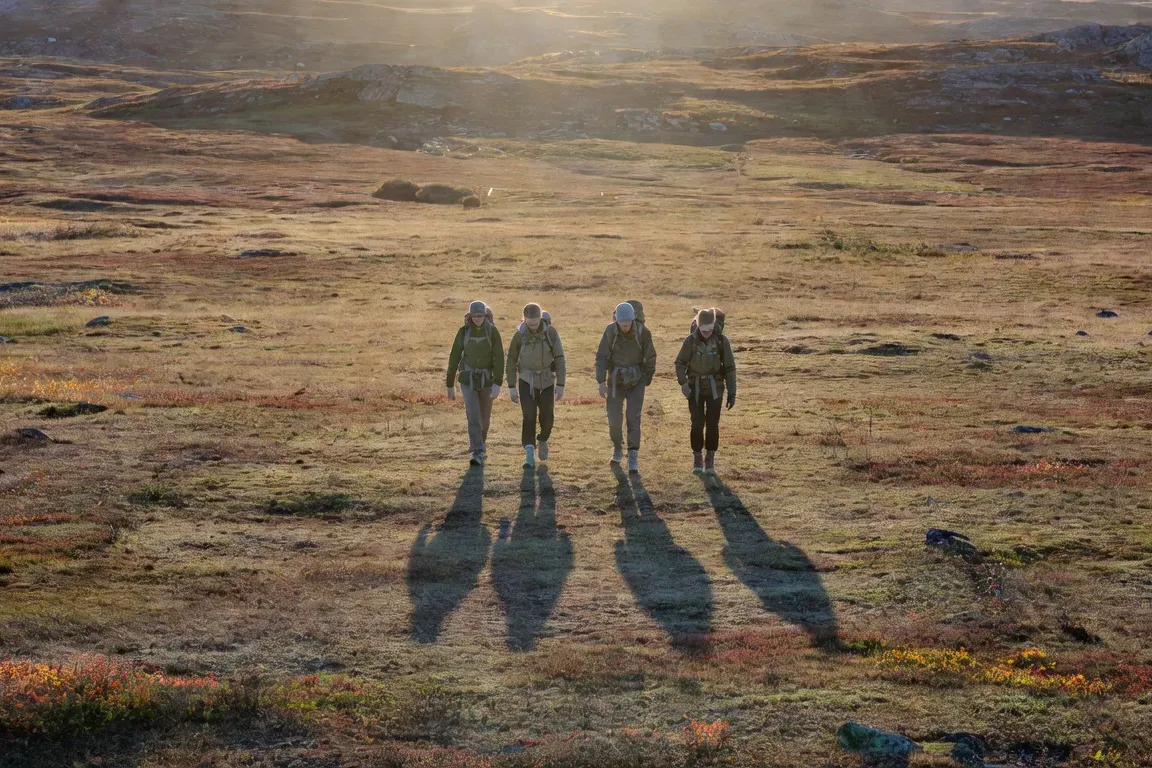
Sophie Beaulieu :It depends on seasons and local partners. Some concrete examples: day on a boat with a cooperative fisherman to observe belugas along the coast; afternoon workshop on Arctic char preparation with a family sharing traditional technique; day hike in the tundra accompanied by a local guide who knows historical hunting sites; visit to an artists' workshop in the local cooperative; throat singing evening if a troupe is available and wishes to perform.
None of these activities is guaranteed in advance. All depend on real local people availability and weather conditions. That is also what I must make travellers understand: we do not consume a program, we seize opportunities that present themselves.
Unwritten rules
Claire Vasseur :What unwritten rules do you transmit to your travellers?
Sophie Beaulieu :Several. Photography first: we never photograph a person without having asked. Especially not a child. And even when we asked once, we ask again at each new situation. This rule is non-negotiable and I repeat it several times.
Silence then: there are many silences in conversations with Inuit people, and these silences are not awkwardnesses to fill. They are part of the exchange rhythm. A traveller trying to fill all blanks with questions or comments disrupts the conversation.
Relationship with food: if you are invited to share a traditional meal — seal, char, whale, caribou — you taste with respect. You are not obligated to finish if it really is not to your taste, but you do not refuse showing disgust. You thank sincerely.
Relationship with time: an appointment set for 2 PM may materialise at 2:30 or 3 PM depending on circumstances. It is neither negligence nor disrespect, it is another relationship to time. The impatient traveller will be uncomfortable and will make it felt, which will needlessly hurt.
Relationship with criticism: even if you find that this or that thing could be improved, you do not say so on arrival. You are invited, not consultant. You listen, observe, learn.
Common mistake: photographing a person — especially a child — without asking, or assuming that permission given once covers the rest of the stay. The rule applies to every new situation, without exception.
Summary table: unwritten rules of community tourism
| Rule | What to do |
|---|---|
| Photography | Always ask, for every new situation — never a child without explicit consent |
| Silence | Let it exist in the conversation, do not try to fill it at all costs |
| Traditional food | Taste with respect; no need to finish, but never show disgust |
| Relationship with time | Accept a 30-60 minute shift on an appointment without impatience |
| Criticism | Observe and learn before commenting; you are a guest, not a consultant |
Claire Vasseur :Are there subjects to avoid talking about?
Sophie Beaulieu :Not really prohibitions, but a question of approach. Politics, residential school issues, intra-family violence, addictions: these are subjects that concern communities daily and can be addressed. But it is for local people to decide if they want to talk about them with you, not for you to arrive with these questions like a journalist conducting an investigation.
If a conversation orients toward these subjects because the interlocutor wishes, you listen with the greatest attention. You do not give your opinion. You do not compare with other situations. You thank for the trust.
Daily professional practice
Claire Vasseur :How does your typical tourist season unfold?
Sophie Beaulieu :From April to October, I am accompanying groups or in logistics between two groups. Sessions generally last seven to fourteen days. Between two groups, I spend three to five days on logistical adjustments, debriefing with local partners, and first contacts for following groups.
In high season, I can chain two consecutive groups. Beyond that, I weaken and transmit less well the listening quality this type of trip demands. One must know to stop.
In off-season, November to March, I work on program preparation, continuing education, animation of videoconferences with future travellers, and I give distance sustainable tourism courses for two training establishments. This allows me to keep regular activity year-round.
Claire Vasseur :Is it a profession one can consider as a career change in adulthood?
Sophie Beaulieu :Yes, but not naively. It is a profession requiring patience, curiosity, good mental and physical health, and acceptance of modest income. If someone considers this career change, I always recommend the same approach: start by travelling as a client, then as a volunteer, and finally as a professional. Not the reverse.
And one must accept that the profession is not only accompaniment. It is also administrative management, contractual negotiation, communication with varied audiences, pedagogy. It is not a pure encounter profession, it is an organisation profession serving encounter.
Quick questions: misconceptions
Claire Vasseur :True or false: "Tourism in Nunavik will explode in the next ten years."
Sophie Beaulieu :False, and so much the better. Communities control volumes and pace. Reception capacity is voluntarily maintained at a sustainable level. We will not see Nunavik transform into 2010s Iceland.
Claire Vasseur :True or false: "To travel well in Nunavik, one must be a great athlete."
Sophie Beaulieu :False. Normal physical condition suffices for the majority of trips. What matters is mental openness, not performance.
Claire Vasseur :True or false: "Children can participate in this type of trip."
Sophie Beaulieu :Rather true from twelve-thirteen years old, with adapted preparation. Below that, I discourage — it is neither a format nor an environment adapted to young children, and group dynamics suffer.
Claire Vasseur :True or false: "One can avoid operators and organise one's trip alone."
Sophie Beaulieu :Technically yes, ethically it is complicated. Without pre-established relationship with local partners, your trip will necessarily be more extractive and less respectful. If you are a very experienced traveller with pre-existing local contacts, it is doable. Otherwise, going through an operator remains largely preferable.
Claire Vasseur :True or false: "Nunavik in winter is for the crazy."
Sophie Beaulieu :False. With good preparation and adapted supervision, winter is one of the most beautiful seasons. The auroras, the landscapes, the village atmosphere in cold season — it is another experience, complementary to summer.
Conclusion: three things to remember
Sophie Beaulieu :If I had to summarise our conversation for someone hesitating to take the plunge:
First point: a trip to Nunavik is not a destination, it is an encounter. If you do not come for the human encounter, you will not have the experience this territory offers.
Second point: preparation is non-negotiable. Fifteen to twenty hours of upstream work, serious readings, openness to cultural protocols. Without that, we miss the trip.
Third point: choosing an engaged operator makes the difference. Not only for the quality of your experience, but for the respect due to communities you will visit. See our [responsible travel guide to Nunavik](/en/blog/voyage-responsable-nunavik-guide-communautes-inuit-2026/) for concrete operator choice criteria, as well as the welcoming approach elsewhere in Quebec of partner actors like [Soleica Chalets](https://www.soleicachalets.ca) who share a similar approach to respectful hospitality in remote regions.
And a final word: the trip worth taking is the one that leaves a territory and its inhabitants in a state at least as good as on your arrival. In Nunavik, more than anywhere else, it is not an option, it is a condition.
Our Northern Quebec glossary 2026 covers 30 essential terms in Inuktitut, Cree-Eeyou, Northern geography and institutions.
To go further on the technical dimension of modern reception in remote regions, see our feature on Nunavik’s digital connectivity in 2026.
Frequently asked questions
How many people per group do you supervise?
Four to six people maximum, never more. Beyond that, the experience becomes intrusive for visited communities and logistically difficult to manage in villages where accommodation is limited. The small group format also allows real human exchange quality, which is precisely the interest of this type of trip.
What preparation do you require from travellers before departure?
A two-hour videoconference three months before departure, followed by a thirty-page preparation file participants must read. An individual phone call one month before, and a logistical reminder two weeks before. Preparation represents fifteen to twenty hours of work for a ten-day trip. It is not negotiable — a poorly prepared traveller puts the group in difficulty.
How is the relationship with visited communities built?
Over time. All cooperatives and organisations I work with have known me for five to eight years. We built protocols together: how many groups per month, how many people per group, which activities, what revenue distribution. No trip is improvised. And each group represents the responsibility not to break what was built with previous ones.
Do you need to be in good physical shape for this type of trip?
Not particularly, except for some prolonged hiking formats. A classic trip requires normal mobility, the ability to walk a few hours on uneven terrain, and reasonable cold tolerance. The challenges are not physical, they are mental: adaptation capacity, patience with weather hazards, cultural openness. A person in average physical condition but well prepared mentally has a better trip than a closed-minded sportsperson.
What errors do you see most often in travellers?
Three recurring errors. Wanting to see everything and do everything — the trip to Nunavik is not an accumulation of activities, it is a presence in a territory. Constantly comparing with other destinations — each place has its rhythm and codes, Nunavik is neither Yukon, nor Iceland, nor Siberia. And the systematic photo reflex without asking, sometimes without really looking at what is being photographed. On these three points, I spend a lot of time upstream of the trip.
Is it a profession one can practise year-round?
Not really. The main tourist season runs from mid-June to mid-September, with a second window in March-April for winter trips. Off-season, we work on program preparation, continuing education, relations with community partners, and often combine with another activity: teaching, translation, writing. It is not a profession where one gets rich, it is a passion profession.
How do communities perceive tourism development?
In a nuanced way that evolves over time. The majority of communities are favourable to controlled, small-scale tourism that brings revenue and positive visibility. But they are very vigilant on volumes, on disrespectful practices, and on economic distribution. Some villages voluntarily limit the number of annual visitors, others temporarily close their welcome when internal events require it. Our role is to be the ambassadors of this ethic to travellers.