
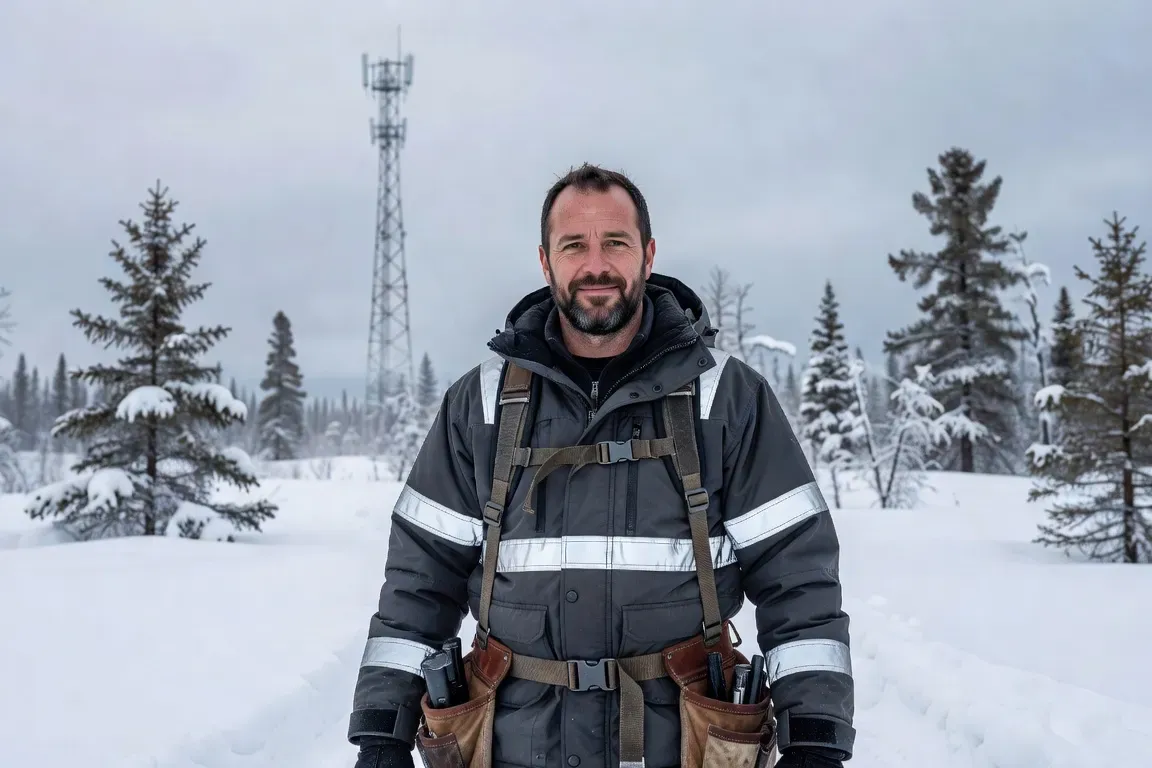
Mathieu Tremblay receives our editor by videoconference one May morning, from his offices in Sept-Îles. The camera shows behind him a Nunavik map annotated in marker pen, technical specification files stacked on a filing cabinet, and the grey sky of a North Coast day. He has just returned from a two-week mission to Kangirsuk where a team of three replaced the main power supply of the local cooperative’s relay site.
For nearly an hour, Mathieu talks to us about his trade, the technical choices that structure deployments in Northern Quebec, and the evolution of the sector since he started in 2014.
Daily life in the trade
Claire Vasseur :Mathieu, how would you describe your trade to someone who knows nothing about it? Many people imagine a telecom engineer spends their days in an office drawing diagrams.
Mathieu Tremblay :That is part of the trade, yes, but in reality it looks more like infrastructure surgery. You arrive in a village where the school depends on its connection for three live courses a week, where the health centre awaits a teleconsultation at 2 PM, where the cooperative cannot pay its suppliers if the payment terminal goes down. And you have two days to replace the faulty equipment without breaking anything. It requires precision, calm, and improvisation capacity that you do not learn at school.
Office work is half the time. The other half is field. And the field in Nunavik is not the field in Trois-Rivières.
Claire Vasseur :What concrete differences with a network deployment in a southern Quebec city?
Mathieu Tremblay :Everything. Logistics first. For a project in Sherbrooke, you order your equipment in the morning, you have it the next day. For a project in Salluit, you order in March for end-of-August delivery. If you forgot a connector or discover on site that a cable is too short, you improvise with what the community has on hand, or you wait for the next air rotation — which can be cancelled by weather.
Then climate. At -35°C, some equipment simply does not work. Batteries lose capacity, touch screens become inert, plastic components crack. You quickly learn to choose equipment based on its operating temperature range rather than its price or theoretical specifications.
And then the human element. You work with communities that have their own rhythm, their own culture, their own priorities. If you arrive in urban project mode where you want to finish everything by Friday noon, you will create unnecessary friction. The trade in the North is also about patience and respect.
Structuring technical choices
Claire Vasseur :You mentioned the cold. Concretely, how does it change your equipment choices?
Mathieu Tremblay :Let me give you a concrete example. For a UPS in a health centre's technical room, you theoretically want large capacity — let's say 10 kVA to hold at least four hours on servers and network equipment. In the south, we take a standard Eaton or APC model with lead-acid batteries, screw it to the wall, done.
In the North, we must ensure the technical room is heated year-round — including in case of central heating failure, which happens. We often opt for lithium batteries that handle variations better, but we then have to manage the recharge phase that cannot occur below zero. We provide a safety thermostat that cuts recharging if temperature drops too low. And we document all this with a procedure the local team can understand and apply in case of alert. This same reliable power question is central to the hybrid solar-diesel microgrids now feeding several remote technical sites: our interview with an energy engineer on Nunavik microgrids details these hybrid architectures.
Multiply this reasoning by all components — servers, switches, routers, antennas, possible solar panels, backup generators — and you understand why a Northern deployment requires two to three times more preliminary studies than a standard deployment.
Key takeaway: in the Far North, equipment choice comes down first to its operating temperature range, not its price or theoretical spec sheet — an undersized lithium battery for cold-weather recharging can immobilise an entire technical site.
Claire Vasseur :Does permafrost pose structural problems for your installations?
Mathieu Tremblay :Enormously. Permafrost is soil that remains frozen year-round below a certain depth, but its surface thaws in summer. When you install an antenna mast, you must anchor its foundations in the stable layer, not in the layer that moves. This requires deep drilling, sometimes up to six metres, with thermal piles that maintain the soil frozen around the foundation.
Old buildings built on concrete slab without this technique have often tilted over the decades. You arrive in a 1990s technical room, you put down a spirit level, and you see the entire rack has tilted by a degree or two. It is not catastrophic for equipment, but it complicates interventions and tells the story of the soil that has moved.
Claire Vasseur :Has the deployment of low-Earth orbit satellite constellations — Starlink at the forefront — really changed your trade?
Mathieu Tremblay :Yes, profoundly, but not as it is sometimes presented in the media.
Before LEO constellations, the number one challenge was obtaining usable bandwidth. We spent months sizing microwave links, negotiating geostationary satellite slots, dealing with latencies that made some uses impractical. Today, we install a Starlink antenna in a few hours and we have a usable connection.
But that does not mean the work has become trivial. On the contrary, expectations have exploded. When a village had a 5 Mbps connection with 600 ms latency, no one imagined doing high-definition teleconsultations or streaming university courses. Now that it is technically possible, communities want — legitimately — to benefit from these services. And our work is to build the local infrastructure that makes these uses reliable and sustainable: adapted equipment, redundancy, local backups, user training.
So yes, LEO has freed up time on the transport layer, but it has replaced it with time on the services layer. The trade has become more complex upwards.
Claire Vasseur :Are there specific pitfalls to avoid when deploying a LEO antenna in a Nunavik village?
Mathieu Tremblay :Several. First the orientation and clearance. Starlink antennas need a clear sky over a wide cone. What seems obvious in theory becomes complicated when you have a higher building nearby, or an existing mast creating obstruction. You must do site surveys, not settle for a Google Maps view.
Then the electrical supply. LEO antennas consume 50 to 100 watts continuously, which is not insignificant if they are on a site with backup batteries. You must size batteries accordingly and plan for the scenario of a prolonged grid outage.
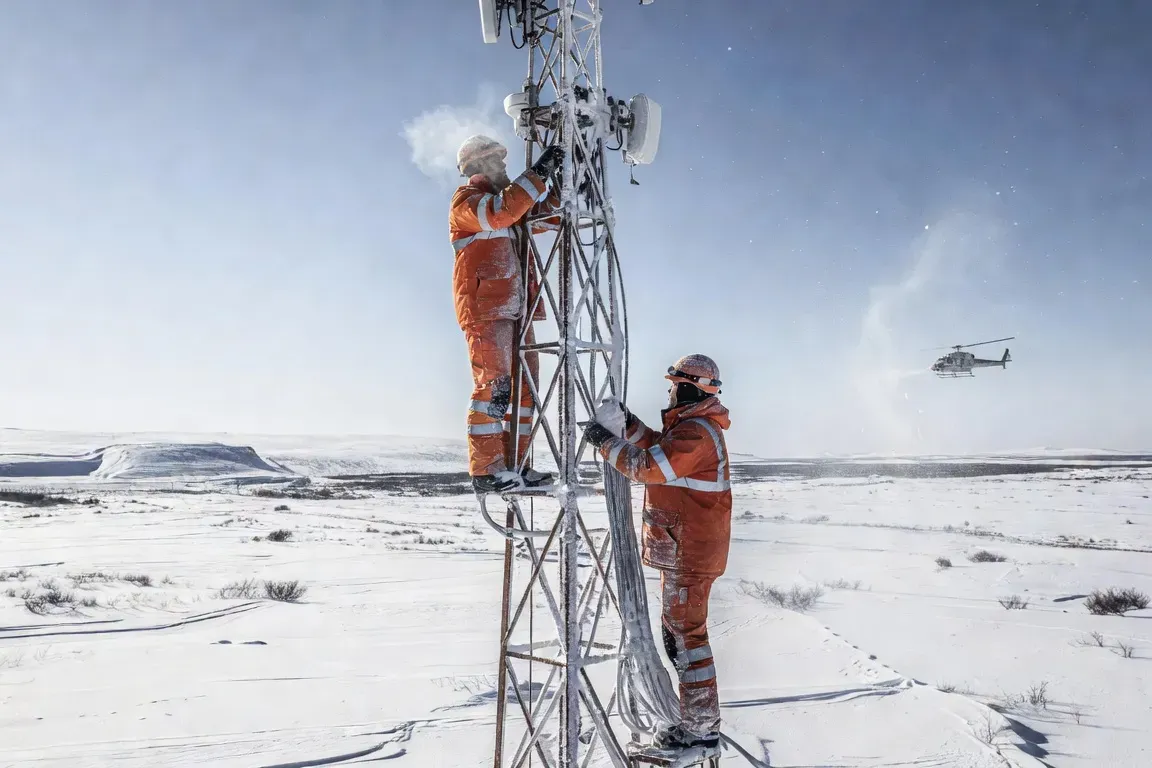
Finally physical maintenance. Antennas in Arctic environments accumulate frost and packed snow. Some have built-in heating resistors, but they consume additional energy. You must anticipate the snow removal routine and train someone on site who can intervene within minutes — otherwise, you lose service in the middle of a storm, precisely when it is most needed.
Common mistake: installing a LEO antenna based on a satellite map view (Google Maps) to judge sky clearance. An on-site survey is essential, otherwise a neighbouring building or existing mast can create an obstruction discovered only after installation.
Logistics and seasonality
Claire Vasseur :You mentioned the summer maritime delivery. Can you describe a project's annual cycle?
Mathieu Tremblay :January-February is the final specification and pricing phase. We confirm with client organisations the equipment to order, finalise quotes, get financing approved.
March is the critical ordering window. Any bulky or heavy material that must ship by boat must be ordered then to arrive in July or August at the village dock. If we miss this window, we switch to air freight at three to five times higher costs, or we wait for the next rotation.
April-May, we prepare projects: detailed plans, coordination with local teams, human resource booking. We also do indoor winter missions that do not depend on thaw.
June-October is project season. It is intense. Teams chain missions, sometimes two or three villages in the same trip. Daylight hours are long — we have midnight sun in June — so we can work outdoors almost continuously.
November-December, we consolidate, document, train local teams on new installations. We also start discussing next year's projects.
Claire Vasseur :How does a typical two-week mission on site unfold?
Mathieu Tremblay :Arrival is by plane, generally from Montreal, with a stopover in Kuujjuaq for more remote villages. You arrive with personal equipment and supplies — the majority of technical material is already on site or arrived by boat.
You stay either in a transit house managed by the municipality, or in the client building if planned. You work with a schedule adapted to local constraints — building availability, organisation calendar, weather. You eat what is locally available, which assumes a significant food budget because Nunavik prices are unrelated to those in the south.
You document everything as you go: photos, updated diagrams, written procedures. Because in six months, if something fails, you are likely the one who will get the call, and you will need to find precisely what was done.
And you keep time to talk with people. Not for polite conversation, but because the best improvement ideas come from users with daily system experience. A cooperative employee explaining why the terminal always saturates on Tuesday morning will save you weeks of remote diagnosis.
Sector evolution in 2026
Claire Vasseur :What major technical evolutions do you see coming in the next two or three years?
Mathieu Tremblay :Three big things.
First, the maturation of Telesat Lightspeed as a credible Canadian alternative to Starlink in the institutional segment. Today, many Northern Quebec organisations would prefer to use a Canadian operator, but the Lightspeed offer is still ramping up. By 2027-2028, things will probably change.
Second, the growing integration of AI tools into public services — assisted medical diagnosis, educational support, automation of administrative tasks. This will further increase demand for bandwidth and local computing power, and open new questions on data hosting and sovereignty.
Third, the progressive strengthening of local digital trades training capacities. Several initiatives led by the Kativik Regional Government and the private sector aim to train technicians from the communities. This is essential for the longevity of everything we deploy.
Claire Vasseur :The question of Inuit communities' digital sovereignty comes up regularly. How does it translate in your trade?
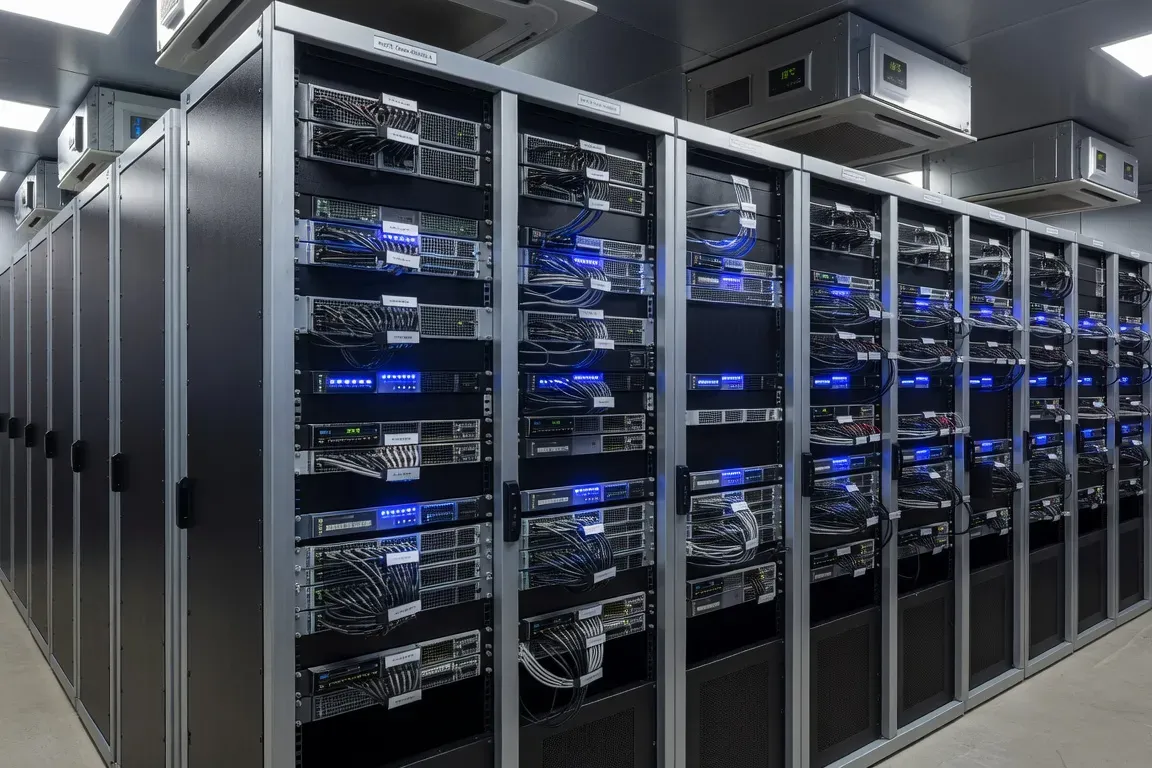
Mathieu Tremblay :Concretely, by a growing demand for local hosting. Rather than storing sensitive data — medical, school, accounting — on servers in the south or in the United States, several organisations want to keep this data physically in their community, on servers they control.
This requires sufficiently robust local servers, redundant backups, and management procedures that local teams can sustain over time. It is not trivial, but it is feasible. And it corresponds to a strong political demand that joins that of many Indigenous communities in Canada.
Equipment behaviour in the cold
| Equipment | Observed behaviour in Arctic climate |
|---|---|
| Lead-acid batteries | Lose up to 40% of capacity at -30°C |
| Lithium batteries | Less affected in discharge, but cannot be recharged below 0°C without risk of permanent damage |
| SSDs | Sometimes more restrictive operating ranges than mechanical drives |
| LCD / touch screens | Become very slow, even inert, at low temperature |
| Plastic components | Can crack in extreme cold |
Quick questions: misconceptions
Claire Vasseur :A few quick questions to close. True or false: "In Nunavik, we are still in the Stone Age regarding Internet."
Mathieu Tremblay :False, and it is a cliché that annoys communities. Several villages have LEO connections that are better than what you find in rural hamlets in southern Quebec. The subject is not the absence of technology, it is the inequality of access and the fragility of infrastructure.
Claire Vasseur :True or false: "It is a dangerous trade."
Mathieu Tremblay :More demanding than dangerous. If you respect protocols — appropriate clothing, regular communication, safety equipment, never alone in isolated areas — risks are manageable. Danger comes mainly from imprudence or underestimating the climate. There are strict rules, we follow them.
Claire Vasseur :True or false: "Deployment costs will be divided by ten thanks to LEO."
Mathieu Tremblay :False. LEO reduces some initial connection costs, but the bulk of a Northern deployment cost lies in logistics, climate adaptation and local training. These costs do not decrease. We gain in service quality, not in invoice."
Claire Vasseur :True or false: "With AI, we will soon no longer need to send technicians on site."
Mathieu Tremblay :False. AI helps diagnose incidents remotely, predict failures, optimise configurations. But someone must still climb a mast, replace a faulty UPS, pull a cable, dialogue with a local team. The trade evolves, it does not disappear."
Claire Vasseur :True or false: "Working in the North is for young single people."
Mathieu Tremblay :Cliché. I have colleagues of all ages, in couples or not, with or without children. What matters is the organisation of rotations and the quality of family support. Several companies have two-weeks-on, two-weeks-off contracts, which allows balanced family life."
Conclusion: three things to remember
Mathieu Tremblay :If I had to keep three ideas from our conversation for someone wanting to understand this trade:
First thing: deploying telecom in Nunavik is not a technical problem but a system problem — logistics, climate, human, governance. If you only see the technical, you fail.
Second thing: LEO has freed time on the transport layer, but it has shifted effort to service quality, redundancy and local training. The trade does not simplify, it shifts.
Third thing: Northern communities are partners, not passive recipients of our work. The best deployments are those embedded in time, that train local personnel and respect the territory's rhythms. This is the approach [Soleica has defended for fifteen years](/en/about-us/), and also that of partners like [Soleica Chalets](https://www.soleicachalets.ca) on other types of remote-region infrastructure.
To go further, see our feature on connectivity in Nunavik in 2026 and our Hyper-V deployment case study in an isolated village.
Frequently asked questions
What training is needed to work as a telecom engineer in Northern Quebec?
A bachelor's degree in electrical engineering, computer engineering or telecommunications engineering is the classic path. Several DEC programs in industrial electronics or network technologies also allow entry as a technician with progression. Beyond the diploma, field experience in Northern environments is built by accompanying experienced teams over several seasons. Familiarity with winter safety standards, topographic map reading and basic Inuktitut are major assets.
How long does a typical technical mission in Nunavik take?
It varies enormously depending on the project. A simple maintenance intervention can fit in two useful days, but with travel and weather hazards, you should plan five to seven days on site. A complete antenna deployment, with mast installation, electrical connection and commissioning, often requires two to three weeks with a team of three to five people. Major projects span several seasons.
Which equipment is hardest to operate in the cold?
Traditional lead-acid batteries lose up to 40% of their capacity at -30°C. Lithium batteries suffer less in discharge but cannot be charged below 0°C without risk of permanent damage. SSDs sometimes have more restrictive operating ranges than mechanical drives. LCD screens become very slow at low temperatures. All this conditions equipment choices much more than the simple performance criterion.
Has low-Earth orbit satellite made your trade simpler or more complex?
Simpler in the initial connection phase — a few hours instead of several months to obtain a usable Internet link. More complex in overall architecture, because the satellite link must integrate into a network that now includes local servers, redundant microwave links and backups across multiple technologies. Multi-technology integration competence has become central.
What is the main satisfaction of this trade?
Seeing a school finally able to receive distance courses, a health centre successful in its teleconsultations without interruption, a cooperative able to keep its accounting in real time — these are concrete changes in the lives of communities long left aside. And working in landscapes few people see, with Northern colleagues, in conditions where every project tells a story. It is a deeply human trade.
Is there seasonality in deployments?
Yes, strongly. Outdoor projects concentrate between May and October, sometimes until mid-November depending on villages. In winter, we mainly do corrective maintenance, indoor interventions and preparation of the following season's projects. March is typically devoted to material orders for summer maritime delivery, because what is not ordered in March will not arrive before the following year.
How do you manage the human distance of these missions?
It is a real subject, and we must be honest about the fact that it is not for everyone. Missions last several days to several weeks, away from family, with sometimes fragile connectivity. The best teams are those with organised rotation, planning collective decompression times on site and maintaining links with local communities beyond the simple technical contract. Soleica and several operators are working to structure this dimension, which is as important as the technical one.