
In 2026, mental health and digital social services in Nunavik and Eeyou Istchee are advancing mainly through a hybrid model: remote consultations, close community support, and culturally grounded accompaniment. Improved internet access facilitates telepsychology and continuity of care, without eliminating isolation, connection outages, or the shortage of bilingual and bicultural staff. The strongest initiatives connect a remote professional with a trusted person on site, actively protect confidentiality, and give a genuine place to peer support workers, elders, families, and land-based practices.
To situate the broader cultural context surrounding these issues, our glossary of 30 essential terms of Nunavik and Eeyou Istchee offers useful reference points for understanding the institutions and vocabulary mentioned in this interview.
Editorial Interview: Understanding Two Distinct Territories
Expert bio: Mika is an entirely fictional character, created for this editorial interview. Their experience as a community mental health worker is a synthesis of practices and challenges documented in Northern Quebec. Their statements do not represent any organization, nation, or specific community.
Antoine Monnier:Can we speak of a single northern reality for Nunavik and Eeyou Istchee?
Mika:No. Nunavik and Eeyou Istchee share certain challenges related to remoteness, travel costs, and the limited availability of specialized services, but their realities are not interchangeable. The Inuit communities of Nunavik and the Cree communities of Eeyou Istchee each have their own languages, governance structures, cultural practices, and care networks.
Even within a single territory, each community has different needs. Population size, air links, the stability of internet connections, and the presence of permanent staff all significantly affect access to care. A relevant strategy therefore needs to be designed with the community rather than mechanically copied from one village to another.
Isolation, Clinical Distance, and Intergenerational Impacts
Antoine Monnier:What challenges particularly affect mental health in isolated northern communities?
Mika:Geographic isolation does not necessarily mean social isolation: family and community ties can be very strong. However, it does complicate quick access to a psychologist, a psychiatrist, a specialized social worker, or an addiction service. An appointment can require a virtual consultation, a medical evacuation, or a trip lasting several days.
Other determinants weigh on well-being: housing shortages, overcrowding, high cost of living, staff turnover, and difficulty obtaining continuous follow-up care. It is also important to recognize the lasting consequences of colonial policies, forced relocations, residential schools, and cultural ruptures. These factors do not explain every individual situation, but they shape the collective context in which people seek help.
Antoine Monnier:How can intergenerational impacts be addressed without reducing people to their trauma?
Mika:It is important to acknowledge history without presenting communities solely through the lens of suffering. Trauma can be passed on through family silences, separations, the loss of reference points, or mistrust of institutions. However, skills, languages, humour, mutual aid, and relationships with the land are also passed on.
A balanced approach values existing strengths. It asks the person what helps them, who they wish to involve in their care, and what role they want family, elders, or cultural activities to play. Care then becomes a space of choice and safety, not another decision imposed from the outside.
Telepsychology and Digital Social Services in 2026
Antoine Monnier:What does improved internet access concretely change for psychological care?
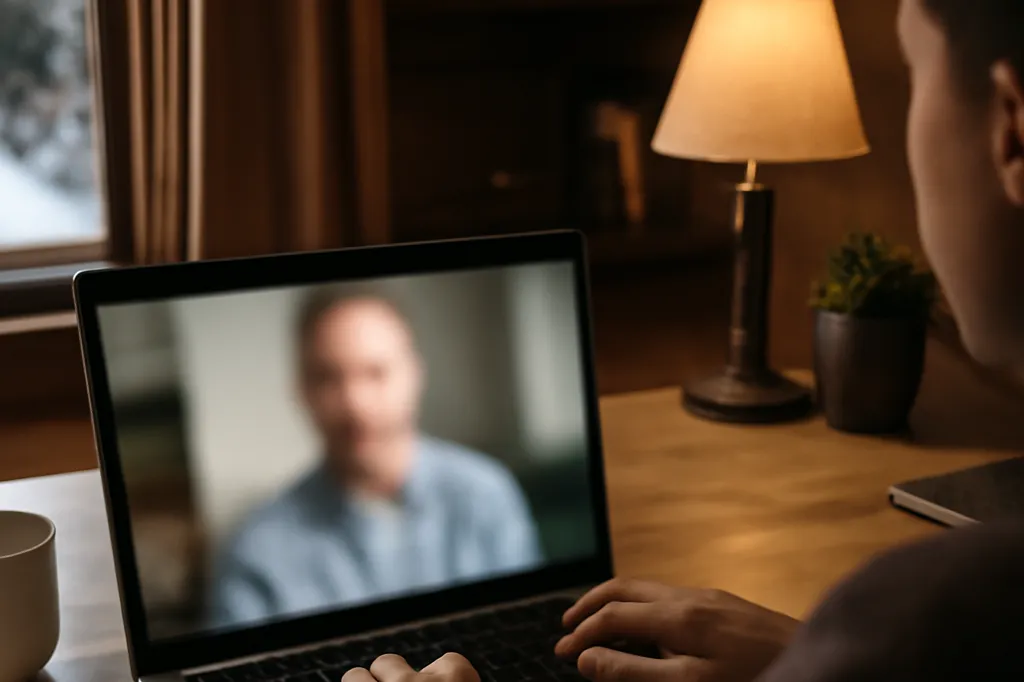
Mika:In communities where the connection has become more stable, telepsychology allows for more regular sessions, the involvement of specialists located elsewhere in Quebec, and better continuity of care after a medical trip. Digital social services can also include psychosocial follow-up, family support, case coordination, and certain group activities.
The improvement remains uneven, however. A connection sufficient for exchanging emails does not guarantee a confidential and stable video call. Satellite technology or new infrastructure can increase available capacity, but weather conditions, congestion, equipment costs, and technical support remain determining factors.
These connectivity issues connect directly to the infrastructure described in our feature on e-health and telemedicine in Nunavik and Eeyou Istchee, which details the technical requirements behind these remote consultations.
| Type of Service | Mode of Access | Target Audience |
|---|---|---|
| Individual telepsychology | Secure videoconference, from home or a clinical setting | Adolescents and adults needing planned follow-up |
| Psychosocial consultation | Phone, video, or supervised professional messaging | Individuals and families seeking listening or guidance |
| Peer support | Local meeting, hybrid group, or remote exchange | Youth, adults, caregivers, and people in recovery |
| Specialized consultation | Link between the local team and a remote professional | People with complex or specialized needs |
| Cultural well-being activity | In person, sometimes complemented by digital coordination | Families, youth, elders, and community members |
Antoine Monnier:What does a quality digital care pathway look like?
Mika:The best care pathway is not entirely virtual. A person can be welcomed by a local worker, meet a psychologist remotely, and then continue certain activities with a peer support worker or a community group. They need to know who to contact if the connection drops or if their condition worsens.
A safe digital service should notably include:
- clear consent, in a language the person understands well;
- a private space and a headset when necessary;
- a backup option by phone or in person;
- a protocol adapted to urgent situations;
- genuine coordination between the remote professional and the local team.
Peer Support Workers, Elders, and Culture as Foundations of Well-Being
Antoine Monnier:Why are community peer support programs important?
Mika:Peer support workers can shorten the distance between the service and daily life. Their role is not to replace a psychologist or a social worker, but to offer an accessible presence, facilitate referrals, and support continuity of care. A person can sometimes speak more easily to someone who understands local realities and the community's relational codes.
To function sustainably, these programs need training, clinical supervision, fair pay, and clear boundaries. Without support, peer workers risk carrying an excessive emotional burden. Their own well-being must be part of the program.
Antoine Monnier:What role can elders and culture play in mental health services?
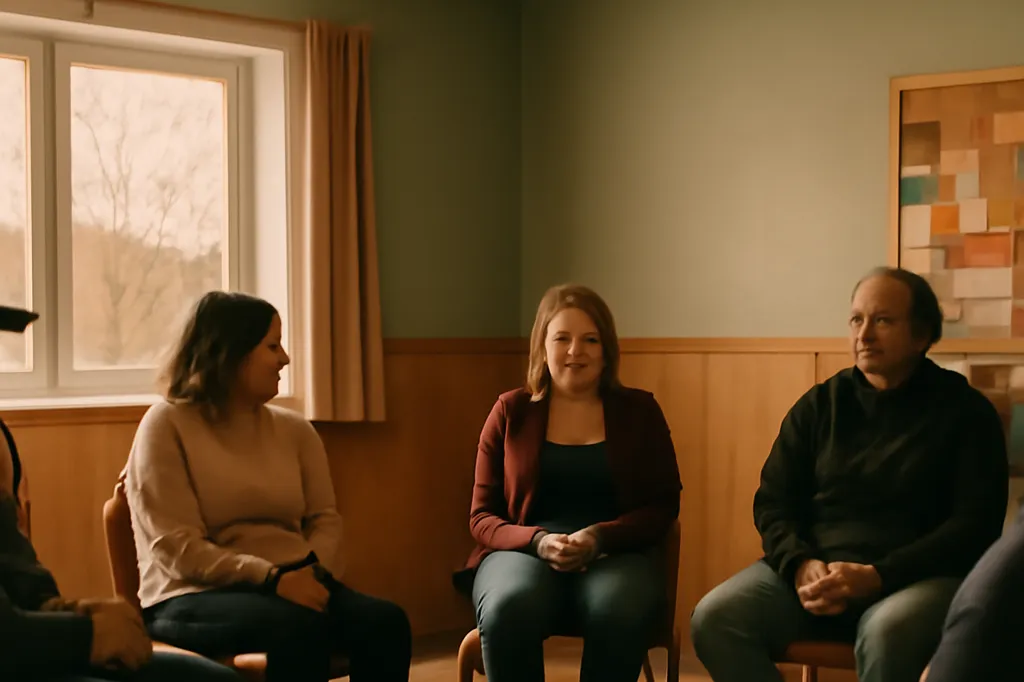
Mika:Their role must be defined locally, with their consent, not added as a token gesture. Elders can pass on language, stories, values, and ways of understanding relationships. Activities on the land, food preparation, art, sewing, hunting, or gatherings can strengthen belonging and open a space for speaking.
These practices do not automatically constitute psychotherapy and are not suited to everyone. They can, however, complement clinical follow-up and support overall well-being. The goal is to allow several paths toward help:
- an individual clinical consultation;
- a circle or community group;
- support from a peer;
- a cultural or land-based activity;
- family participation chosen by the person.
These cultural well-being activities connect to traditions that remain very much alive in the region, such as those described in our feature on Goose Break and goose hunting among the Cree and Inuit, a period when the land and family gathering play a central role.
Confidentiality, Languages, and Initiatives That Work
Antoine Monnier:What obstacles still limit the growth of digital services?
Mika:Connectivity remains the most visible obstacle, but it is not the only one. Available rooms, functioning equipment, technical assistance, and platforms that comply with privacy protection requirements are also needed. Staff turnover can weaken the therapeutic relationship, even when the technology works perfectly.
The shortage of staff who speak Inuktitut or Cree, or who deeply understand local cultural references, remains a major issue. Professional interpretation can help, but it changes the dynamic of a session. Training, supporting, and retaining workers from the communities is therefore a more structural investment than simply multiplying screens.
Antoine Monnier:How can confidentiality be protected in a small community?
Mika:Confidentiality begins before the connection itself. The location of the appointment should avoid frequent foot traffic and limit audible conversations. Scheduling, notifications, and record sharing must also remain discreet. A person should not have to publicly reveal the reason for their visit in order to access a room.
It is also important to explain the limits of confidentiality, particularly when an immediate risk to safety is detected. In a small setting, trust depends heavily on rules that are known, consistent, and applied by all staff.
Antoine Monnier:Which initiatives are showing the most encouraging results?
Mika:The most promising initiatives are generally stable, hybrid, and co-developed. They do not start by asking which platform to buy, but by determining what the community actually needs. They involve local leadership, frontline workers, youth, families, peers, and elders.
Several conditions favour their success:
- maintaining a local human presence between virtual consultations;
- setting aside time to build a relationship of trust;
- offering services in the person’s language of choice whenever possible;
- training staff on historical and cultural realities;
- evaluating lived experience, not just the number of appointments;
- funding supervision and the prevention of professional burnout.
In 2026, the challenge is therefore no longer simply about opening up digital access. It is about building a coherent network where technology, local skills, culture, and specialized care reinforce one another.
This same balance between digital access and local realities is also found in residents’ administrative processes, as shown in our interview on digital access to government services in Nunavik, where trust and human support remain just as important as technology itself.
Frequently asked questions
Can telepsychology fully replace in-person services?
No. It improves access to specialists and the consistency of certain follow-ups, but it cannot replace community presence or the in-person interventions required in complex situations. A hybrid model generally offers greater continuity and safety.
Are virtual consultations confidential in a small community?
They can be, provided the platform, the room, the headset, appointment management, and record-keeping are adequate. Confidentiality depends as much on local organization as on the digital tool used.
Can services be received in one's own language in Nunavik or Eeyou Istchee?
This depends on the community, the program, and the professionals available. Some services can be offered in Inuktitut or Cree, either directly or through interpretation. The shortage of bilingual and bicultural staff remains a significant limitation, however.
What is the role of a peer support worker?
A peer support worker offers listening, guidance, and support grounded in relevant lived experience. They do not replace a clinician. Their work must be supported by training, confidentiality rules, supervision, and clear boundaries of role.
What should be done when someone is at immediate risk?
One should not wait for a routine virtual appointment. It is important to contact the local emergency service, the nursing station, or the community health centre. In Canada, 9-8-8 also offers suicide prevention support by phone or text where that service is available.