

In 2026, food security in Nunavik and Eeyou Istchee remains fragile due to transportation costs, dependence on imported products, often insufficient incomes, and vulnerable supply chains. Fresh food can cost significantly more than in southern Quebec, despite Nutrition North Canada. The most solid response combines better-monitored subsidies, cooperative grocery stores, community sharing, climate-adapted gardens, subsistence hunting and fishing, and direct support for households. No single measure is enough on its own: access must be economic, physical, cultural and sustainable all at once.
Editorial Interview: Understanding Food Security in Northern Quebec
Our expert: Maude Beaulieu is a community worker in food security in Northern Quebec. She is a fictional, composite character, created for this editorial interview based on documented issues in Nunavik and Eeyou Istchee. Her role, independent of any real organization, involves supporting food access projects, collective kitchens and community supply initiatives. To place these issues within their broader territorial context, our glossary of 30 essential terms of Nunavik and Eeyou Istchee offers useful reference points.
Antoine Monnier:What does the term "food security" actually mean in a northern context?
Maude Beaulieu:Food security doesn't just mean having something to eat. It requires regular access to food that is sufficient, nutritious, safe, affordable and culturally appropriate. In Nunavik as in Eeyou Istchee, this definition includes food purchased in stores, but also country foods, sharing between families, and the ability to preserve harvests. A community can have a grocery store and still face food insecurity if prices are too high, if fresh products are damaged, or if households have to cut back on portions.
Antoine Monnier:Are the realities identical in Nunavik and Eeyou Istchee?
Maude Beaulieu:No. We need to avoid presenting Northern Quebec as a uniform whole. Nunavik brings together Inuit communities generally accessible by plane or, depending on the season, by boat. In Eeyou Istchee, Cree territory, some communities have road access, while others face different logistical constraints. Food prices, the quality of transport links, harvesting practices and services therefore vary considerably. Solutions must be designed locally, together with Indigenous governments, families, hunters, elders, youth and the businesses involved.
Why Do Fresh Products Cost More in Nunavik?
Antoine Monnier:What explains the high price of imported fruit, vegetables and dairy products?
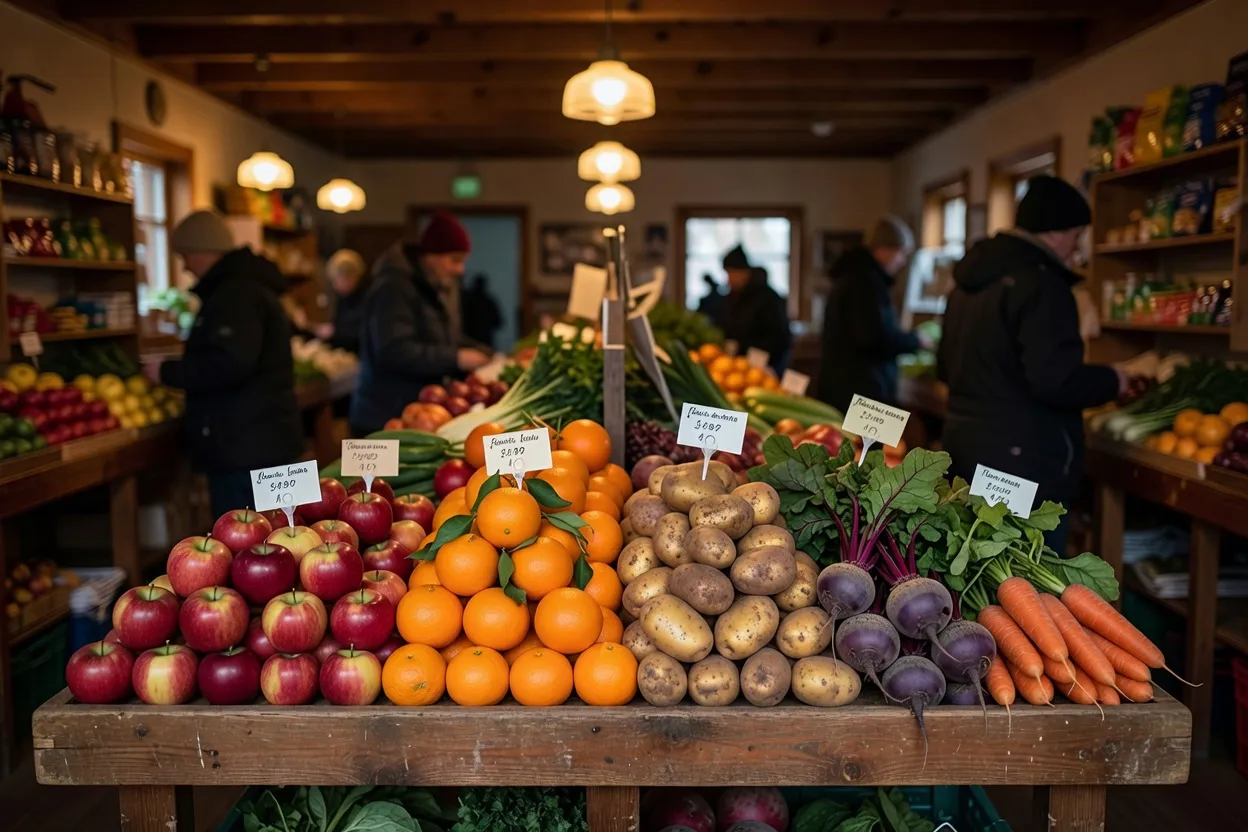
Maude Beaulieu:Air transport accounts for a large share of the cost, but it isn't the only factor. Storage, refrigeration, energy, insurance, handling and losses linked to unsold or spoiled products all matter as well. Lettuce or a container of berries doesn't hold up well to delays and temperature swings. Low volumes also reduce economies of scale. When a storm disrupts deliveries, availability drops quickly and consumers have fewer choices among formats, brands and promotions.
Antoine Monnier:Can prices in the North simply be compared to those in southern Quebec?
Maude Beaulieu:Any comparison has to be treated with caution. Prices change depending on the community, the season, the store, product quality and transport conditions. The following table therefore presents qualitative orders of magnitude, not an official record applicable to every location.
| Food category | Typical price in southern Quebec | Price in Nunavik or an isolated northern community |
|---|---|---|
| Fragile fruits and vegetables | Reference level, with frequent promotions | Often several tens of percent higher; sometimes several times the southern price |
| Milk, yogurt and cheese | Generally competitive prices across retailers | Often a marked gap despite subsidies applying to certain products |
| Eggs | A relatively accessible staple | Frequently higher priced, with fewer format choices |
| Fresh meat and poultry | Wide range of cuts and promotions | Cost ranging from a moderate gap to several times the southern price |
| Frozen products | Large selection and regular discounts | Higher prices due to transport and the cold chain |
| Rice, pasta and dried legumes | Inexpensive products in various formats | Gap often more contained, but significant for low-income households |
| Highly perishable off-season products | Generally stable availability | Very variable price and quality; higher risk of shortage or loss |
These gaps don’t allow for the calculation of a universal “northern basket.” What they mainly show is that the foods most recommended for a varied diet are also among the hardest to transport and preserve.
Nutrition North Canada: Real Support, but Not a Complete Solution
Antoine Monnier:How does the federal Nutrition North Canada program work?
Maude Beaulieu:Nutrition North Canada is a federal program aimed at eligible isolated northern communities that lack year-round surface access. It provides a subsidy calculated according to eligible product categories and transport costs. This support flows mainly through registered retailers and suppliers, who must pass on the full subsidy to consumers. The corresponding savings must be shown on receipts. The program can also support access to country foods through components dedicated to harvesters and community food programs.
To assess its actual effect, several elements need to be examined:
- the final price actually paid at checkout;
- whether the subsidy appears on the receipt;
- the freshness, format and availability of the products;
- the ability to order through a registered supplier;
- how transport and operating costs are evolving;
- accessibility for households without a credit card or the ability to buy in bulk.
Antoine Monnier:Why doesn't the program solve food insecurity on its own?
Maude Beaulieu:Nutrition North Canada is a supply subsidy, not a general price control system or a universal allowance paid to every household. Even when a product is subsidized, its final price can still be too high for a family with limited income. Nor does the program address the shortage of housing, energy costs, the cost of hunting equipment, or losses of fresh products. Its effectiveness also depends on local competition, price transparency, and consumers' ability to find eligible products on the shelf.
Cooperative Grocery Stores, Gardens and Country Foods
Antoine Monnier:What role can local cooperative grocery stores play?
Maude Beaulieu:A cooperative can pool purchases, adapt orders to needs expressed within the community, and reinvest part of its returns locally. It can also create jobs, build management skills, and facilitate the sale or distribution of country foods where health regulations allow it. That said, a cooperative doesn't escape freight, energy and refrigeration costs. Its strength lies mainly in local governance: members can discuss formats, margins, supply priorities and solidarity mechanisms.
Antoine Monnier:Can community gardens produce enough food in a northern climate?
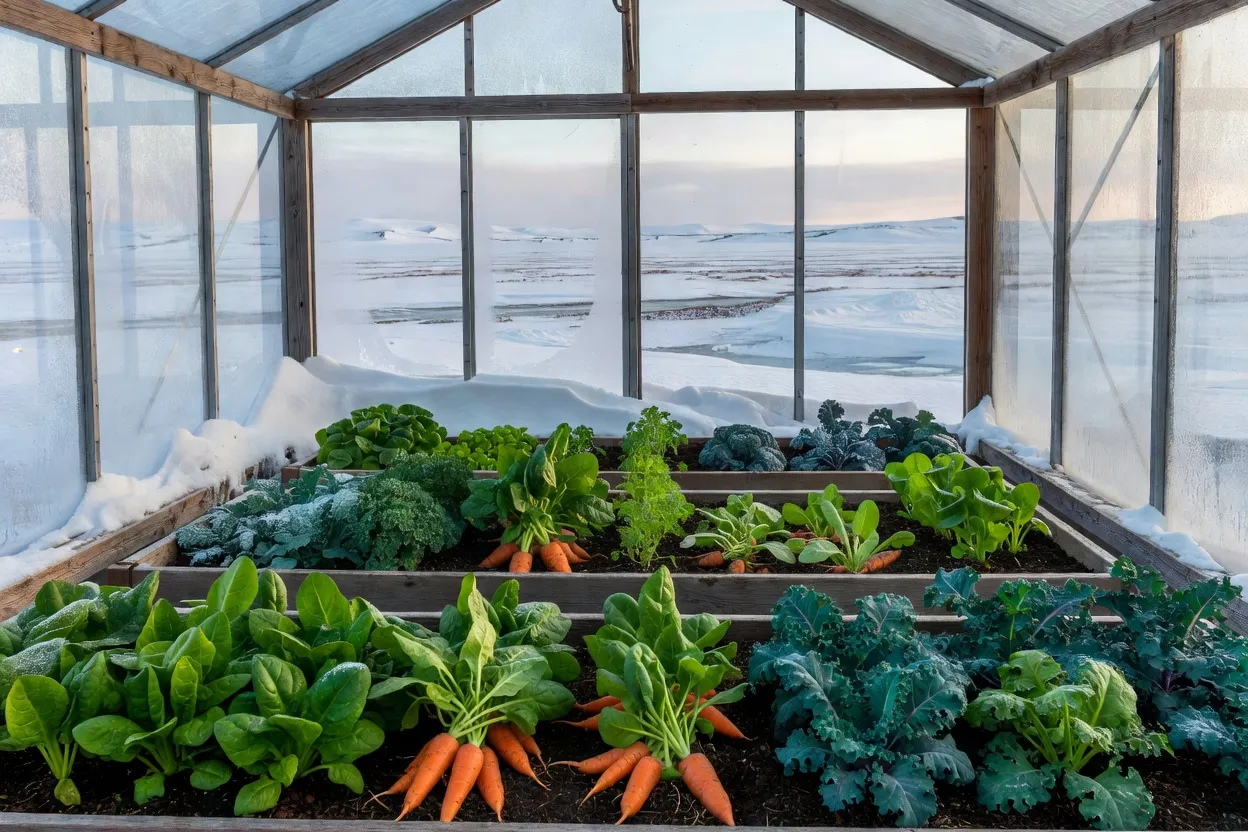
Maude Beaulieu:They won't replace the main food supply, but they can provide a useful supplement. Raised beds, greenhouses, hydroponic systems or indoor spaces make it possible to grow certain hardy herbs, lettuces and plants. Their value is also educational and social: young people learn to grow, cook and share fresh food. Their success, however, requires water, energy, equipment, training and ongoing maintenance. Presenting the greenhouse as a miracle solution would overlook its costs as well as the limits imposed by light and climate.
Among the local initiatives that can reinforce one another are:
- community freezers and sharing networks;
- breakfasts, lunches and snacks in schools;
- collective kitchens and preservation workshops;
- food baskets or vouchers for vulnerable households;
- fuel, equipment and training support for hunters;
- gardens, greenhouses and hydroponic projects adapted to the local environment;
- group purchasing through a cooperative or a registered supplier.
These community initiatives often rely on well-established local organizations, much like what our profile of Niskamoon Corporation and its mission serving the 9 Cree communities of Eeyou Istchee documents.
Antoine Monnier:What place do subsistence hunting and fishing occupy?
Maude Beaulieu:Country foods hold a major nutritional, social and cultural place. Caribou, fish, birds and other resources can supplement purchased products, depending on the season, the territory and applicable rules. Harvesting isn't free, however: it requires fuel, equipment, time, knowledge and means of preservation. Climate change can also make travel riskier. Any initiative must respect local knowledge, sharing practices, harvesting rights and health advisories concerning certain species or certain areas.
This seasonal and cultural dimension of harvesting is well illustrated by our coverage of goose hunting traditions among the Cree and Inuit during Goose Break, which shows just how central these practices remain to community food supply.
Impact on Families and Priorities for Action in 2026
Antoine Monnier:How does the cost of living affect low-income families?
Maude Beaulieu:These families often have to choose between food, housing, electricity, telecommunications, clothing and transportation. The most immediate strategy is to buy filling, cheaper, easy-to-store foods, even if they're less varied. Parents may reduce their own portions to protect their children's. Food insecurity also produces stress, fatigue and a sense of losing control. It particularly affects people who are isolated, elders, large families, and households whose income varies with the season.
Antoine Monnier:What should the priorities be in Nunavik and Eeyou Istchee in 2026?
Maude Beaulieu:The first priority is to support household purchasing power while improving supply. That requires transparent monitoring of prices and subsidies, stable school programs, support for hunters and fishers, and freezing and storage infrastructure. Cooperative grocery stores and local growing projects need predictable, not one-time, funding. Finally, decisions must be made together with the communities. Northern food security cannot be reduced to the delivery of goods: it also depends on local autonomy, sharing and cultural continuity.
These priorities connect with other issues shaping the future of youth and the territory’s economy, including those addressed in our feature on IT careers and jobs in Nunavik and Eeyou Istchee, where local autonomy also plays a central role.
Frequently asked questions
Why is food so expensive in Nunavik?
Most communities rely heavily on air transport for fresh products. Freight, refrigeration, energy, storage, low volumes and spoilage losses all drive up the final price. Weather delays can also quickly reduce the available selection.
Does Nutrition North Canada apply to all products?
No. The program uses lists of eligible products and different subsidy levels. It mainly targets nutritious foods and certain essential items shipped to eligible communities. It is neither a flat discount across the whole store nor an automatic payment to residents.
Can country foods replace grocery store products?
They are an essential resource for many families, but their availability varies by season, species, travel conditions and harvesting capacity. Fuel and equipment costs also limit access. They generally complement purchased food rather than fully replacing it.
How can consumers verify the Nutrition North Canada subsidy?
At a registered retailer, the receipt should show the savings linked to the subsidy. Consumers can compare unit prices, check product eligibility, and report concerns through the program's official mechanisms or to the relevant local authorities.
Which solution would have the fastest effect on low-income families?
Direct, accessible support for purchasing power can have an immediate effect. To be sustainable, it must be paired with school meals, food baskets or vouchers, better oversight of subsidy enforcement, community infrastructure, and support for harvesting country foods.